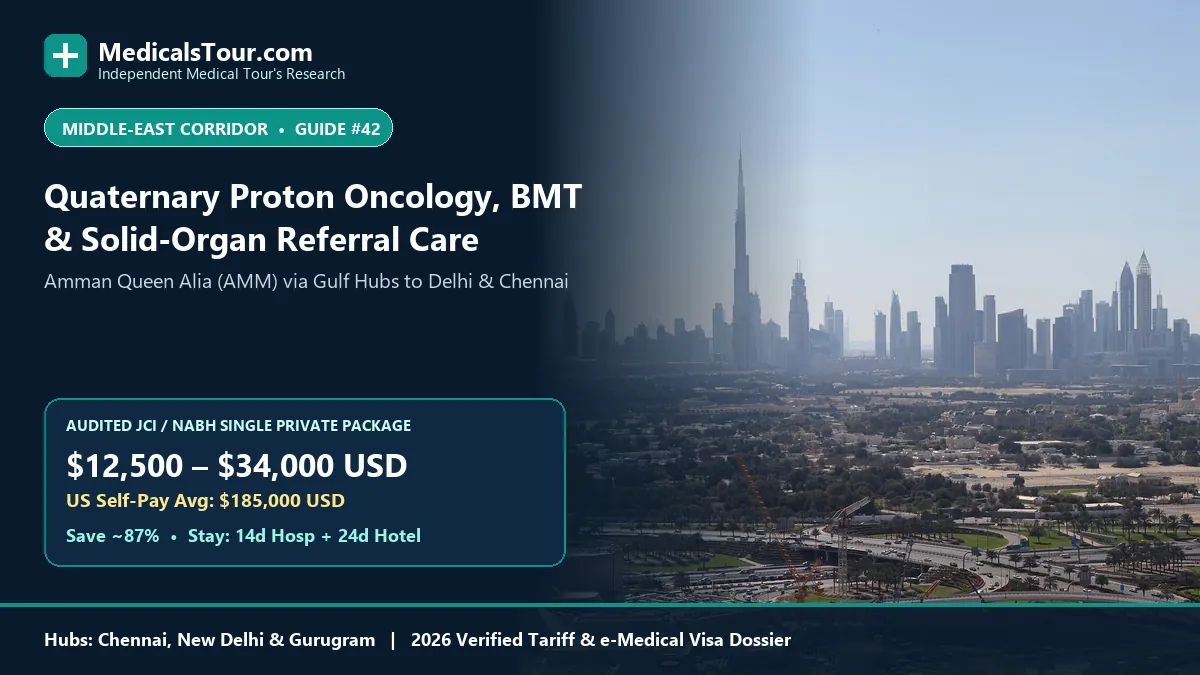
Anyone familiar with healthcare in the Middle East knows that Amman does not lack surgical talent. Between the private medical towers along Al-Khalidi Street, Abdoun, and Shmeisani, and flagship institutions in oncology and cardiac care, Jordan has served for decades as the Levant’s own referral magnet. Jordanian, Palestinian, and Lebanese families do not board long-haul flights to Chennai or New Delhi for routine joint replacements, simple coronary stents, or standard laparoscopic cholecystectomies. They look eastward only when a diagnosis crosses into ultra-specialized quaternary medicine—where either the physical capital equipment does not exist anywhere in the Levant, or European and North American self-pay estimates exceed 130,000 Jordanian Dinars ($185,000+ USD).
Three specific clinical bottlenecks drive almost 85% of Levantine medical referrals to India in 2026: pencil-beam scanning proton therapy for pediatric brain tumors and skull-base sarcomas, haploidentical (half-matched) bone marrow transplantation for relapsed leukemias and thalassemia major, and high-volume living-donor liver and pediatric cardiac redo surgeries. Across Medical Tour’s recent Middle East referral reviews, families departing Queen Alia International Airport (AMM) consistently cut total clinical expenditure by 65% to 80% compared with Munich, London, or Houston while accessing JCI-accredited programs performing hundreds of transplants annually.
This guide maps the exact clinical handoff from Amman and Beirut to Chennai, Gurugram, and New Delhi—covering Jordanian Dinar (JOD) and USD package structures, consular nuances for Jordanian versus Palestinian and Levantine travel documents, one-stop Gulf aviation logistics, and statutory living-donor paperwork. Every timeline and cost bracket reflects actual two-center collaboration between referring specialists in Amman, Irbid, Aqaba, Ramallah, and Beirut and receiving multidisciplinary units in Taramani and Delhi NCR, ensuring families preserve continuity of care once they fly back home.
When Amman Specialists Refer East: The Three Quaternary Triggers
Conversations with Jordanian oncologists, pediatric hematologists, and hepatologists reveal a clear division of labor between Levantine medicine and Indian quaternary centers. Domestic hospitals in Amman deliver outstanding linear-accelerator IMRT/VMAT radiation, autologous stem-cell rescues, and primary cardiac surgery. Referral abroad becomes medically urgent when sparing healthy tissue or overcoming donor-matching barriers requires sub-specialty volume on a continental scale.
1. Pencil-Beam Proton Therapy for Pediatric & Skull-Base Tumors
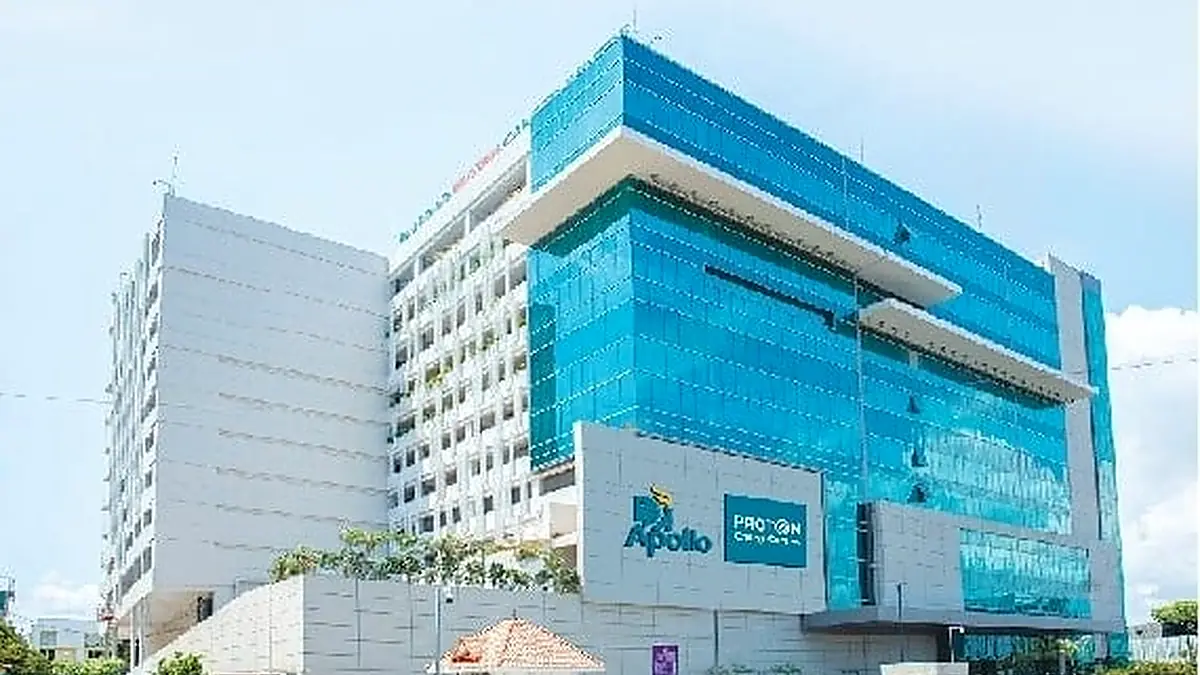
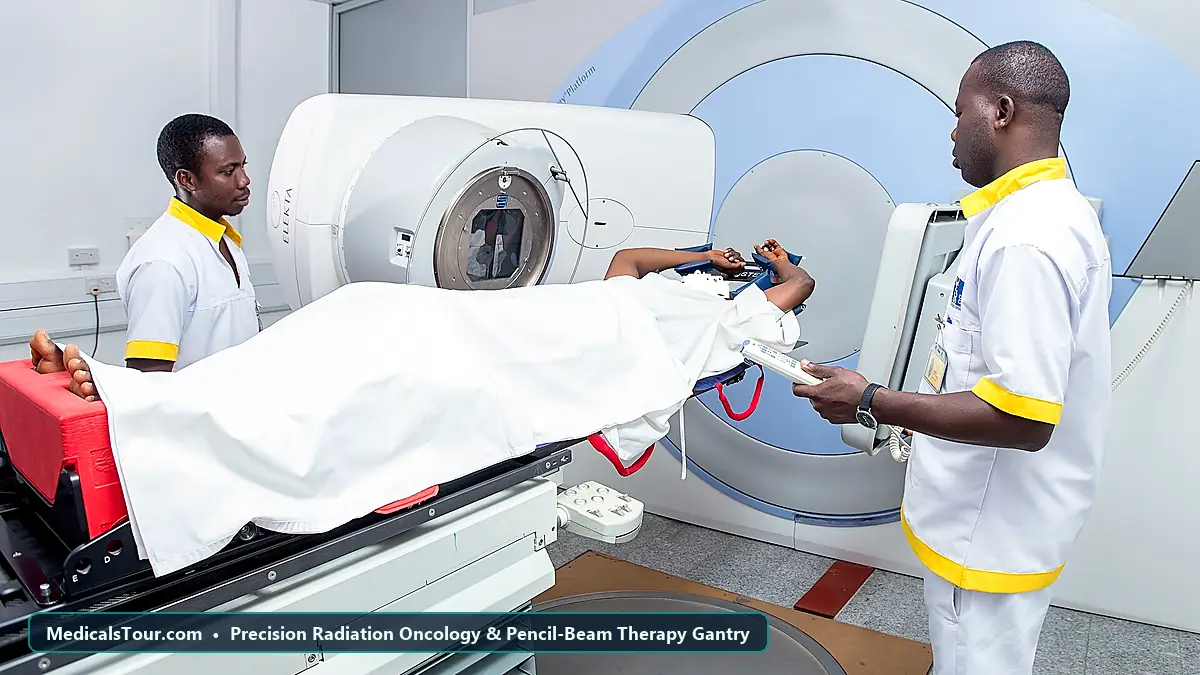
Conventional X-ray photon radiation deposits exit dose into healthy tissue beyond the tumor target. In a six-year-old child with medulloblastoma, ependymoma, craniopharyngioma, or orbital rhabdomyosarcoma—or an adult with a clival chordoma wrapped around the optic chiasm and brainstem—that exit dose risks permanent neurocognitive decline, pituitary failure, cochlear hearing loss, or secondary radiation-induced malignancies decades later. Apollo Proton Cancer Centre in Taramani, Chennai operates South and West Asia’s established multi-room pencil-beam scanning cyclotron facility, sculpting sub-millimeter Bragg-peak proton doses with zero exit radiation behind the target at roughly one-fourth of US proton tariffs.
2. Haploidentical BMT & CAR-T / Salvage Hematology
When a patient in Amman, Irbid, Zarqa, or Ramallah lacks a 10/10 HLA-identical sibling donor and international unrelated marrow registries return no match—or carry €35,000 registry procurement fees alone—Indian HEPA-filtered BMT units execute TCR-alpha/beta T-cell-depleted or post-transplant cyclophosphamide (PTCy) haploidentical transplants using a biological parent or half-matched sibling, achieving engraftment benchmarks comparable to Western European academic centers while eliminating four-month donor search delays.
3. High-MELD Living-Donor Liver & Complex Redo Cardiac Surgery
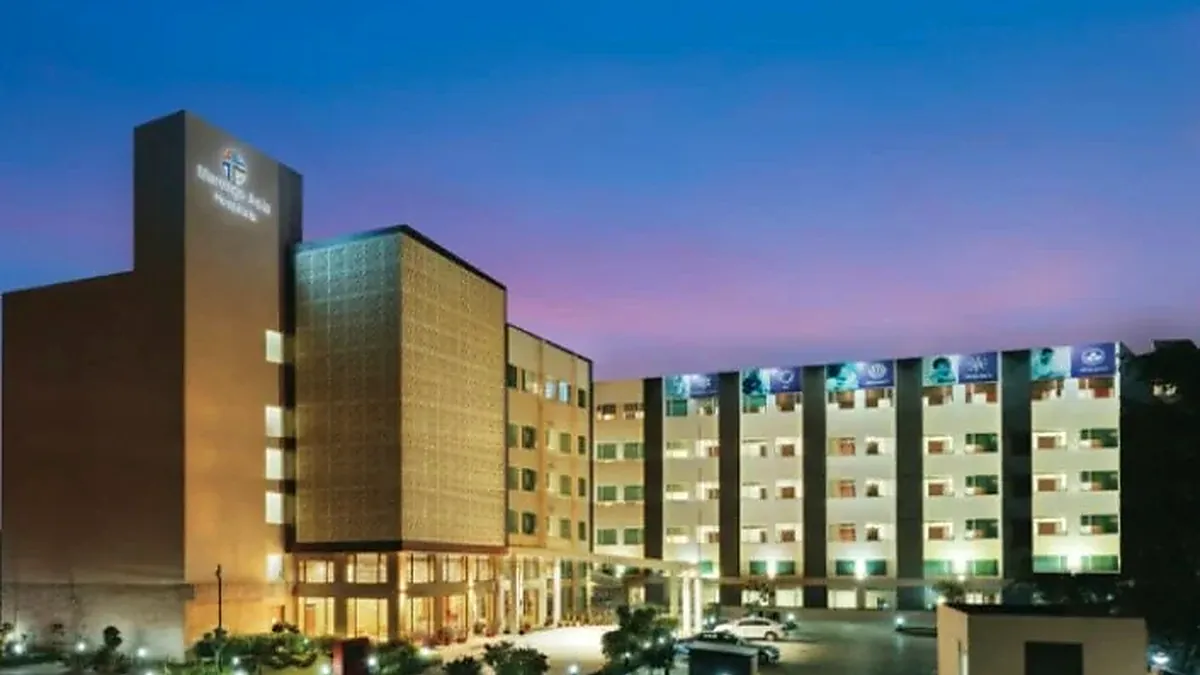
At quaternary campuses such as Marengo Asia Hospitals in Sector 56, Gurugram and peer Delhi NCR/Chennai transplant institutes, dedicated hepatobiliary and mechanical circulatory support teams perform ABO-incompatible liver transplants, dual-lobe grafts, pediatric biliary atresia Kasai-failure rescues, left ventricular assist device (LVAD) implantations, and third-time sternotomy valve reconstructions backed by 24/7 ECMO circuits.
That institutional surgical cadence changes ICU mortality curves dramatically. When a transplant unit completes 150 to 250 living-donor hepatectomies every single year, vascular microsurgeons reconstruct two-millimeter hepatic arteries under high-magnification operating microscopes as routine daytime work, interventional radiologists stay on 15-minute bedside call for Doppler portal-vein checks, and dedicated transplant infectious-disease physicians adjust antifungal prophylaxis before fever spikes turn into sepsis.
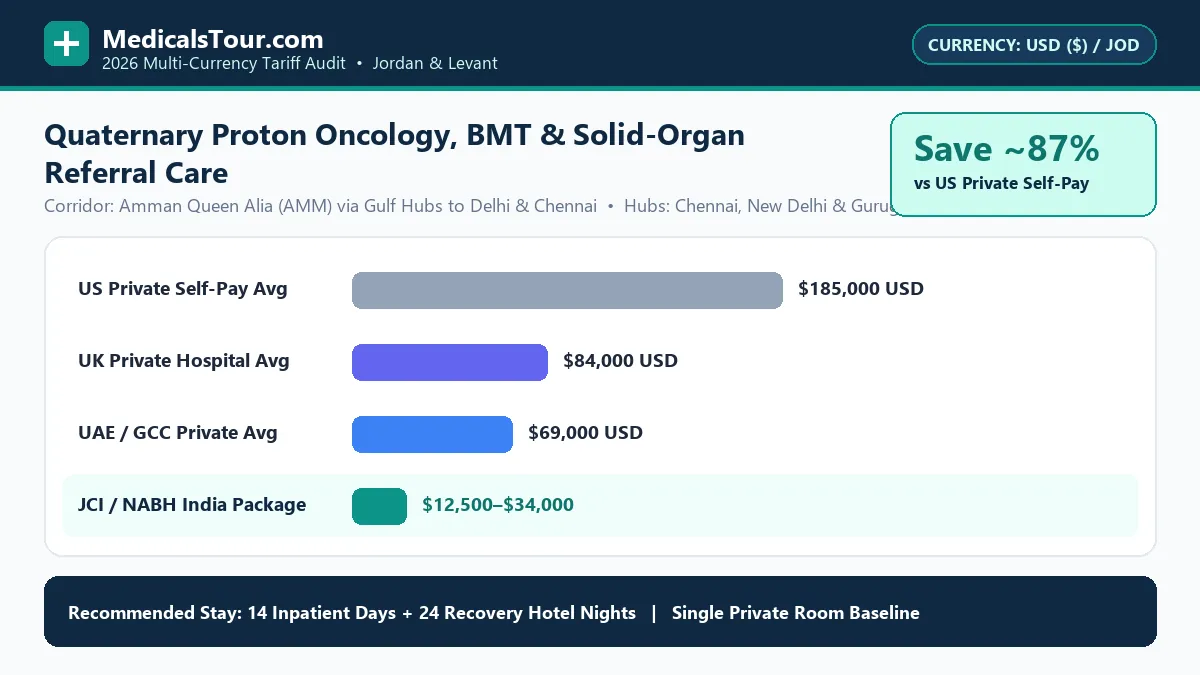
2026 Quaternary Package Tariffs in USD ($) and Jordanian Dinars (JOD)
Because the Jordanian Dinar is pegged stably to the US Dollar (1 JOD ≈ $1.41 USD, or $1 USD ≈ 0.709 JOD), Jordanian families enjoy zero exchange-rate volatility when comparing Indian USD Proforma Invoices against private self-pay quotes in Amman, Frankfurt, or Boston. Below are verified 2026 Single Private Room institutional ranges across Chennai and Delhi NCR.
| Quaternary Procedure / Modality | India JCI Package (USD) | Equivalent in Jordan (JOD) | Europe / US Benchmark (USD) |
|---|---|---|---|
| Pencil-Beam Proton Therapy (25–33 Fractions Full Course) | $24,500 – $37,500 | 17,370 – 26,590 JOD | $95,000 – $160,000 |
| Craniospinal Irradiation (CSI) Pediatric Proton Protocol | $32,000 – $42,000 | 22,690 – 29,780 JOD | $135,000 – $195,000 |
| Matched-Sibling Allogeneic Bone Marrow Transplant | $21,000 – $28,500 | 14,890 – 20,210 JOD | $140,000 – $280,000 |
| Haploidentical (Half-Match) Bone Marrow Transplant | $29,500 – $38,500 | 20,915 – 27,300 JOD | $190,000 – $350,000 |
| Living-Donor Adult Liver Transplant (Recipient + Donor) | $28,500 – $35,000 | 20,210 – 24,815 JOD | $175,000 – $340,000 |
| Living-Donor Pediatric Liver Transplant (<15 kg) | $29,000 – $36,500 | 20,560 – 25,880 JOD | $210,000 – $390,000 |
| Complex Redo Cardiac Valve / Aortic Root Bentall Surgery | $7,800 – $11,800 | 5,530 – 8,365 JOD | $55,000 – $125,000 |
Note what is separated from base oncology and transplant bundles: proton therapy requires custom thermoplastic mask or vacuum-cushion immobilization, planning 3T MRI/CT simulation ($900–$1,600), and daily pediatric propofol sedation if the child is under age six ($2,200–$3,800 across 30 fractions), while outpatient hotel residence in Chennai runs five to six weeks because daily gantry delivery takes only 30–45 minutes per weekday. Compare baseline radiation and cardiac numbers in our Oncology, PET-CT & Radiation Cost Guide and Heart Valve & TAVR Cost Guide. For BMT and liver recipients, budget a dedicated 15%–20% clinical reserve ($4,000–$6,500 USD) outside the base quote to cover extended liposomal amphotericin, valganciclovir, Defibrotide, or extra apheresis platelet units should febrile neutropenia or graft-versus-host flare occur.
Medical Visa Pathways in Amman: Jordanian Passports vs Levantine Travel Documents
Families departing Queen Alia International Airport frequently hold mixed nationality documents within the same household, so sorting visa pathways ten days ahead of travel prevents last-minute splitting of attendants.
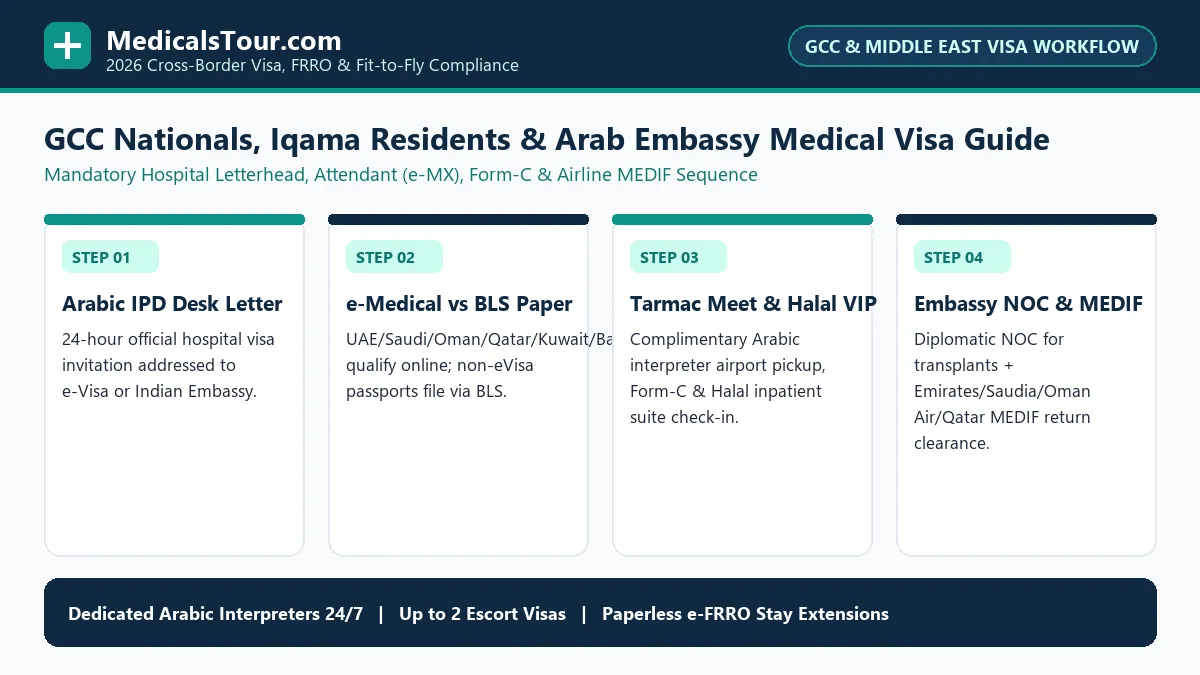
- Jordanian Citizens (Hashemite Kingdom Five-Year Biometric Passport): Eligible Jordanian nationals traveling for short-to-medium quaternary workups, proton therapy, or cardiac surgery can apply online for the 60-day triple-entry Indian e-Medical Visa (and linked e-Medical Attendant Visa for up to two family members) using a stamped hospital Visa Invitation Letter, typically approved within 48 to 96 hours. However, for 6-to-10-week allogeneic BMT or living-donor liver transplantation certain to exceed 60 days, applying directly for a 6-month paper Medical Visa (MED) at the Embassy of India in Abdoun, Amman avoids paying early extension fees immediately after hospital discharge.
- Palestinian Authority Passports, Two-Year/Temporary Jordanian Passports & Lebanese/Syrian Nationals: Travelers holding Palestinian Authority travel documents, temporary non-national travel documents without a Jordanian national ID number (Raqam Watani), or Syrian and Lebanese passports residing in Amman or Beirut must apply for a stamped Paper Medical Visa through the Embassy of India in Amman (or Beirut). Ensure the Indian hospital addresses the Visa Invitation Letter explicitly to the exact diplomatic post where biometrics will be lodged, listing passport numbers, diagnosis, estimated stay duration, and primary consultant name.
Before visiting the consular counter in Abdoun, assemble three months of stamped bank statements from Arab Bank, Housing Bank, or Cairo Amman Bank, English civil family-book translations proving attendant kinship, return or open-dated Gulf carrier flight reservations, and a pre-departure tele-consultation note signed by the receiving Indian department chair. When an inpatient pediatric or transplant patient requires both mother and father alongside a living organ or marrow donor, the hospital issues a unified multi-person VIL explicitly naming the donor separately from the two MED-X attendants so consular staff grant all three accompanying visas simultaneously.
Patients sponsored by the Jordanian Royal Medical Services, Ministry of Health overseas treatment committees, or private corporate diplomatic funds in Amman should also obtain a stamped English financial guarantee letter before applying. Having that ministry sponsorship reference embedded inside the Indian hospital’s Visa Invitation Letter accelerates consular verification in Abdoun and clarifies to FRRO officers in Chennai or New Delhi why your household requires a full 180-day multi-entry medical stay.
Queen Alia (AMM) to Chennai (MAA) & Delhi (DEL): One-Stop Gulf Flight Strategy
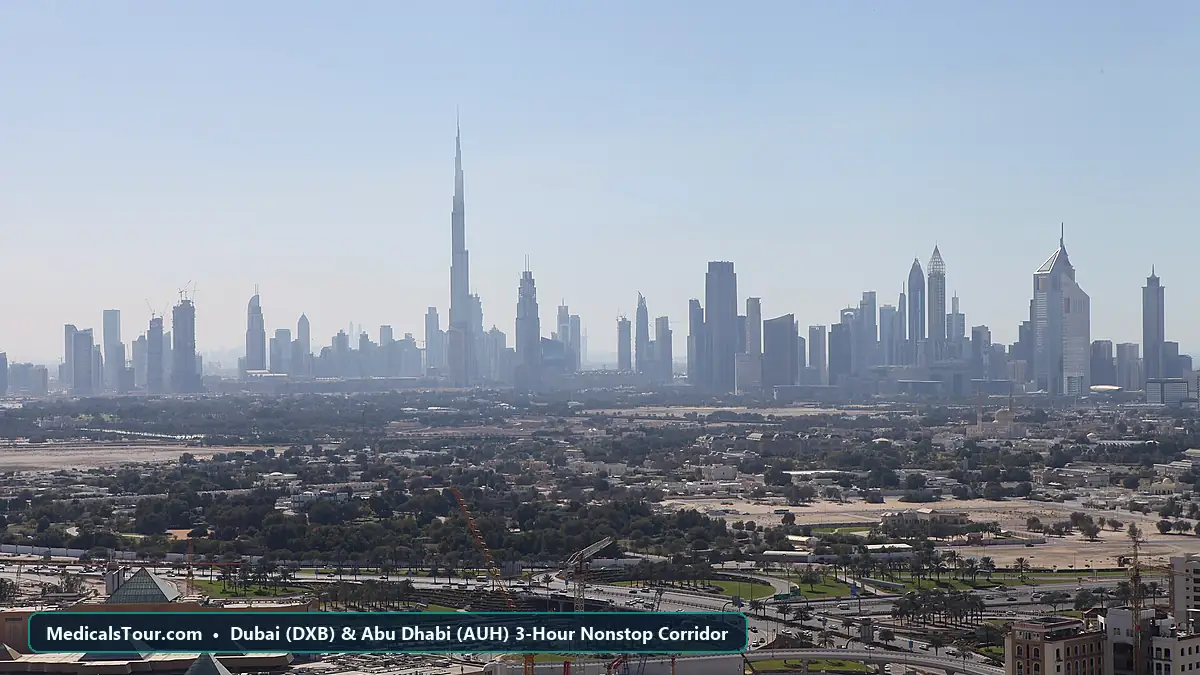
While Amman does not currently maintain daily nonstop widebody service into Chennai or New Delhi, one-stop connectivity across the Arabian Peninsula is brisk and medically predictable when booked on a single Gulf flag carrier. Total airborne time runs approximately 6.5 to 7.5 hours split into two gentle three-to-four-hour stages—far easier on post-craniotomy, thrombocytopenic, or hepatic-ascites travelers than a 12-hour transatlantic leg to North America.
| Carrier & Transit Hub from Amman (AMM) | Best Indian Arrival Gateway | Transit Window & Medical Handling Strength |
|---|---|---|
| Qatar Airways via Doha (DOH) | Chennai (MAA) & New Delhi (DEL) | 1h 45m – 2h 50m transfer; Al Maha airside buggy & medical lounge support into Taramani proton corridor. |
| Emirates via Dubai (DXB) | Chennai (MAA), Mumbai (BOM) & Delhi (DEL) | 2h 00m – 3h 15m transfer; A380/B777 lie-flat stretcher & oxygen MEDIF reliability on both legs. |
| Etihad Airways via Abu Dhabi (AUH) | New Delhi (DEL) & Chennai (MAA) | 1h 50m – 2h 45m transfer at Zayed International Terminal A with step-free gate-to-gate wheelchair escort. |
| Oman Air via Muscat (MCT) / Gulf Air via Bahrain (BAH) | Chennai (MAA) & New Delhi (DEL) | Compact single-terminal hubs minimizing walking distance for fatigued oncology & cardiac patients. |
For neutropenic hematology patients (absolute neutrophil count < 1,000/µL) or thalassemia children departing Amman for bone marrow transplant, ask your Jordanian hematologist whether a pre-flight filgrastim (G-CSF) boost or irradiated red-cell/platelet transfusion is warranted 24 hours before departure so hemoglobin stays safely above 8.5 g/dL at 8,000-foot cabin pressurization. Wear a fitted N95 respirator throughout Queen Alia and Gulf transit concourses, carry central-line heparin/saline flush kits in original hospital packaging with an English doctor’s note, and avoid split-ticket low-cost connections that require clearing Gulf immigration to re-check suitcases.
Travelers arriving from Beirut–Rafic Hariri International Airport (BEY) follow an identical Gulf hub playbook via Doha, Dubai, or Abu Dhabi. Because Lebanese passport holders also require a pre-issued paper Medical Visa rather than an online e-Visa, families departing Beirut should initiate VIL generation at least two weeks prior to planned radiation simulation or transplant workup dates, booking flexible medical-fare tickets that waive date-change penalties if platelet counts or post-op wound healing shift your departure by three or four days.
Remote DICOM Cloud Review & Paraffin Block Logistics Before Leaving Amman
Never spend $2,500 on business-class tickets and hotel deposits before confirming that your case truly qualifies for proton beam advantage, surgical resectability, or transplant listing. Every major Indian quaternary center runs a structured Pre-Travel Multidisciplinary Case Review at zero or nominal second-opinion cost ($50–$100) when you upload raw imaging properly.
Paper radiology summaries translated into English are never enough for radiation physicists or liver transplant surgeons. Request the actual raw DICOM folder on CD/USB from your Amman imaging center (3T contrast brain/spine MRI with thin 1 mm T1/T2/FLAIR slices for proton dosimetry, or triphasic CT liver angiogram + MRCP for living-donor transplant sizing), compress the folder into a single .zip archive, and upload it through the hospital’s encrypted PACS link or cloud portal.
Within 48 hours, radiation oncologists and medical physicists in Chennai run preliminary dose-volume histogram comparisons to confirm whether proton beam geometry meaningfully reduces cochlear, optic nerve, salivary, or hippocampal dose compared with local IMRT in Amman—honestly advising families to stay home in Jordan whenever photon therapy offers identical clinical safety! For pediatric brain tumor cases that recently underwent craniotomy in Amman, ask your Jordanian neurosurgeon for the exact operative note, pre-op and 48-hour post-op MRI DICOM files, and lumbar puncture CSF cytology report so craniospinal proton simulation can begin within 72 hours of landing at MAA.
If traveling for oncology or BMT, hand-carry all original FFPE pathology paraffin wax blocks, stained H&E slides, bone marrow aspirate smears, and cytogenetic/FISH/NGS reports inside a rigid crush-proof plastic box in cabin baggage—never in checked cargo holds where heat and humidity degrade tissue wax—accompanied by a signed hospital pathology release certificate.
Cardiac redo candidates referred from Amman’s Shmeisani or Khalidi hospitals should similarly upload native coronary angiogram cine-loops (DICOM videos, not static smartphone clips of catheterization screens), gated cardiac CT reconstructions showing sternal-wire proximity to the right ventricle or innominate vein, and transesophageal echocardiography recordings. Having those cine-loops reviewed ahead of travel lets Indian cardiothoracic teams pre-order specialized peripheral femoral cannulation kits, aortic root conduits, or mechanical circulatory backup before your flight departs Queen Alia.
Embassy NOC Rules for Living-Donor Transplants & SWIFT Wire Transfers in JOD/USD
Families traveling from Jordan or the Levant for living-donor liver or kidney transplantation must satisfy India’s strict statutory safeguards against commercial organ trafficking. Under THOA regulations, both recipient and donor must be close blood relatives (parent, child, brother, sister) or a legally married spouse. Before the hospital Authorization Committee schedules operating rooms, your family must present translated, Ministry-attested civil family-book certificates (Daftar Al-Aila issued by Jordan’s Civil Status and Passports Department) alongside an official Form-21 Relationship & No Objection Certificate (NOC) issued by the Embassy of the Hashemite Kingdom of Jordan (or respective Levantine embassy) in Chanakyapuri, New Delhi. Read our dedicated Arab & GCC Organ Transplant Embassy NOC Guide for the complete document tree.
One practical hepatology warning saves Levantine families immense heartbreak: roughly 20% of prospective adult donors with mild metabolic syndrome or elevated BMI show greater than 20% macrovesicular hepatic steatosis (fatty liver) or complex biliary ductal branching on CT volumetry and MRCP in India. Before buying flights from Amman, ask a local radiologist for a baseline non-contrast liver attenuation CT index and FibroScan on your intended donor—and whenever possible, identify a second healthy sibling or adult child at home as a backup candidate.
On the financial side, Jordan’s banking sector makes cross-border hospital settlement clean and traceable. Rather than carrying tens of thousands of dollars in physical banknotes through Gulf transit security, take your stamped hospital Proforma Invoice (displaying the hospital’s corporate beneficiary name, account number, SWIFT/BIC code, and AD Code) to your branch at Arab Bank, Bank al Etihad, or Housing Bank for Trade and Finance. Outbound USD SWIFT wires annotated “Medical Treatment Abroad — Patient Passport No. [XXXX]” typically clear into Indian hospital escrow accounts in 2 to 4 business days. Review intermediary bank fee tips and refund protocols in our Hospital Forex & SWIFT Wire Billing Guide.
Long-Stay Recovery Neighbourhoods in Chennai OMR/Taramani & Gurugram
Because outpatient proton therapy spans five to six weeks (Monday-through-Friday 30-minute treatment slots) and post-BMT or post-transplant monitoring requires three to five weeks of twice-weekly clinic labs after inpatient discharge, picking the right neighborhood prevents exhausting urban traffic.
- Around Apollo Proton Cancer Centre (Taramani / OMR, Chennai): Taramani sits in Chennai’s modern IT and research corridor just 25–35 minutes southeast of Chennai International Airport (MAA). Families favor 1BHK and 2BHK serviced apartments and international suite hotels (Holiday Inn Chennai OMR IT Expressway, Citadines OMR, Taj Wellington Mews luxury residences right in Taramani, or Westin Velachery 15 minutes away) ranging from $55 to $155 USD (39–110 JOD) per night with full induction kitchens, washing machines, and instant Form-C compliance.
- Around Gurugram Sector 56 & Sector 38: Families admitted to Marengo Asia Hospitals on Golf Course Extension Road or Medanta in Sector 38 lease elevator-equipped serviced apartments in Sector 55–57, Sushant Lok, or DoubleTree by Hilton / Lemon Tree Premier ($48–$130 USD per night), enjoying quiet residential streets, fresh halal groceries, and 10-minute cab transfers for tacrolimus trough blood draws.
Daily life in both Taramani and Gurugram adapts smoothly to Levantine dietary habits. Supermarkets near OMR Perungudi, Adyar, and Gurugram’s Golf Course Road carry imported olive oil, labneh, chickpeas, pita bread, fresh halal poultry and lamb, and bottled low-mineral water required for neutropenic post-BMT cooking. Hospital Arabic patient coordinators also arrange dedicated weekly sanitizing housekeeping for immunocompromised children staying in nearby aparthotels.
Before finalizing dates, Medical Tour’s planning team recommends coordinating a joint Zoom handover between your Amman referring consultant and your Indian department lead so post-return MRI schedules, central-line care, or maintenance immunotherapy cycles align from day one. Ensure your discharge binder includes complete proton radiation DICOM-RT dose cubes (so your Jordanian radiation oncologist has exact cumulative organ-at-risk gray maps on file), chimerism PCR baselines for BMT recipients, and a 90-day supply of branded immunosuppressants or anticonvulsants accompanied by a stamped customs pharmacy letter. Browse more regional routes on our Medical Corridors Directory and build a week-by-week JOD/USD cashflow model in our Medical Trip Budget Planner.