Across Britain, Ireland, and Western Europe, few surgical backlogs erode daily quality of life quite like benign complex gynaecology. Women diagnosed with Stage III or Stage IV deep infiltrating endometriosis (DIE)—tethering the rectovaginal septum, uterosacral ligaments, ureters, and anterior sigmoid colon—routinely wait twenty to thirty-four months for a joint gynaecology-colorectal theatre date at an accredited British Society for Gynaecological Endoscopy (BSGE) centre or Irish HSE tertiary hospital. Living through three winters on cyclical GnRH analogues, synthetic progestins, and escalating opioid prescriptions often costs women career momentum, pelvic nerve function, and precious ovarian reserve.
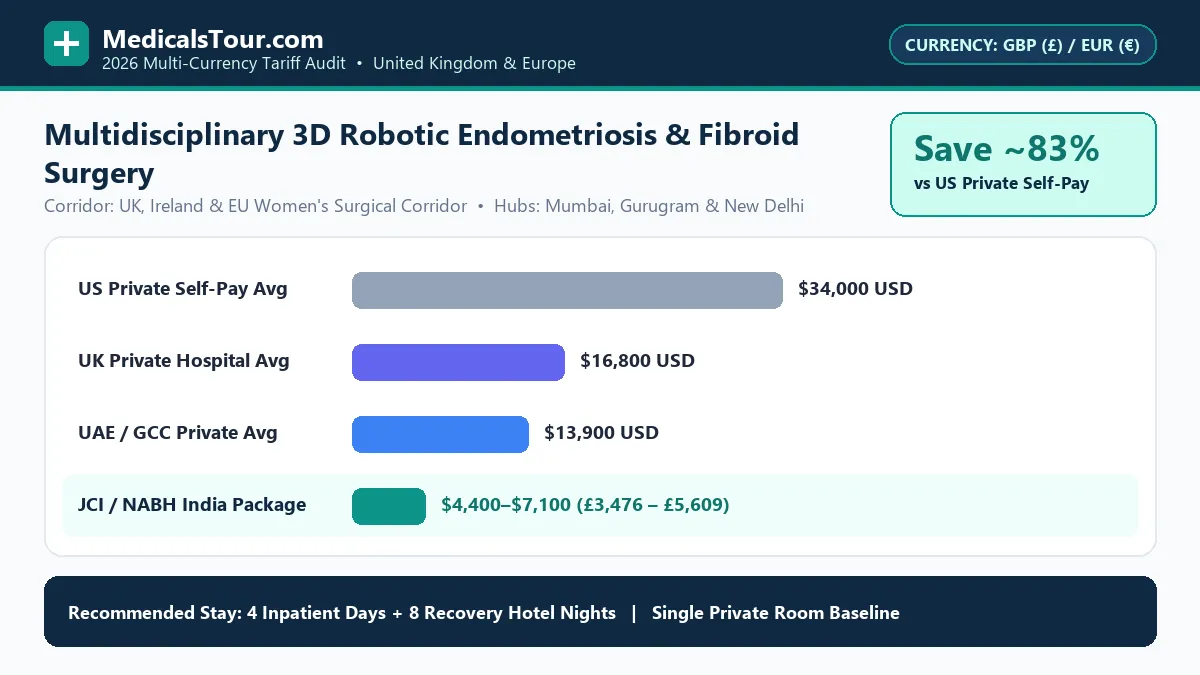
Seeking uninsured private surgery in London, Bristol, Dublin, or Amsterdam solves the calendar bottleneck, yet triggers severe co-surgeon fee multiplication. Once a lead endometriosis excision specialist brings a colorectal surgeon and an endourologist into a private theatre for four hours, self-pay hospital estimates jump from £9,500 to £18,500–£23,000 (€21,500–€26,500). By contrast, audited through Medical Tour’s 2026 women’s surgical benchmarks, JCI-accredited multidisciplinary pelvic institutes in Mumbai, Gurugram, and New Delhi complete 3D laparoscopic or Intuitive Da Vinci Xi radical excision and fertility-sparing fibroid myomectomy for $4,400 to $7,100 (£3,470 to £5,600 / €4,060 to €6,550).
Travelling eight to nine hours for pelvic surgery demands clinical rigour: distinguishing genuine cold-scissors and harmonic radical excision from superficial diathermy fulguration, verifying contained tissue extraction for large uterine fibroids, and planning a twelve-day recovery window before flying home. Here is how UK, Irish, and EU patients structure every clinical and logistical detail.
Why Radical Excision Beats Superficial Ablation—and Why Private UK & Irish Bills Spike
General gynaecology departments frequently treat peritoneal endometriosis spots with monopolar or bipolar surface ablation—burning the visible black or red surface lesion while leaving dense fibrotic disease roots infiltrating five to ten millimetres into underlying uterosacral nerves or rectal muscularis. Within six to nine months of superficial cautery, cyclical dyschezia, deep dyspareunia, and sciatic pelvic pain routinely return, leaving behind tougher scar tissue for the next surgeon.
True radical excision dissects the entire fibrotic nodule down to healthy retroperitoneal fat and muscular planes, which requires co-scrubbed colorectal and urological surgeons whenever rectosigmoid or ureteric involvement appears on pre-op imaging. In UK and Irish private hospitals, each co-surgeon bills separately alongside hourly robotic theatre fees. In Indian JCI quaternary centres, multidisciplinary co-surgeon participation is structured transparently inside Single Private Room bundles, complementing reproductive preservation pathways detailed in our Egg Freezing & Fertility Preservation Cost Guide and IVF Treatment Package Guide.
| Pelvic Procedure (Single Private Room) | UK Private (£ GBP) | Ireland / EU Private (€ EUR) | India JCI Hospital ($ USD / £ / €) |
|---|---|---|---|
| 3D Laparoscopic / Da Vinci Stage III–IV DIE Excision | £13,500 – £18,200 | €14,800 – €19,500 | $4,800 – $6,600 (£3,785 / €4,430) |
| Stage IV Bowel Endometriosis + Discoid / Segmental Resection | £17,500 – £23,500 | €18,900 – €25,500 | $5,800 – $7,100 (£4,575 / €5,350) |
| Da Vinci Multi-Layer Fibroid Myomectomy (In-Bag Extraction) | £11,800 – £16,400 | €12,500 – €17,200 | $4,400 – $6,200 (£3,470 / €4,060) |
| Robotic / Total Laparoscopic Hysterectomy + Excision | £11,200 – £15,500 | €11,900 – €16,500 | $4,500 – $6,300 (£3,550 / €4,150) |
| Dedicated Endometriosis-Protocol 3T Pelvic MRI | £850 – £1,350 | €680 – €1,050 | $190 – $280 (£150 / €175) |
Remember how inpatient bed categories govern billing across Indian corporate hospitals: booking a Standard Single Private Room—private en-suite bath, companion sofa-bed, and quiet nursing bay—keeps surgeon and anaesthesia charges at baseline, whereas upgrading to a Luxury Suite triggers a 20% to 35% room-tier multiplier.
Outpatient Items Priced Outside the Surgical Bundle
Even comprehensive gynaecological packages separate pre-admission diagnostic mapping from inpatient theatre charges. Budget an additional $380 to $740 across Days 1 and 2 for your dedicated endometriosis-protocol 3T pelvic MRI with gel contrast, anti-Mullerian hormone (AMH) and iron-panel bloodwork, pre-anaesthesia 2D echocardiography, and any pre-operative ferric carboxymaltose iron infusion if heavy fibroid bleeding has pushed haemoglobin below safe surgical thresholds. Post-discharge hormonal maintenance—such as oral dienogest (2 mg daily), a levonorgestrel intrauterine system (Mirena) inserted conveniently while you are asleep under general anaesthesia, or GnRH antagonist add-back tablets—is likewise billed transparently at Indian hospital pharmacy retail prices, often 70% cheaper than private European prescriptions.

Multidisciplinary Pelvic Theatre Teams: Rectovaginal Shaving, Ureterolysis & Discoid Resection
Operating safely inside a ”frozen pelvis“ obliterated by dense cul-de-sac adhesions requires magnified depth perception and wristed articulation. Flagship gynaecological endoscopy teams in Mumbai and Gurugram operate with either 4K 3D Karl Storz / Olympus NIR-ICG laparoscopy towers or four-arm Intuitive Da Vinci Xi surgical consoles, matching the instrument choice to lesion geometry rather than forcing one modality onto every pelvis.
Three anatomical safeguards distinguish genuine tertiary endometriosis referral teams from general obstetric-gynaecology lists:
- Autonomic Nerve-Sparing Pelvic Dissection (NSRH Principles): Aggressive blind resection of bilateral uterosacral and cardinal ligament nodules can injure the inferior hypogastric plexus and pelvic splanchnic nerves, leaving young women with long-term neurogenic bladder atony requiring self-catheterization. Senior Indian pelvic excision surgeons identify the hypogastric nerve trunks medially in the pararectal space (Okabayashi and Latzko spaces) before excising parametrial endometriosis.
- Bilateral Ureterolysis & Indocyanine Green Perfusion Checks: Extrinsic fibrotic rings around the distal ureters silently cause hydroureteronephrosis in up to 12% of severe rectovaginal cases. Co-scrubbed endourologists perform complete retroperitoneal ureterolysis, check ureteral wall vascularity with intravenous ICG fluorescence, and place temporary internal double-J ureteric stents only when deep muscularis shaving or reimplantation requires six weeks of protected drainage.
- Conservative Rectal Shaving vs Circular-Stapler Discoid Excision: Whenever sigmoid or mid-rectal wall infiltration involves less than 40% of bowel circumference and remains under 3 cm in length, colorectal co-surgeons favour rectal muscularis shaving or transanal circular-stapler discoid excision over full segmental resection—preserving rectal compliance, avoiding Low Anterior Resection Syndrome (LARS), and avoiding temporary diverting ileostomies in well over 92% of planned cases.
Managing Diaphragmatic, Appendiceal & Sciatic Endometriosis
Patients who have endured ten years of misdiagnosed cyclical chest-wall pain or right-iliac-fossa cramping should ensure their Indian excision team inspects the upper abdomen systematically at the start of laparoscopy. Roughly 8% to 15% of women with severe rectovaginal DIE harbour synchronous appendiceal endometriosis or right hemidiaphragmatic implants hidden behind the liver dome. High-volume pelvic units routinely perform prophylactic laparoscopic appendicectomy when the appendix appears thickened or tethered into the right ovarian fossa, and collaborate with thoracic or hepatobiliary colleagues when full-thickness diaphragmatic nodules require laparoscopic excision and suture repair.
Fertility-Sparing Da Vinci Myomectomy & Contained In-Bag Morcellation Standards
Large or multiple intramural, subserosal, and broad-ligament uterine fibroids (leiomyomas measuring 7 cm to 16 cm) represent the second major reason British, Afro-Caribbean UK, Irish, and continental European women fly to Mumbai and Delhi NCR. In many overstretched public clinics, women over 38 presenting with bulk pressure symptoms, urinary frequency, and severe iron-deficiency anaemia from heavy menstrual bleeding are offered open midline laparotomy or hysterectomy simply because laparoscopic suturing of deep uterine defects demands long theatre slots.
Four-arm Da Vinci Xi wristed needle drivers transform uterine reconstruction. Unlike straight-stick laparoscopy where awkward suturing angles can leave dead space inside a deep intramural myoma bed, robotic articulation allows meticulous three-layer baseball and imbricating myometrial closure using knotless barbed V-Loc sutures—restoring full uterine wall tensile strength to protect future third-trimester pregnancies against uterine rupture. Intraoperative intramyometrial vasopressin injection and temporary bulldog clamping of the uterine arteries hold blood loss low enough that homologous blood transfusion is rarely needed.
Equally non-negotiable is how excised fibroid tissue leaves the abdomen. Uncontained open power morcellation inside the peritoneal cavity is strictly avoided under modern ESGE, RCOG, and FDA safety norms due to the risk of seeding benign parasitic myomas or an occult 1-in-400 leiomyosarcoma. Accredited Indian robotic units insert every resected fibroid into a sealed, tear-resistant polyurethane contained extraction endobag (such as Espiner EcoSac or More-Cell-Safe) before performing in-bag morcellation or mini-umbilical cold-knife coring—leaving zero tissue fragments behind in the pelvis. Women managing concurrent bilateral ovarian endometriomas (”chocolate cysts“) who still plan pregnancy should also ensure baseline AMH is measured pre-operatively and confirm that the surgeon uses gentle cortical stripping plus haemostatic suturing or focal plasma/bipolar pinpoint control rather than broad ovarian hilar cautery.
Hospital Spotlight: Apollo Hospitals Navi Mumbai & Fortis Memorial Gurugram
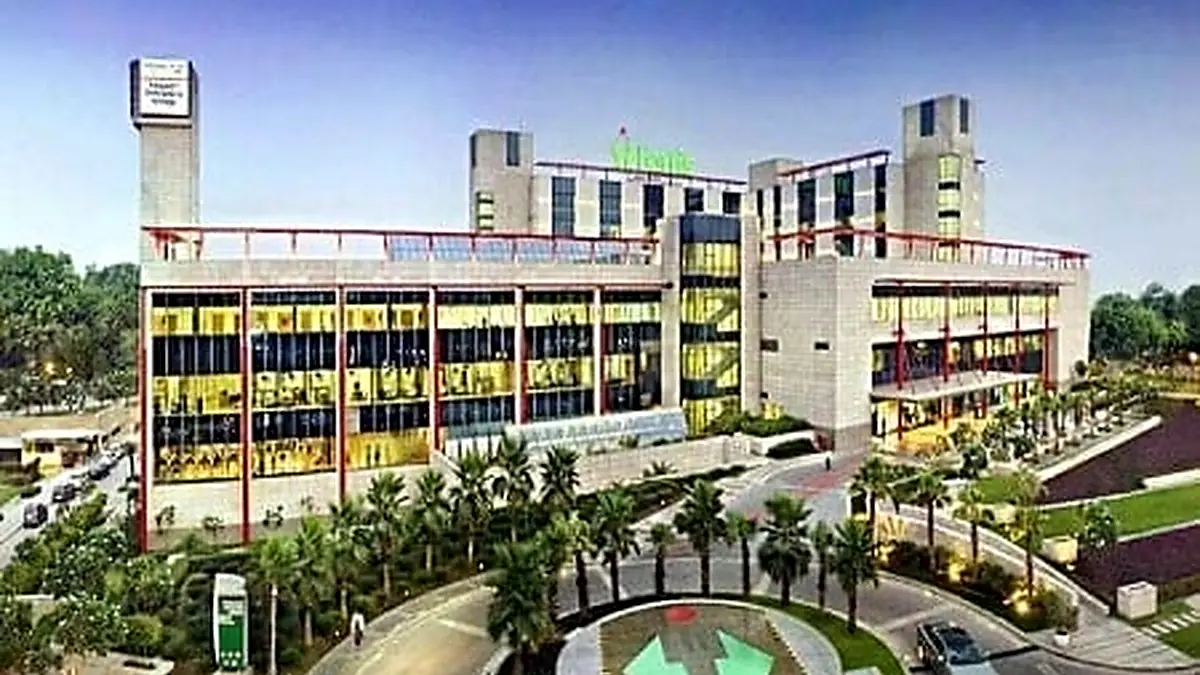
Two JCI-accredited quaternary campuses stand out for European gynaecological travelers seeking calm surroundings and deep co-specialty benches. Across Mumbai Harbour, Apollo Hospitals in CBD Belapur, Navi Mumbai offers a spacious 500-bed modern campus framed by wide palm-lined avenues and Parsik Hill greenery—noticeably quieter and less congested than inner-city South Mumbai while sitting within direct expressway reach of Mumbai International Airport Terminal 2 (served nonstop from Heathrow, Paris, Frankfurt, Amsterdam, Munich, and Zurich). Apollo Navi Mumbai runs dedicated minimal-access endometriosis and robotic myomectomy lists backed by female gynaecological surgeons, colorectal surgical oncology, and advanced 3T pelvic imaging.
In northern India’s NCR corridor, Fortis Memorial Research Institute (FMRI) in Sector 44, Gurugram sits twenty-five minutes down NH-48 from New Delhi IGI Terminal 3 and directly opposite Huda City Centre / Millennium City Centre Metro. FMRI combines fourth-generation Da Vinci Xi robotics, high-volume minimally invasive gynaecology, dedicated colorectal stapling teams, and one of North India’s cleanest post-operative surgical step-down floors. Irish patients flying from Dublin or Cork via Heathrow, Dubai, or Doha can also compare cross-specialty logistics in our Ireland HSE Waitlist to India Surgery Guide inside our International Medical Corridors Hub.
Both hospitals assign a dedicated international women’s case coordinator prior to departure so imaging uploads, female nursing shift preferences, and hotel transfers run on a single point of contact.
Choosing Recovery Hotels & Apartments for Female Solo or Companion Travel
Many European women fly accompanied by their partner, mother, or sister, though solo female medical travelers are equally routine in both Belapur Navi Mumbai and Sector 44 Gurugram. Within five to ten minutes of Apollo Navi Mumbai, gated business hotels in CBD Belapur and Vashi ($65–$105/night) provide step-free elevator lobbies, 24-hour room service for soft low-residue post-bowel-shaving meals, and hospital shuttle drop-offs. Around Fortis Memorial in Gurugram, serviced studio and 1BHK apartments in Sector 43, Sushant Lok I, and South City I ($60–$110/night) sit inside security-guarded residential blocks with kitchenettes for warm ginger or peppermint infusions, washing machines, and electronic Form-C registration.
Pre-Flight Endometriosis-Protocol 3T MRI Mapping & Anaemia Optimization
Routine transvaginal ultrasound performed in general community clinics frequently misses rectosigmoid tethering, uterosacral ligament nodularity, and diaphragmatic or sciatic endometriosis—reporting ”normal pelvis“ in women with debilitating Stage III disease unless performed by a specialist dynamic-sliding-sign sonographer. To prevent intraoperative surprises in India, complete three preparation steps before departure:
- #Enzian-Mapped 3T Pelvic MRI: If you already hold a recent European 3T pelvic MRI (ideally acquired with anti-peristaltic hyoscine butylbromide [Buscopan] and T1 fat-suppressed / T2 high-resolution oblique axial sequences), upload the raw DICOM dataset to your Indian surgeon. If you only hold a basic ultrasound, schedule a dedicated endometriosis-protocol 3T MRI with vaginal/rectal aqueous gel contrast on Day 1 in Mumbai or Gurugram ($190–$280) so the gynaecologist and colorectal surgeon map exact nodule depth together before admission.
- Pre-Operative Haemoglobin Optimization: Women with large submucosal or intramural fibroids frequently board flights with haemoglobin levels of 8.0 to 9.8 g/dL from chronic menorrhagia. Ask your home GP four weeks prior to travel whether an intravenous ferric carboxymaltose (Ferinject) infusion or oral iron-bisglycinate plus tranexamic acid during menses is appropriate; entering theatre with haemoglobin above 11.0 g/dL accelerates post-op stamina dramatically.
- Cycle Timing & Mechanical Bowel Prep: Aim to schedule pelvic surgery outside heavy menstrual flow days when pelvic vascular engorgement is lower. For confirmed Stage IV rectovaginal or sigmoid endometriosis, expect admission or outpatient instruction twenty-four hours pre-op for a low-residue liquid diet and gentle osmotic bowel preparation.
Women coupling surgical excision with future assisted reproduction should also discuss pre-operative oocyte vitrification vs post-surgical natural conception windows during their initial teleconsultation. When bilateral 5-to-7-cm ovarian endometriomas have already depressed baseline AMH below 1.2 ng/mL, fertility specialists occasionally recommend banking one batch of oocytes prior to ovarian cystectomy so healthy follicular cortex is safeguarded first.
12-Day Admission, Gas-Pain Management & Post-Op Recovery Schedule
Although uncomplicated diagnostic laparoscopy is day-case surgery in Europe, three-to-four-hour deep pelvic excision or multi-fibroid robotic reconstruction warrants three to four inpatient ward nights followed by seven to eight recovery nights in a nearby serviced apartment or four-star hotel before enduring a nine-hour long-haul cabin.
| Trip Day | Clinical Step (Robotic DIE Excision / Multi-Fibroid Myomectomy) | Location |
|---|---|---|
| Day 1 | Arrival rest; endometriosis-protocol 3T pelvic MRI, CBC/ferritin/AMH, anaesthetic echo & joint gynaecology-colorectal consult. | Outpatient + Nearby Hotel |
| Day 2 | Final surgical mapping consent; clear liquid diet & bowel prep if rectovaginal or discoid bowel shaving is planned. | Hotel / Evening Admission |
| Day 3 | Da Vinci Xi / 3D laparoscopic excision or myomectomy (2.5–4 hrs); TAP abdominal wall nerve block & ward observation. | Single Private Room |
| Days 4 – 6 | Catheter removed Day 4 morning with bladder voiding ultrasound check; early hallway walking for CO2 shoulder-pain relief; flatus & bowel opening; discharge Day 6. | Inpatient Ward to Hotel |
| Days 7 – 10 | Gentle indoor apartment walks, peppermint tea & simethicone for residual bloating, oral stool softeners, histopathology review. | Hotel / Apartment (10 min away) |
| Days 11 – 12 | Port-site waterproof glue/suture inspection, operative HD video USB handoff, hormonal suppression plan & Fit-to-Fly sign-off. | Return Flight to UK / Ireland / EU |
During Post-Op Days 4 and 5, the most common surprise for minimal-access pelvic patients is referred right-shoulder-tip discomfort caused by residual carbon dioxide insufflation gas irritating the phrenic nerve beneath the diaphragm—not surgical shoulder injury. Frequent gentle corridor walks, heat packs across the collarbone, and non-constipating multimodal analgesia (paracetamol, short-course NSAIDs if bowel anastomosis was not required, and transverse abdominis plane local blocks) resolve gas pain rapidly without heavy opioid gut stasis.
Post-Excision Pelvic Floor Physiotherapy & Central Sensitization
Years of guarding against cyclical dysmenorrhoea and rectovaginal pain leave many women with hypertonic levator ani and obturator internus muscles even after every millimetre of endometriosis has been surgically excised. Leading pelvic teams in Mumbai and Gurugram schedule a gentle inpatient consultation with a specialist women’s pelvic-health physiotherapist prior to discharge—teaching diaphragmatic down-training breaths, scar-mobilization timing once port glue sheds, and pacing milestones so patients returning to London, Dublin, or Amsterdam know when to start hands-on myofascial pelvic floor release around Week 6 post-op. Addressing central nervous system sensitization alongside anatomical disease prevents lingering pelvic floor spasm from mimicking surgical recurrence.
Irish Med 1 Tax Relief, EU Documentation & Safe Long-Haul Return Travel
Patients residing in the Republic of Ireland enjoy a valuable statutory fiscal offset that British patients often overlook: under Irish Revenue rules, qualifying non-routine surgical care performed at an accredited hospital abroad—even outside the European Union—is eligible for 20% standard-rate income tax relief via the Med 1 Health Expenses claim on your annual Form 12 return (covering hospital surgical invoices and consultant fees, though excluding flights and hotels). Ask the Indian hospital’s international billing desk to issue an itemized final receipt in English stamping paid amounts alongside surgeon registration numbers.
Before clearing your return flight—outlined in our Post-Surgery Fit-to-Fly Certificate Guide—your gynaecologist verifies comfortable spontaneous urination, normal bowel transit without fever or abdominal guarding (especially crucial if rectal shaving or discoid stapling was performed, where anastomotic surveillance through Day 8–10 is mandatory), and dry umbilical/suprapubic port incisions. Insist on carrying home an encrypted USB drive containing your unedited high-definition surgical laparoscopy/robotic video alongside printed histopathology; British BSGE centres, Irish consultants, and European IVF specialists value operative video enormously when planning future natural conception or embryo transfer.
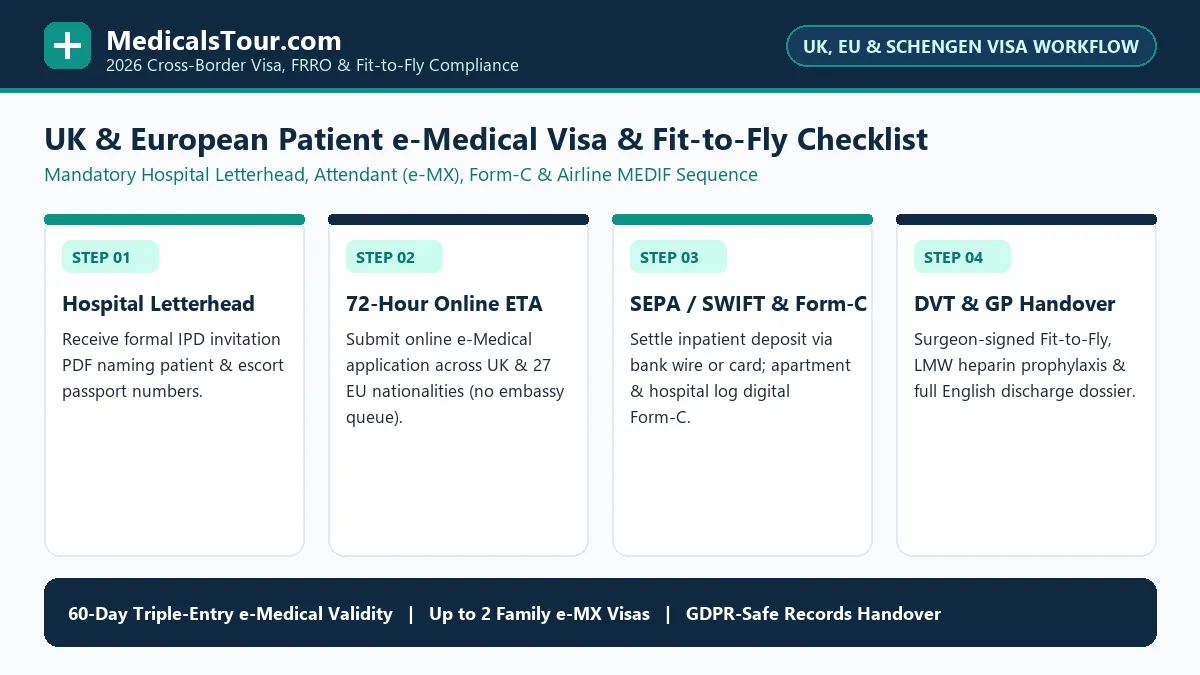
For the nine-hour flight back to London, Dublin, Amsterdam, or Frankfurt, wear Class II graduated compression stockings, complete your prescribed prophylactic enoxaparin course if surgical time exceeded three hours, choose loose high-waisted cotton travel trousers that do not press across 8-mm lower-quadrant port incisions, and book wheelchair assistance through terminal corridors. Visa paperwork is detailed in our UK & Western Citizens e-Medical Visa Checklist, SWIFT payment steps sit in our Hospital Wire Transfer & Forex Billing Guide, and full GBP/EUR trip estimates can be built inside Medical Tour’s interactive Medical Trip Budget Planner.
Once home in Britain, Ireland, or continental Europe, schedule a routine GP check around Post-Op Week 4 to review ferritin recovery and postoperative hormonal suppression tolerance (if prescribed to quiet microscopic peritoneal implants), sharing your printed synoptic histopathology sheet and surgical USB video with your local gynaecology clinic so long-term records stay unified.