Few moments terrify young parents in Muscat, Sharjah, Riyadh, Kuwait City, or Basra quite like watching a pediatric cardiologist freeze a 2D color Doppler echocardiogram frame and trace a congenital defect across a newborn’s tiny, four-centimeter heart. Whether the diagnosis arrives prenatally at 22 weeks’ gestation or after a pediatrician notices bluish lip cyanosis, rapid intercostal breathing, and poor bottle feeding in week three of life, the clock starts ticking immediately. Conditions like large perimembranous Ventricular Septal Defects (VSD), Tetralogy of Fallot (TOF), Total Anomalous Pulmonary Venous Connection (TAPVC), and Transposition of the Great Arteries (d-TGA) cannot wait twelve months on a public surgical queue without risking irreversible pulmonary vascular disease.
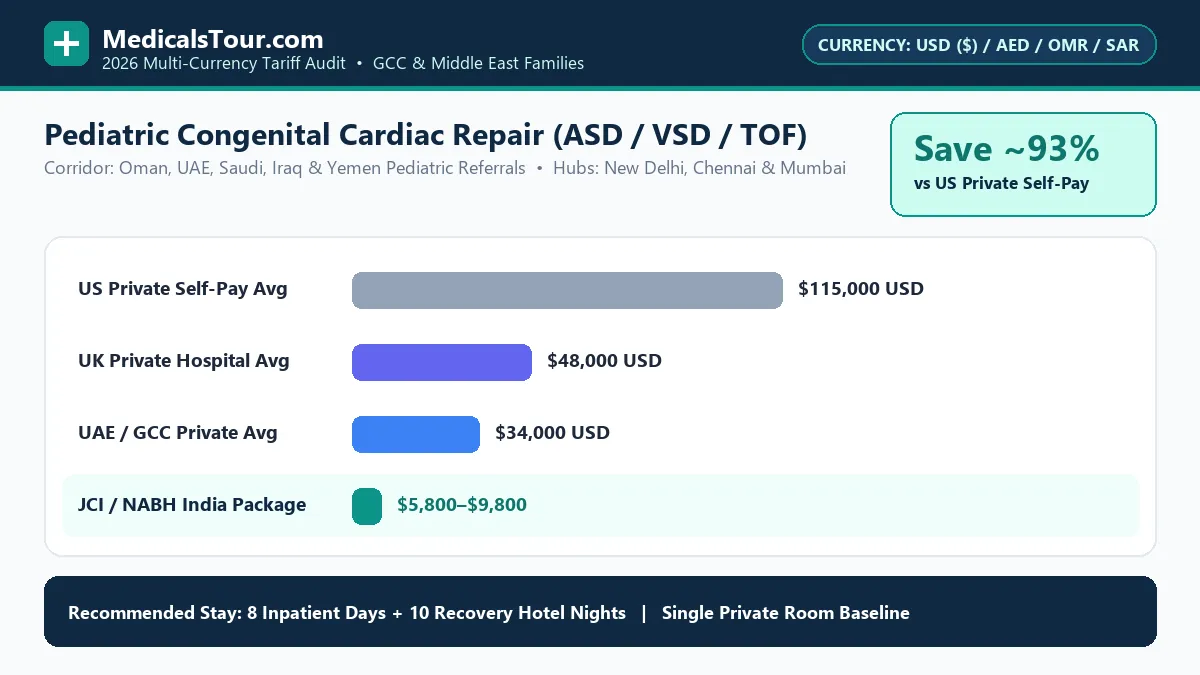
While flagship government children’s hospitals in Riyadh, Abu Dhabi, and Doha deliver excellent congenital cardiac care for citizens with immediate bed access, expatriate families on capped corporate insurance—and citizen families facing multi-month scheduling backlogs for complex neonatal or redo conduit repairs—routinely look three to four hours east across the Arabian Sea. Across Medical Tour’s 2026 audit of congenital cardiac centers in New Delhi and Chennai, dedicated high-volume Indian pediatric heart units perform 500 to 900 open-heart infant pump surgeries per hospital every year, posting >97.5% survival on standard biventricular repairs at total package tariffs between $5,800 and $11,500 USD.
This parent-focused clinical and logistical guide details exact 2026 surgery costs in USD, AED, SAR, and OMR, what separates a true dedicated Pediatric Cardiac ICU (PCICU) from an adult heart ward, how to fly safely with a cyanotic infant, and how emergency newborn passport and dual-parent visa clearances work. Whether your baby carries an Omani birth certificate from Sultan Qaboos University Hospital, an Emirati or expat family card in Sharjah, or a Ministry referral from Baghdad or Sana’a, every clinical checkpoint below is designed to eliminate guesswork before you pack your infant’s travel bag.
Why Annual Infant Pump Volume Determines Congenital Heart Survival
Adult coronary bypass surgery and neonatal congenital heart repair share almost nothing in common beyond the word “cardiac.” Operating inside the chest of a 3.2-kilogram newborn whose coronary arteries measure barely 1.0 millimeter across—and whose total circulating blood volume equals a single teacup (260 milliliters)—demands an entire ecosystem built exclusively around infants and children rather than downsized adult instruments.
In lower-volume regional hospitals performing fewer than 80 pediatric heart operations a year, congenital cases often share operating theatres, perfusionists, and intensive-care nurses with 65-year-old adult bypass patients. By contrast, flagship Indian referral centers such as Fortis Escorts Heart Institute in New Delhi and MGM Healthcare on Nelson Manickam Road in Chennai run self-contained Pediatric Cardiothoracic & Vascular Surgery (Pediatric CTVS) divisions where every single team member handles congenital physiology all day, every day:
- Dedicated Pediatric Perfusionists & Miniaturized Bypass Circuits: Low-prime neonatal oxygenators and modified ultrafiltration (MUF) reduce donor blood exposure and post-bypass whole-body fluid edema in babies weighing 2.5 to 5.0 kilograms.
- 24/7 In-House Pediatric Cardiac Anesthesiologists & Intensivists: Board-certified pediatric cardiac ICU consultants sleep inside the hospital wing—not twenty minutes away at home—managing delicate post-pump junctional ectopic tachycardia, low-cardiac-output syndrome, and peritoneal dialysis catheters in real time.
- Bedside Inhaled Nitric Oxide (iNO) & Neonatal ECMO: Babies arriving late from Oman, Yemen, Iraq, or Sudan with elevated pulmonary artery pressures face life-threatening pulmonary hypertensive crises when waking from anesthesia; immediate inline nitric oxide gas delivery at 10–20 ppm relaxes lung vessels within seconds, backed by rapid-deployment pediatric extracorporeal membrane oxygenation (ECMO) circuits.
- Valve-Sparing TOF Philosophy: Experienced Indian congenital surgeons prioritize pulmonary-valve-sparing Tetralogy of Fallot repairs whenever annulus Z-scores permit, reducing the likelihood that your child will need repeat open-chest pulmonary valve replacement in adolescence.
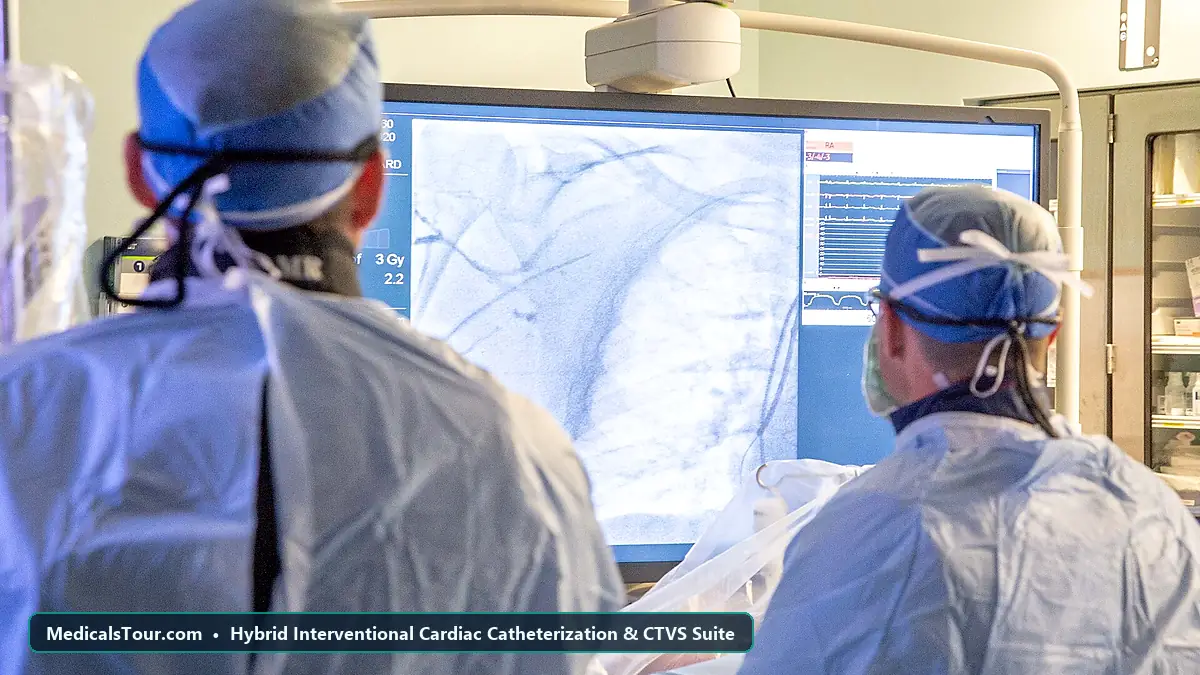
Hybrid pediatric catheterization laboratories sit right alongside the congenital operating suites at both institutions. When a borderline-small left ventricle, residual branch pulmonary artery narrowing, or complex muscular VSD benefits from a combined surgical-plus-catheter stenting approach under a single anesthetic session, interventional pediatric cardiologists and cardiac surgeons scrub in side by side without wheeling an unstable baby across separate buildings.

2026 Pediatric Heart Surgery Tariffs in USD, AED, SAR & OMR (RACHS-1 Tiers)
Congenital cardiac tariffs scale directly by surgical complexity (often grouped internationally under STAT or RACHS-1 risk categories), infant weight, prosthetic conduit needs, and expected days on mechanical ventilation inside the PCICU. All estimates below reflect Standard Single Private ward step-down bundles following dedicated PCICU stabilization.
| Congenital Heart Procedure | India JCI Package (USD) | Approx. Gulf Equivalent (AED / SAR / OMR) | Typical PCICU + Ward + Hotel Stay |
|---|---|---|---|
| Catheter ASD / PDA Device Closure (Non-Surgical) | $4,400 – $5,900 | 16,160 AED / 16,500 SAR / 1,695 OMR | 2 Hosp + 4–5 Hotel Days |
| Surgical ASD or Simple VSD Patch Repair | $5,800 – $7,500 | 21,300 AED / 21,750 SAR / 2,230 OMR | 6–7 Hosp + 7–9 Hotel Days |
| Complete Intracardiac Tetralogy of Fallot (TOF) Repair | $6,800 – $9,200 | 24,970 AED / 25,500 SAR / 2,620 OMR | 7–9 Hosp + 8–10 Hotel Days |
| Complete AV Canal Defect (CAVSD — Common in Trisomy 21) | $7,500 – $9,900 | 27,545 AED / 28,125 SAR / 2,885 OMR | 8–10 Hosp + 9–12 Hotel Days |
| Bidirectional Glenn or Extracardiac Fontan (Single Ventricle) | $7,200 – $10,400 | 26,440 AED / 27,000 SAR / 2,770 OMR | 8–11 Hosp + 10–14 Hotel Days |
| Neonatal Arterial Switch (d-TGA) or Obstructed TAPVC Repair | $8,800 – $12,800 | 32,320 AED / 33,000 SAR / 3,390 OMR | 10–14 Hosp + 10–14 Hotel Days |
| Redo Conduit Replacement (Contegra / Homograft RV-PA) | $8,500 – $11,900 | 31,220 AED / 31,875 SAR / 3,270 OMR | 8–10 Hosp + 9–11 Hotel Days |
What sits outside a standard pediatric cardiac Proforma Invoice? Ask the coordinator to specify hourly or daily add-on rates for three critical-care contingencies before signing admission forms: imported Contegra bovine jugular vein conduits ($1,400–$2,100 when anatomical pulmonary atresia requires a valved tube), extended inhaled Nitric Oxide gas hours ($250–$450/day beyond package allowance), and ECMO rescue runs if severe ventricular stun occurs. Compare structural valve and adult bypass benchmarks in our Heart Valve Replacement Cost Guide and Cardiac Surgery Cost Breakdown.
Parents comparing quotes from Muscat, Sharjah, or Riyadh should also verify whether their child’s admission falls under the Standard Single Private step-down tier rather than an Executive Pediatric Suite, since ward-room upgrades multiply surgical and perfusion professional fees by 20% to 30% without changing a single minute of sterile PCICU nursing care.
Sending Pediatric Echo Cine-Loops & Cardiac CT Angiograms from the Gulf
Before telling parents whether a child needs a one-stage biventricular repair, a temporary Blalock-Taussig-Thomas (BTT) shunt, or an interventional catheter stent, Indian pediatric cardiac surgeons need moving anatomical images—not a five-line typed summary from a clinic visit in Muscat or Jeddah.
When visiting your local pediatric cardiologist in the UAE, Oman, Saudi Arabia, Kuwait, Qatar, Bahrain, or Iraq, ask the technician to export the complete 2D + Color Doppler Echocardiogram study as raw DICOM video loops (subcostal, apical four-chamber, parasternal long/short-axis, and suprasternal aortic arch sweeps) onto a USB flash drive. A clear echocardiogram video showing exact VSD margins, tricuspid chordal attachments, coronary artery origins, and branch pulmonary artery confluence diameter (McGoon ratio / Nakata index) lets the surgical chief in Delhi or Chennai confirm operability within 24 hours.
For complex cyanotic lesions—such as Tetralogy of Fallot with suspected major aortopulmonary collateral arteries (MAPCAs), double-outlet right ventricle (DORV), or aortic arch coarctation—if your local hospital has already performed a low-dose ECG-gated Pediatric CT Cardiac Angiogram, upload that raw DICOM folder too. Never sedate an unstable infant twice unnecessarily at home just to repeat a scan: if local echo loops already establish the diagnosis, Indian centers perform ultrashort low-radiation 256/640-slice CT angiography immediately on arrival with a pediatric cardiac anesthesiologist standing right beside the scanner gantry.
Include your child’s exact naked weight in kilograms (measured within the past three days), current feeding volume in milliliters per three-hour feed, oxygen saturation in both right hand (pre-ductal) and foot (post-ductal), and any genetic screening notes (such as Down syndrome / Trisomy 21 or 22q11.2 DiGeorge microdeletion). Children with 22q11 deletion require irradiated, leukodepleted blood components during cardiopulmonary bypass to prevent transfusion-associated graft-versus-host reactions—a detail Indian blood banks prepare 24 hours ahead of surgery when alerted during pre-travel triage.
Flying Safely with a Cyanotic (‘Blue’) Baby: SpO2 Physics, MEDIF & Prostaglandin Rules
Parents of a cyanotic infant with Tetralogy of Fallot, tricuspid atresia, or transposition naturally panic when an airport pulse oximeter reads 78% to 83% SpO2 on room air. Understanding aviation physiology prevents both dangerous complacency and unnecessary air-ambulance overspending.
Commercial airliners departing Muscat (`MCT`), Dubai (`DXB`), Abu Dhabi (`AUH`), Riyadh (`RUH`), Doha (`DOH`), or Baghdad (`BGW`) pressurize their cabins to an equivalent altitude of 6,000 to 8,000 feet, where ambient oxygen partial pressure drops roughly 25%. In a stable, compensated 6-month-old TOF infant who feeds comfortably without hypercyanotic “tet spells,” commercial travel on Oman Air, Emirates, Etihad, Saudia, or Qatar Airways is routinely cleared via IATA MEDIF 48 to 72 hours pre-flight—with airline-supplied low-flow therapeutic medical oxygen (`1 to 2 L/min` via infant nasal prongs) staged on board as a safety buffer and oral propranolol carried in the mother’s diaper bag per cardiologist prescription.
Conversely, three clinical scenarios strictly prohibit commercial cabin flights and require a bed-to-bed neonatal/pediatric ICU air ambulance staffed by a pediatric transport intensivist:
- Duct-Dependent Neonates on Continuous Prostaglandin E1 (PGE1 / Alprostadil) Infusion: Newborns with d-TGA and intact septum, critical pulmonary stenosis, or hypoplastic aortic arch rely on intravenous PGE1 to keep the arterial duct open—and PGE1 can trigger sudden apnea requiring immediate endotracheal intubation.
- Infants on Mechanical Ventilation, High-Flow Nasal Cannula, or Inotropes (Milrinone / Dopamine): Requires continuous syringe-pump telemetry and blood-gas capability en route.
- Severe Uncompensated Metabolic Acidosis or Frequent Daily Hypercyanotic Spells: Needs bedside sedation, phenylephrine/fluid boluses, and sea-level cabin pressurization. Read our full Gulf-to-India Air Ambulance & Commercial Stretcher MEDIF Guide for aircraft pricing and tarmac transfer steps.
During commercial flight boarding with a cleared cardiac infant, request front-row bassinet seating well ahead of departure, dress the baby in warm breathable cotton layers (hypothermia raises systemic vascular resistance and oxygen consumption in newborns), and feed small, frequent milk volumes during ascent and descent to relieve middle-ear pressure without causing diaphragmatic stomach distension. Upon touchdown at New Delhi IGI Terminal 3 or Chennai International Airport, pre-booked hospital pediatric cardiac ambulances wait directly outside arrivals equipped with neonatal transport incubators, pulse oximeters, syringe pumps, and pediatric resuscitation kits.

Emergency Newborn Passport Issuance & Dual-Parent e-Medical Visa Workflow
When a three-week-old baby in Muscat, Dubai, Dammam, or Manama needs arterial switch or obstructed TAPVC repair within days, bureaucratic delays around birth registration are often tighter than surgical scheduling. GCC civil status departments and expatriate embassies in the Gulf maintain expedited humanitarian tracks when presented with a stamped pediatric cardiology urgency letter:
- Expedited Infant Passport: Omani Royal Oman Police civil status desks, UAE ICP/GDRFA portals, and Saudi Jawazat offices can issue emergency citizen infant passports within 24 hours upon submission of the hospital birth notification and consultant cardiac report; expatriate parents in the UAE or KSA should request emergency full-validity or urgent biometric passports at their home embassy in Abu Dhabi, Dubai, or Riyadh.
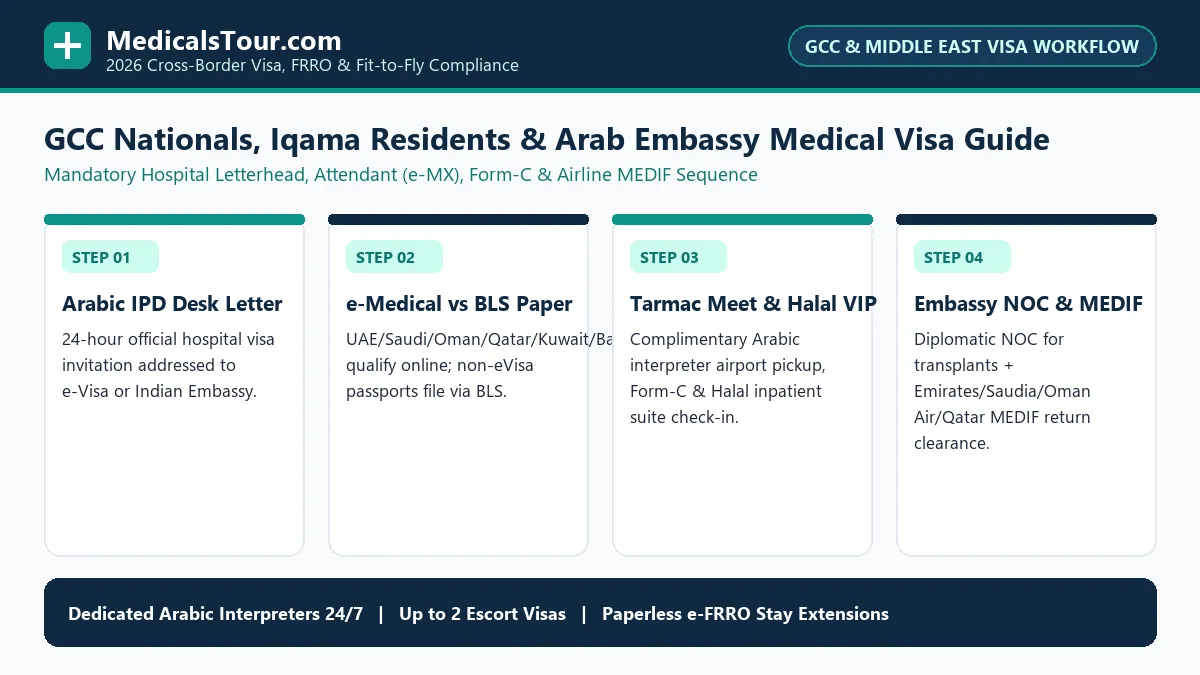
- India e-Medical Visa + Two e-Medical Attendant Visas: Citizens of Oman, the UAE, Saudi Arabia, Qatar, Kuwait, Bahrain, and most Gulf expat nationalities qualify for the online Indian e-Medical Visa (infant as primary patient) paired with two e-Medical Attendant Visas so both mother and father travel legally on medical status. Walk through exact portal upload specs in our India e-Medical Visa Guide for Oman & UAE and Medical Attendant Visa Checklist.
- Emergency Consular Escalation: Once you submit the online e-Visa application IDs, forward those reference numbers along with your receiving Indian hospital’s urgent VIL to the Indian Embassy’s Welfare/Medical Desk in Muscat, Abu Dhabi, Riyadh, or Doha—pediatric life-saving cardiac applications are routinely cleared inside 12 to 24 hours.
Expatriate residents working in the UAE, Saudi Arabia, Kuwait, or Qatar must double-check one critical Gulf re-entry detail before boarding for India: if your newborn has not yet had a UAE Residence Visa, Saudi Iqama, or Qatari QID stamped against the fresh passport, verify with GDRFA/ICP or Jawazat whether an outbound exit/re-entry newborn waiver or electronic residency endorsement is needed so the infant faces zero airline boarding blocks on the return flight home three weeks later.

Inside the PCICU & Mother-Baby Step-Down Ward: Feeding, Breast Milk & Infection Rules
Knowing the day-by-day rhythm inside an Indian Pediatric Cardiac ICU calms parental anxiety tremendously during surgery week. On admission morning (Day 1), your child completes cross-match blood typing, nasal MRSA screening, chest X-ray, and pre-anesthesia review while sleeping in a Single Private Room with both parents present. On Surgery Morning (Day 2), a pediatric cardiac anesthesiologist administers gentle oral or mask pre-medication in the parent-holding bay so the child never experiences frightening separation before falling asleep; a dedicated Arabic coordinator sends WhatsApp updates from the operating complex when bypass begins, when the heart resumes spontaneous sinus rhythm, and when chest closure finishes.
| Recovery Phase | Typical Duration | Parental Access, Breast-Milk & Clinical Milestones |
|---|---|---|
| Phase 1: Acute PCICU Stabilization | Days 2 – 4 (48–72 hrs) | 1:1 pediatric ICU nurse; scheduled sterile-gown parent visits; expressed breast milk delivered in labeled hospital-grade sterile bottles for nasogastric trophic feeds once extubated. |
| Phase 2: Pediatric High-Dependency / Private Ward | Days 5 – 8 (3–4 days) | Chest drains and pacing wires removed; mother stays 24/7 inside Single Private Room; pediatric dietitian transitions infant back to direct breast or high-calorie formula feeding. |
| Phase 3: Nearby Sanitized Hotel Convalescence | Days 9 – 18 (8–10 days) | Oral furosemide/spironolactone diuretic weaning; Day-15 wound check, ECG & final post-op color Doppler echocardiogram confirming zero residual shunt before Fit-to-Fly sign-off. |
Both Fortis Escorts in South Delhi and MGM Healthcare in Chennai provide private, curtained lactation rooms with hospital-grade electric breast pumps and temperature-logged milk refrigerators inside the PCICU complex, alongside halal room-service menus for nursing mothers. Infants recovering from Total Anomalous Pulmonary Venous Connection, Fontan circulation, or thoracic-duct-adjacent aortic arch repairs occasionally develop chylothorax (milky lymphatic chest-drain fluid), requiring specialized Medium-Chain Triglyceride (MCT) infant formula such as Monogen or Simyl MCT—stocked directly inside Indian hospital pharmacies so nutritional weight gain continues uninterrupted.
Sternal Precautions, Vaccine Timing & Cardiology Handover Back in the Gulf
Before carrying your baby onto the return flight to Muscat, Dubai, Riyadh, or Baghdad, spend twenty unhurried minutes with the pediatric cardiac discharge nurse mastering post-sternotomy handling. For six full weeks after midline sternotomy, never lift an infant under the armpits or pull the child up by both hands—always scoop one palm beneath the baby’s bottom and the other cradle-style behind the upper back and head so zero shearing force pulls across the healing breastbone.
Confirm four clinical items in your discharge folder before leaving India:
- Compounded Liquid Cardiac Syrups: Pediatric strengths of sildenafil, captopril, enalapril, furosemide, spironolactone, or aspirin often require exact milligram-per-milliliter suspension instructions; carry a 60-day supply with oral graduated 1 mL syringes and written Arabic/English dosing times.
- Infective Endocarditis Prophylaxis & Childhood Immunization Restart: Following cardiopulmonary bypass and donor blood products, live vaccines (MMR, varicella, rotavirus) are typically deferred for 3 to 6 months per pediatric cardiology guidelines, while inactivated vaccines resume roughly 4 to 6 weeks post-op—get the exact written calendar signed for your local Gulf pediatrician.
- Recorded Post-Op Echo Video: Carry the post-repair DICOM echocardiogram video loop showing intact patch closure and laminar outflow gradients so your home cardiologist has a true Day-15 baseline.
- Staged Palliation Calendar (For Single-Ventricle Babies): If your newborn underwent a Stage-1 shunt or Norwood/banding procedure, lock in the exact target weight and age window (typically 4–6 months for Bidirectional Glenn and 3–4 years for Fontan completion) alongside home pulse-oximetry red-flag thresholds (<75% SpO2 or sudden 24-hour weight jump).
Drawing on Medical Tour’s pediatric corridor benchmarks, families who budget 18 to 21 total days on the ground in Delhi or Chennai rarely face rushed re-bookings or unexpected hotel stress. Compare more regional guides on our Medical Corridors Hub and estimate flights, dual-parent visas, and apartment stays using our Medical Trip Budget Planner.