Walk past Gate Z50 at Frankfurt Airport or Terminal 2’s long-haul pier in Munich on any weekday afternoon and you will spot a quiet cohort of German and Austrian travelers carrying something weightier than holiday luggage: a padded folder of histopathology reports from Heidelberg, Charité Berlin, or AKH Wien alongside an encrypted USB stick of 3-Tesla spinal or oncological MRI sequences. On paper, residents insured through Germany’s statutory funds (Gesetzliche Krankenversicherung, or GKV) and Austria’s Österreichische Gesundheitskasse (ÖGK) enjoy universal domestic hospital coverage. On the ground in 2026, operating-theatre nursing shortages, rigid DRG catalog boundaries, and steep private liquidation multipliers push thousands of DACH households to evaluate cross-border self-pay care.
Three specific clinical bottlenecks drive this corridor. First, statutory patients diagnosed with multi-level lumbar canal stenosis, cervical radiculopathy, or degenerative spondylolisthesis routinely wait four to seven months for non-emergency neurosurgical slots across Bavaria, Baden-Württemberg, North Rhine-Westphalia, and Lower Austria—while stepping into a German Privatklinik as a Selbstzahler triggers 2.3x to 3.5x GOÄ physician multipliers totaling €19,000 to €31,000. Second, oncology patients seeking rapid molecular tumor profiling, CyberKnife radiosurgery, or off-catalog targeted combinations often run into protracted Medizinischer Dienst (MD) reimbursement refusals at home. Third, stroke and spinal-cord survivors wanting intensive daily robotic gait training alongside physician-supervised Ayurvedic convalescence quickly outgrow the standard 21-day domestic Anschlussheilbehandlung (AHB) quota.
With Lufthansa and Air India linking Frankfurt (FRA), Munich (MUC), and Vienna (VIE) nonstop to New Delhi’s Indira Gandhi International Airport (DEL) in under eight hours eastbound, accredited quaternary campuses in Delhi NCR operate as a practical, English-fluent surgical extension. Drawing on Medical Tour’s 2026 European hospital tariff audit, this guide maps realistic EUR budgets, clinical hardware parity, banking compliance, and post-operative flight protocols for DACH families.
Why GKV, PKV and ÖGK Patients Choose Self-Pay Care in Delhi NCR
Understanding when an Indian surgical trip makes financial sense requires looking honestly at German Social Code Book V (§ 13 SGB V) and Austrian ASVG cross-border statutes. Unlike elective care inside the European Economic Area, neither Techniker Krankenkasse, AOK, Barmer, DAK, nor ÖGK reimburses planned inpatient surgery outside Europe unless a rare, life-threatening domestic treatment failure is certified in advance—a threshold social courts (Sozialgerichte) almost never grant when domestic university clinics theoretically offer the procedure several months later.
Consequently, DACH patients flying to New Delhi or Gurugram fall into three distinct financial profiles:
- Statutory GKV and ÖGK Waitlist Bypassers: Working engineers, self-employed Freiberufler, Mittelstand business owners, and active retirees who refuse to spend six months on pregabalin, metamizole, or Tilidin watching leg motor strength deteriorate before an endoscopic spine decompression, artificial cervical disc, or revision joint arthroplasty—preferring a fixed €4,230–€7,270 all-inclusive bundle scheduled within ten days.
- High-Deductible PKV Policyholders, Beamte & Austrian Sonderklasse Gaps: Privately insured Germans in high-Selbstbehalt or Standardtarif contracts, German civil servants (Beamte) whose state Beihilfeverordnung caps non-EU hospital schedules at domestic GKV base rates, and Austrians without private Zusatzversicherung facing €18,000+ quotes at Wiener Privatklinik or Rudolfinerhaus. Occasionally, German PKV insurers with worldwide tariff clauses (Weltgeltung) issue voluntary pre-arrival cost-sharing commitments once shown that an Indian JCI invoice saves the insurer €25,000 against a Munich Chefarzt bill.
- Extended Neuro-Ortho and Integrative Rehab Guests: Post-stroke, traumatic-brain-injury, and post-fusion patients funding three to four weeks of one-on-one Lokomat robotic gait therapy, hydrotherapy, and NABH-accredited clinical Panchakarma after exhausting their statutory 3-week domestic Rentenversicherung or GKV rehab quota.
Before booking flights, ask your domestic orthopedist, neurologist, or oncologist for an updated German or English diagnostic summary (Arztbrief) alongside raw DICOM imaging exported directly from your radiology practice in Munich, Cologne, Frankfurt, or Vienna. Having unedited axial and sagittal T2-weighted MRI slices—rather than just a two-paragraph German radiologist letter—lets a senior Indian neurosurgeon or tumor-board chair verify surgical candidacy during a 20-minute pre-travel video consultation before you spend a single Euro on airfare. Even when your Krankenkasse contributes zero Euros toward surgery, that domestic clinical indication file anchors both your safe continuity of care and your extraordinary medical expense tax dossier back home.
2026 EUR Package Tariffs: German Privatklinik GOÄ Bills vs India
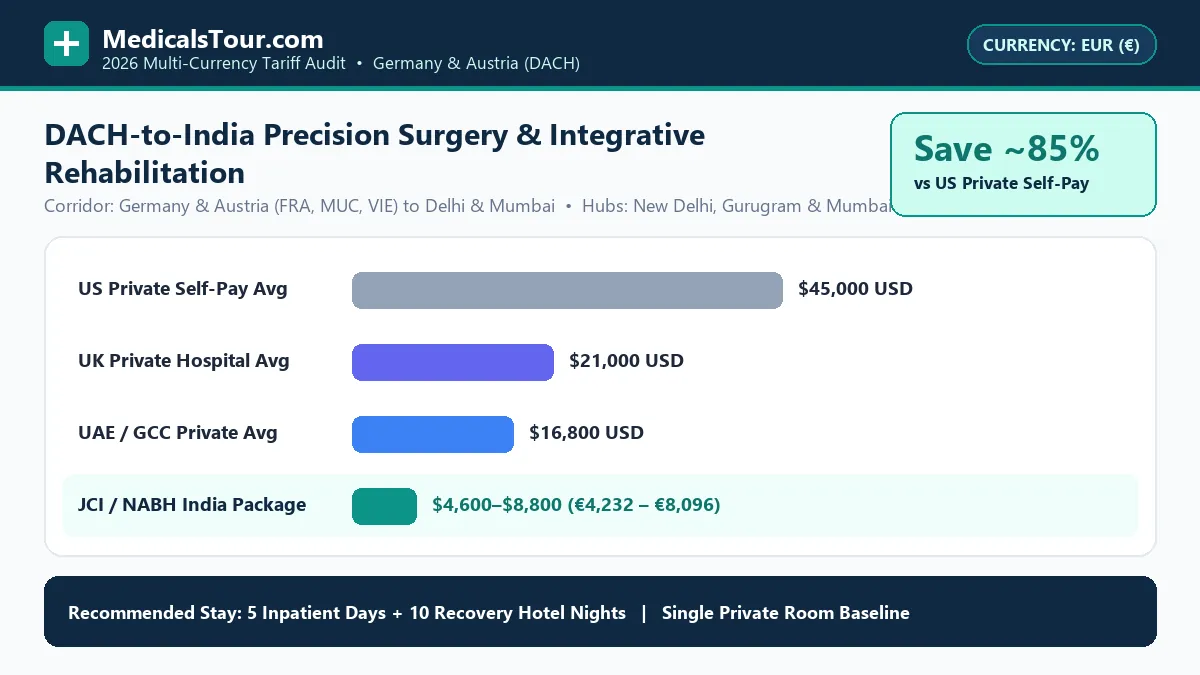
German private clinic estimates split hospital DRG base rates (Fallpauschalen), single-bed Wahlleistung Unterkunft supplements (€160–€290 per night), and separate chief-surgeon, anesthesia, radiology, and pathology invoices billed under the Gebührenordnung für Ärzte (GOÄ). By contrast, international departments in Delhi NCR quote consolidated Single Private Room surgical packages in US Dollars that convert cleanly into Euros (1 USD ≈ €0.92 EUR at 2026 interbank mid-rates).
| Procedure / Clinical Bundle | DACH Privatklinik Self-Pay (€) | Delhi NCR JCI Package (USD) | Delhi NCR Equivalent (€) |
|---|---|---|---|
| Endoscopic Spine Decompression / Microdiscectomy | €12,500 – €17,800 | $4,600 – $5,800 | €4,230 – €5,340 |
| 1-Level O-Arm Navigation TLIF Fusion / Cervical ADR | €21,000 – €31,500 | $5,800 – $7,900 | €5,340 – €7,270 |
| Robotic Radical Onco-Resection + Staging PET-CT | €24,500 – €39,000 | $5,600 – $8,800 | €5,150 – €8,100 |
| CyberKnife S7 Stereotactic Radiosurgery (3–5 Fractions) | €16,500 – €24,000 | $5,900 – $8,400 | €5,430 – €7,730 |
| Whole-Body FDG or PSMA PET-CT + NGS Tumor Panel | €3,400 – €5,800 | $850 – $1,650 | €780 – €1,520 |
| 21-Day Inpatient Robotic Neuro-Rehab + NABH Ayurveda | €14,800 – €22,500 | $3,900 – $6,400 | €3,590 – €5,890 |
Guarding Against Room-Tier Multipliers and Budgeting Hotel Nights
DACH travelers accustomed to booking a Komfort-Einzelzimmer in Düsseldorf or Salzburg must watch one Indian hospital billing rule closely: upgrading from a Standard Single Private Room to a Deluxe Suite scales surgeon, anesthetist, and operating-theatre fees upward by 20% to 35%. Keep your inpatient admission in a Standard Single Private Room—which already includes a private en-suite washroom, HEPA-filtered air handling, electric nursing bed, and an attendant sofa-bed—and allocate €85 to €145 per night for 8 to 10 post-discharge recovery nights at wheelchair-friendly hotels near Sector 38/29 Gurugram (such as Courtyard by Marriott or Crowne Plaza) or Rajendra Place and Connaught Place in central New Delhi. Also budget €290 to €580 ($315–$630) for Day-1 outpatient pre-anesthesia echocardiography, viral serology, and take-home anticoagulants outside the inpatient surgical bundle. Even after adding two Lufthansa Economy or Premium Economy fares from Frankfurt or Munich (€750–€1,480 per person), total landed expenditure typically remains 55% to 70% below a comparable German private-clinic liquidation.
Clinical Standards at Medanta Sector 38 and BLK-Max Pusa Road
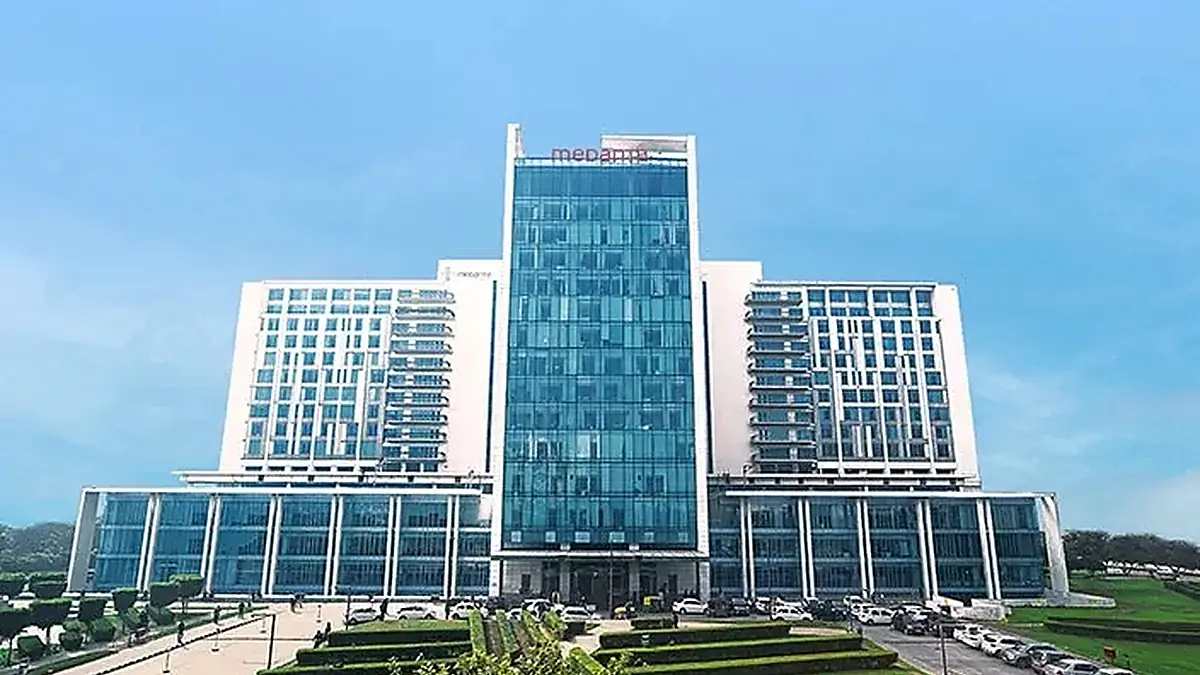
German and Austrian physicians judge foreign hospitals by nosocomial infection surveillance, sterilization validation, implant traceability, and ICU nurse-to-patient ratios rather than marble atriums. In Delhi NCR, two flagship quaternary institutions anchor the DACH oncology, neurosurgery, and spine corridor, both holding Joint Commission International (JCI) and National Accreditation Board for Hospitals (NABH) seals alongside ISO-15189 / NABL laboratory certification. You can audit how those safety frameworks compare with European KTQ and ISO hospital benchmarks in our JCI vs NABH Hospital Accreditation Guide.
Located 18 kilometers south of IGI Airport Terminal 3 along the signal-free NH-48 expressway (25 minutes outside rush hour), Medanta – The Medicity in Sector 38, Gurugram operates across a 43-acre leafy campus founded by cardiovascular surgeon Dr. Naresh Trehan. With over 1,350 beds, dedicated BrainSuite intraoperative MRI neuro-theatres, CyberKnife VSI/S7 radiosurgery, Da Vinci Xi robotic consoles, and an in-house Department of Integrative Medicine, Medanta lets a patient transition from minimally invasive thoracic or spinal surgery directly into supervised neuro-rehabilitation without changing hospital campuses.
In central New Delhi, 17 kilometers east of Terminal 3 via Upper Ridge Road, BLK-Max Super Speciality Hospital on Pusa Road runs a 650-bed tertiary facility renowned for high-volume medical, radiation, and surgical oncology, bone marrow transplantation in positive-pressure HEPA isolation rooms, and O-Arm navigated complex spine reconstruction. Upon landing at IGI Terminal 3, international patients clear dedicated e-Visa counters and meet hospital transport coordinators outside Arrival Gate 5/6 (Pillars 16–18). Clinical pharmacists on both campuses reconcile German home medication lists—matching domestic brand names such as Pantozol, Eliquis, Ass 100, L-Thyroxin, or Ramipril by active INN molecule—while certified German interpreters can be booked 72 hours prior to admission at zero extra fee. Inpatient dietitians also prepare low-spice Continental trays (steamed white fish, poached chicken breast, mashed potatoes, clear vegetable consommé, whole-grain bread, and plain yogurt) tailored to post-operative gut motility so German and Austrian patients recover comfortably without unfamiliar spice heat.
Precision Oncology, Molecular Tumor Boards and O-Arm Spine Protocols
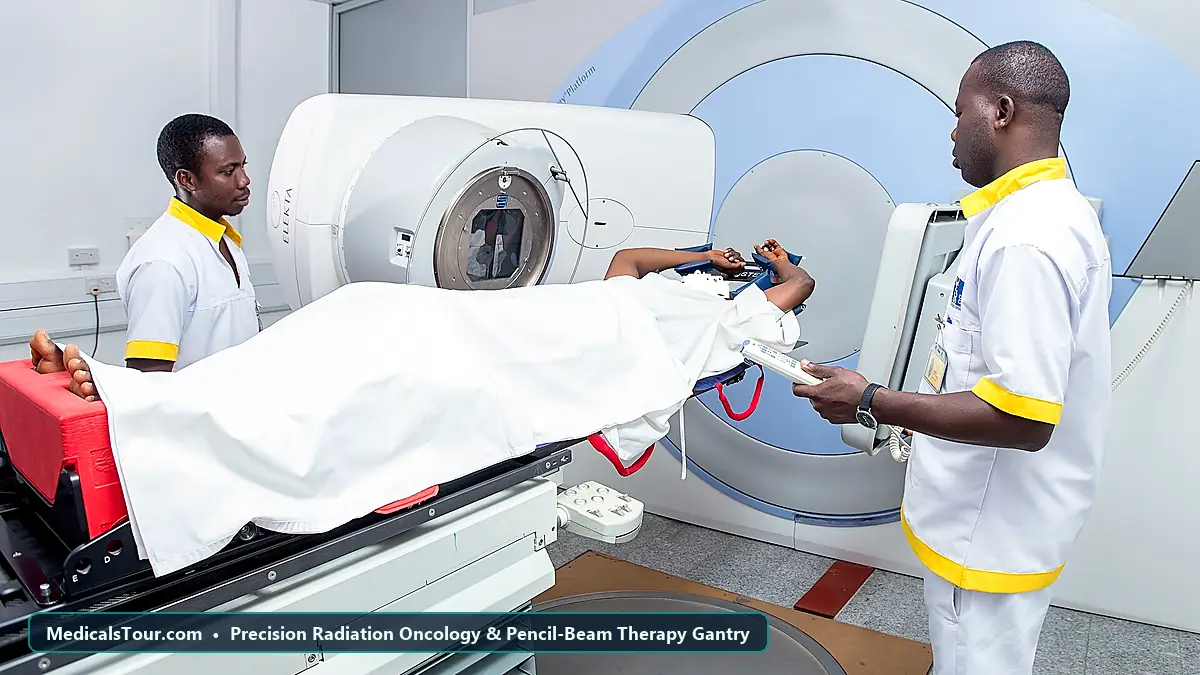
For DACH oncology patients, speed of diagnostic synthesis is frequently the decisive clinical factor. In Frankfurt, Hamburg, Munich, or Graz, booking an outpatient PSMA or FDG PET-CT, waiting for CT-guided core biopsy histology, running a 500-gene Next-Generation Sequencing (NGS) somatic tumor panel, and convening an interdisciplinary Tumorkonferenz can stretch across five to seven weeks. At BLK-Max or Medanta, international oncology coordinators compress 640-slice CT, 3T multiparametric MRI, and gallium-68 PSMA or FDG PET-CT staging into 48 hours of arrival, returning immunohistochemistry and frozen-section reports fast enough to launch Da Vinci robotic resection or custom thermoplastic-mask CyberKnife planning within the same week. Itemized radiation, surgery, and targeted systemic drug benchmarks are detailed in our PET-CT, Oncology Surgery & Radiation Cost Guide.
Implant Traceability and Pathology Handover for Follow-Up Back Home
A common question raised by orthopedists in Munich or neuro-oncologists in Vienna is whether an Indian surgical team uses unfamiliar hardware or unreadable pathology formats. Top Delhi NCR centers eliminate handover friction through strict documentation parity:
- Navigation & Microsurgical Imaging: Medtronic O-Arm 3D intraoperative cone-beam CT paired with StealthStation S8 optical navigation and Carl Zeiss KINEVO 900 robotic visualization microscopes.
- CE-Marked Spinal Implants: Medtronic, Globus Medical, DePuy Synthes, and Zimmer Biomet Mobi-C or Prestige LP cervical discs—every screw, titanium rod, and PEEK cage documented via original peel-off manufacturer LOT barcode stickers inside your English operative report.
- Endoscopic Access & Oncology Slide Kits: Full-endoscopic interlaminar discectomy incisions under 10 millimeters cut ward stays to 48–72 hours (compare hardware tiers in our Minimally Invasive Spine Surgery & Fusion Cost Breakdown), while oncology patients receive DICOM RT-Plan files on encrypted cloud links plus stained pathology slides and paraffin blocks (FFPE) for their domestic Onkologische Schwerpunktpraxis.
Before discharge, request a 20-minute joint video handover or detailed English physician-to-physician cover note addressed to your follow-up specialist in Munich, Vienna, Frankfurt, or Cologne. Including baseline pre-op versus post-op neurological motor grades (MRC 0–5 scale), intraoperative blood-loss totals, antibiotic prophylaxis dosage logs, and target INR or anti-Xa anticoagulation windows ensures your German Hausarzt or Niedergelassener Facharzt steps directly into routine stitch inspection and laboratory monitoring without repeating costly baseline imaging.
Nonstop Aviation from Frankfurt, Munich and Vienna to IGI Terminal 3
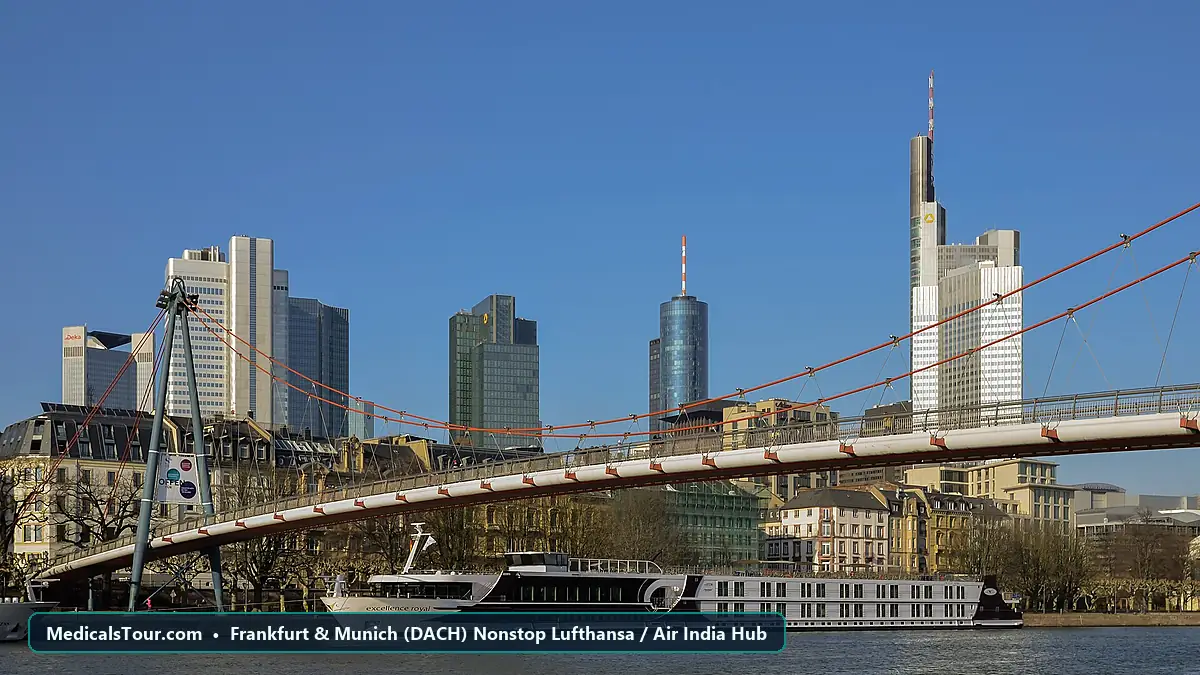
Geography strongly favors DACH travelers over North American patients: nonstop widebody flights from Central Europe to New Delhi cover roughly 6,100 kilometers in 7 hours 20 minutes to 8 hours eastbound, eliminating Gulf layovers, mid-journey wheelchair gate changes, and double cabin pressurization cycles. Travelers starting in Zurich, Salzburg, Innsbruck, Graz, Hannover, or Hamburg connect through Frankfurt or Munich onto Star Alliance widebodies with single-PNR baggage protection.
| Origin Hub | Direct Flight Numbers | Eastbound Block Time | Post-Op Cabin Recommendation |
|---|---|---|---|
| Frankfurt (FRA) → Delhi (DEL) | Lufthansa LH760 / Air India AI2026 | ~7h 35m – 7h 55m | Premium Economy bulkhead or Business lie-flat after spine/onco surgery. |
| Munich (MUC) → Delhi (DEL) | Lufthansa LH762 | ~7h 30m | Airbus A350/A380 lower cabin altitude (~6,000 ft equivalent) limits tissue edema. |
| Frankfurt / Munich → Mumbai (BOM) | Lufthansa LH756 (FRA) / LH766 (MUC) | ~7h 50m – 8h 05m | Direct access to western coastal oncology and neuro-rehab centers. |
| Vienna (VIE) → Delhi (DEL) | Air India AI2030 (3–4x weekly) | ~7h 20m | Shortest nonstop Central European corridor into IGI Terminal 3. |
Thromboembolism Prophylaxis and Lufthansa MEDIF Clearance
After spinal fusion, pelvic onco-surgery, or craniotomy, airline medical desks enforce strict post-operative return windows—typically 7 to 10 days after uncomplicated endoscopic or laparoscopic procedures and 10 to 14 days after instrumented fusion or thoraco-abdominal resection. If a patient requires a cabin stretcher, therapeutic oxygen, or cannot sit upright for takeoff, Lufthansa’s Medical Operation Center (MOC) requires an IATA MEDIF form submitted 72 hours pre-flight. Standard ambulatory patients using free airport wheelchair assistance (WCHR or WCHS) wear fitted German Class II thigh-length compression stockings (Kompressionsstrümpfe Klasse II), walk or flex ankle pumps hourly, drink 250 ml of water every two hours, and carry a signed Fit-to-Fly Medical Certificate alongside prescribed Enoxaparin (Clexane) pre-filled syringes in cabin baggage. Austrian travelers landing at Vienna International Airport (Schwechat) or transferring via Frankfurt onto ÖBB Railjet trains toward Linz, Graz, or Salzburg should also pre-book PRM mobility assistance 48 hours ahead so heavy checked suitcases are handled from the baggage carousel straight to the rail platform.
NABH-Certified Anschlussheilbehandlung and Clinical Ayurveda Rehab
Germany and Austria possess Europe’s strongest medical tradition of structured post-acute convalescence (Kur and Anschlussheilbehandlung), which explains why DACH patients represent one of the largest European cohorts combining high-tech Indian surgery with accredited integrative rehabilitation. The critical safety boundary emphasized across Medical Tour’s European clinical advisories is separating unregulated tourist beach resorts in Goa or Kerala from NABH-accredited Ayurvedic and neuro-rehabilitation hospitals.
Immediately following spinal decompression, joint replacement, or oncological surgery in Gurugram or New Delhi, surgical incision surveillance, DVT monitoring, and suture or staple removal belong strictly under your operating surgeon and hospital physiotherapists for the first 10 to 14 days. Once your surgeon confirms complete wound epithelialization, afebrile recovery, and normalizing C-reactive protein (CRP) levels, patients seeking extended functional recovery choose between two medically governed pathways:
- In-Campus Robotic Neuro-Ortho Rehab (Gurugram & Delhi): Daily three-to-four-hour intensive blocks combining Hocoma Lokomat robotic exoskeleton gait training, Armeo upper-limb robotics, functional electrical stimulation, dysphagia speech therapy, and hydrotherapy pools inside Medanta or specialized NCR rehabilitation wings for €140 to €230 per day—delivering roughly triple the one-on-one therapist contact minutes typical of understaffed domestic rehab clinics.
- Physician-Cleared NABH Clinical Panchakarma: Transferring under an Indian e-Medical or dedicated e-Ayush visa to an NABH-accredited clinical facility where university-qualified BAMS Ayurvedic physicians coordinate gentle anti-inflammatory external therapies, sleep restoration, and oncology-safe nutrition alongside allopathic blood-pressure, INR, and electrolyte checks—never discontinuing prescribed anticoagulants, anticonvulsants, or targeted cancer therapies.
Compare full three-week convalescence itineraries in our European NABH Ayurveda & Robotic Neuro-Rehab Corridor Guide or review neighboring country routes on the International Medical Corridors Hub. Families traveling between October and March also gain a substantial meteorological advantage: convalescing and practicing outdoor gait training in pleasant 22°C–26°C daytime dry warmth rather than navigating icy pavements and damp grey winter conditions across Germany and Austria on forearm crutches. Every inpatient rehab guest departs with a structured functional independence score (FIM), goniometric range-of-motion log, and English physiotherapy handover notes ready for their domestic Hausarzt or outpatient Krankengymnastik practice.
e-Medical Visa for German and Austrian Passports, SWIFT Rules and § 33 EStG
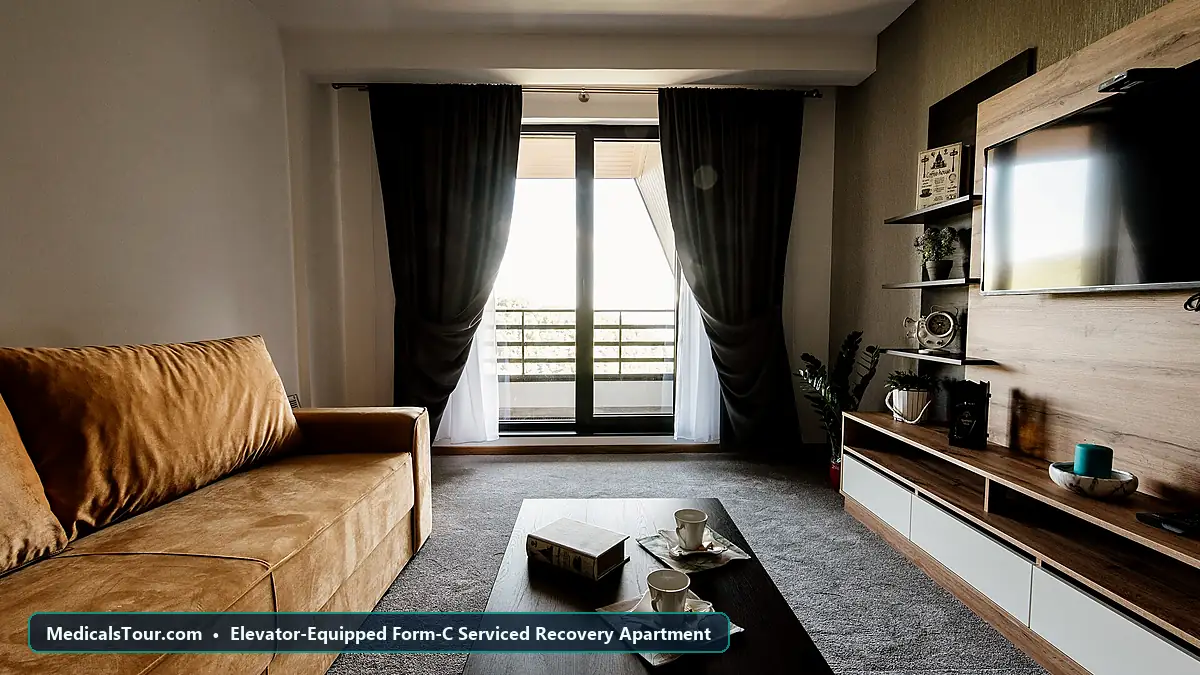
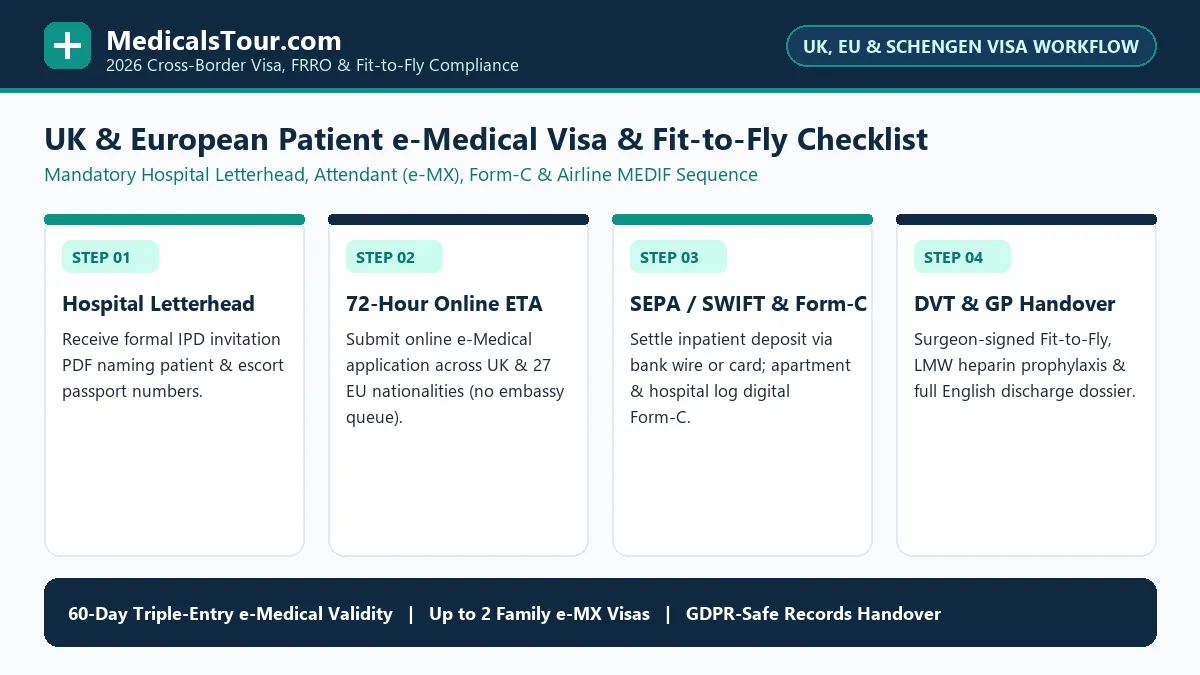
German (Reisepass) and Austrian passport holders qualify online for India’s electronic e-Medical Visa (triple-entry, 60-day validity from arrival) and up to two e-Medical Attendant Visas for accompanying family members via indianvisaonline.gov.in. Electronic approval typically arrives within 48 to 72 hours after uploading a passport bio-page scan, white-background photo, and an official Visa Invitation Letter typed on Medanta or BLK-Max letterhead bearing the patient’s passport number and provisional admission date. If a multi-cycle radiation or neuro-rehab stay extends beyond 60 days—or if you rent a serviced apartment in Gurugram or New Delhi—ensure your property files digital Bureau of Immigration Form-C registration as detailed in our FRRO Medical Visa Extension & Registration Guide.
SWIFT Wire Compliance, AWV €50,000 Thresholds and Tax Deductibility
Because India lies outside the Single Euro Payments Area (SEPA), remitting funds from Deutsche Bank, Commerzbank, Sparkasse, DKB, Raiffeisen, or Erste Bank requires an international SWIFT MT103 wire to the hospital’s beneficiary account in USD or EUR. Keep three 2026 financial rules in focus:
- Bundesbank AWV Reporting Threshold (€50,000): Following Germany’s increase of the cross-border statistical reporting threshold under § 67 AWV from €12,500 to €50,000, standard spine, CyberKnife, and surgical oncology deposits (€4,200–€15,000) clear without filing a separate Deutsche Bundesbank Z4 report—only single transfers above €50,000 trigger monthly statistical reporting.
- OUR Fee Coding & Value-Date Buffer: Select the OUR charge instruction so intermediary correspondent banks do not deduct $25–$40 from your hospital deposit, quote your Passport and Hospital UHID in the reference field, and wire funds 4 business days before surgery; review full banking protocols in our Hospital Forex, SWIFT Wire & Billing Guide.
- German § 33 EStG & Austrian § 34 EStG Tax Relief: Self-paid surgical, hospital, and medically necessary patient flight costs abroad can qualify as außergewöhnliche Belastungen above your income-tiered reasonable burden threshold (zumutbare Belastung) when backed by itemized invoices, SWIFT receipts, and—strictly prior to departure if claiming inpatient rehab or Ayurveda—an amtsärztliches Attest (public health medical officer certificate). Model your full EUR cashflow in our Medical Trip Total Budget Planner.