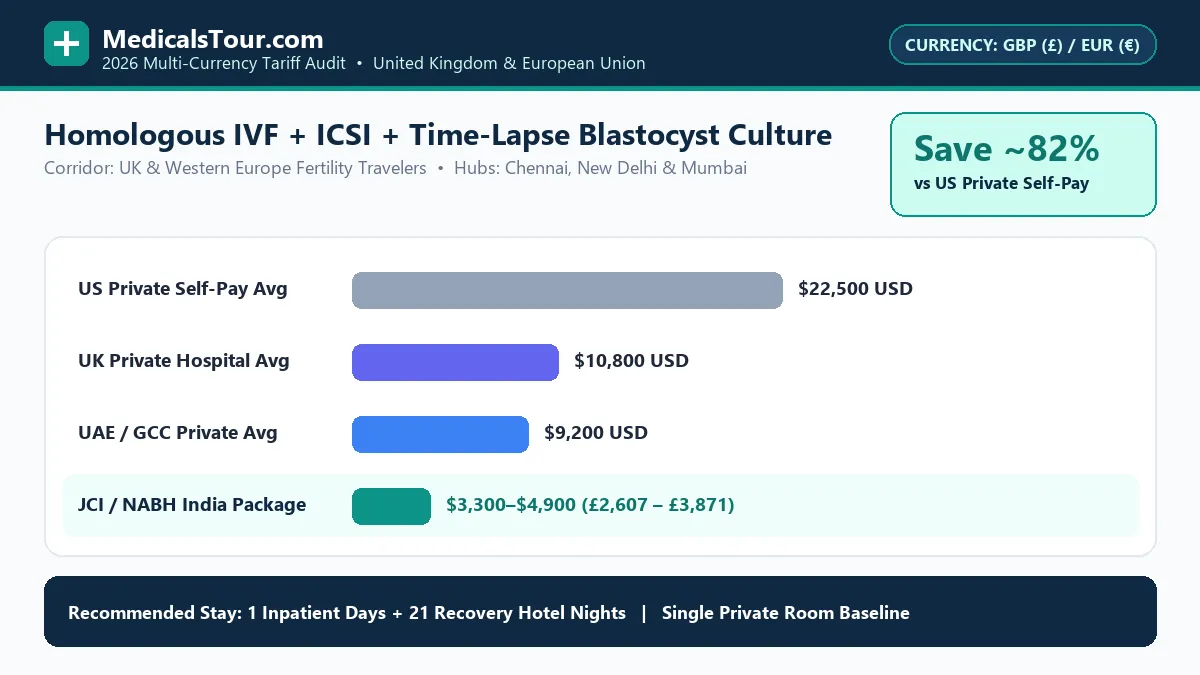
Open a self-pay fertility brochure on London’s Harley Street, in Manchester, or at a private reproductive clinic in Alicante or Athens, and the headline figure rarely tells the whole financial story. A base cycle advertised at £3,950 or €4,600 routinely excludes recombinant follicle-stimulating hormone (rFSH) pens, intracytoplasmic sperm injection (ICSI), continuous time-lapse EmbryoScope culture, blastocyst vitrification straws, and preimplantation genetic testing for aneuploidy (PGT-A). Once serial estradiol blood monitoring, anaesthetist sedation fees, HFEA or regional registry levies, and private pharmacy invoices settle, British and Western European couples regularly wire £9,800 to £13,200 (€11,400 to €15,300) for a single homologous attempt—often after losing eighteen months on restricted NHS Integrated Care Board (ICB) or statutory European waiting lists where maternal ovarian reserve quietly declines.
That compounding sticker shock explains why married couples from the United Kingdom, Ireland, France, Germany, and the Netherlands increasingly look beyond Mediterranean clinics toward JCI- and NABH-accredited tertiary hospital fertility units in Chennai, New Delhi, and Mumbai. Inside India’s flagship hospital embryology suites, an all-inclusive homologous IVF-ICSI cycle with recombinant gonadotropins and extended blastocyst culture lands between $3,300 and $4,900 (£2,600 to £3,860 / €3,050 to €4,520), audited across Medical Tour’s 2026 international fertility tariff benchmarks.
India is not, however, an open-ended reproductive marketplace. Since Parliament enacted the Assisted Reproductive Technology (Regulation) Act, 2021 alongside the Surrogacy (Regulation) Act, 2021, Indian embryology laboratories operate under some of the tightest statutory guardrails anywhere in Asia. Understanding exactly which foreign couples qualify under Indian law, when a Mediterranean donor clinic remains the right legal choice instead, and how a twenty-one-day stimulation, oocyte retrieval, and blastocyst transfer calendar fits around remote European work schedules separates a smooth clinical journey from a costly administrative dead end.
Why Advertised European IVF Quotes Double Once Lab Add-Ons Are Itemized
Private fertility billing across Western Europe relies heavily on modular unbundling. A couple booking an initial consult in London, Dublin, Paris, or Madrid is handed a base clinical tariff covering four transvaginal follicular scans and surgical egg collection, while almost every laboratory intervention that protects cumulative live-birth rates in women over 35 is priced as an optional extra. High-purity Gonal-F, Puregon, or Menopur stimulation regimens alone add £1,250 to £2,100 in UK private pharmacies depending on anti-Mullerian hormone (AMH) levels, antral follicle count (AFC), and body mass index.
Even classic intra-European fertility hubs in Spain, Greece, and Czechia—originally built around anonymous donor-egg demand—now price comprehensive own-egg ICSI plus PGT-A cycles between €7,800 and €10,400 once genetics couriers and vitrification fees are added. In tertiary Indian hospital departments, international coordinators consolidate follicular tracking, day-care theatre propofol anaesthesia, ICSI micromanipulation, Day-5 blastocyst culture, and initial cryostorage into structured written estimates. You can cross-check baseline tariffs in our Chennai IVF Treatment Package Breakdown and PGT-A Genetic Embryo Screening Cost Guide before requesting a personalized hospital Proforma Invoice.
| Fertility Line Item (Homologous Self-Cycle) | UK Private (£ GBP) | Spain / Czechia (€ EUR) | India JCI/NABH ($ USD / £ / €) |
|---|---|---|---|
| Base IVF + ICSI + Follicular Scans | £5,400 – £6,900 | €4,900 – €6,400 | $2,350 – $3,100 (£1,850 / €2,170) |
| Recombinant Gonadotropins (Gonal-F / Cetrotide) | £1,250 – £2,100 | €1,100 – €1,750 | $750 – $1,150 (£590 / €690) |
| Time-Lapse EmbryoScope+ Culture (to Day 5) | £650 – £950 | €500 – €750 | Included or $220 – $350 (£175 / €205) |
| PGT-A NGS Biopsy (up to 4–5 Blastocysts) | £2,600 – £3,400 | €2,100 – €2,850 | $1,250 – $1,850 (£985 / €1,155) |
| Blastocyst Vitrification + 1-Year Liquid N2 Storage | £700 – £1,050 | €550 – €850 | $320 – $480 (£250 / €295) |
| Complete Homologous Cycle + Meds (No PGT-A) | £8,000 – £10,900 | €6,550 – €9,000 | $3,300 – $4,900 (£2,600 – £3,860) |
Even after factoring in two economy return fares from London Heathrow, Paris Charles de Gaulle, or Frankfurt plus twenty-one nights in an elevator-equipped serviced apartment, self-funding European couples routinely retain £4,200 to £6,800 in net household savings—frequently enough to fund a second stimulation batch or frozen transfer without taking on high-interest medical credit.

India’s ART Regulation Act 2021: Strict Eligibility Rules Foreign Couples Must Pass
Before wiring a single pound or euro, European travelers must verify their legal standing under India’s Assisted Reproductive Technology (Regulation) Act, 2021. Unlike clinics in Alicante, Thessaloniki, or Copenhagen that market donor-oocyte or donor-sperm cycles to single women and unmarried partners, Indian National ART Registry rules enforce non-negotiable statutory boundaries for international patients.
- Legally Married Heterosexual Couples Only: Foreign patients seeking IVF or ICSI in India must present an official civil marriage certificate alongside joint Medical Visas. If your marriage certificate is issued in French, German, Dutch, Spanish, or Italian rather than English, carry a certified English translation bearing a Hague Apostille stamp so the hospital’s ART compliance committee can upload it cleanly. Single women and same-sex couples are not eligible for fertility treatment in India and are far better served by regulated clinics in Spain, Denmark, or Portugal.
- Hard Statutory Age Ceilings: Under Section 21(g) of the Indian ART Act, the female partner must be between 21 and 50 years old, and the male partner must be between 21 and 55 years old on the date stimulation begins. Hospital legal desks verify passport dates of birth before issuing a Visa Invitation Letter; no private medical director has discretion to waive these statutory cutoffs.
- Homologous (Own-Gamete) Exclusivity: Commercial surrogacy for foreign nationals has been barred in India since 2015, and the 2021 ART rules tightly cap domestic oocyte donation (permitting an Indian donor to donate only once in her lifetime for up to seven retrieved oocytes), effectively eliminating commercial donor egg banks for non-resident foreigners. India is therefore purpose-built for homologous cycles using the wife’s own eggs and the husband’s sperm—including microscopic testicular sperm extraction (micro-TESE) or TESA for severe male-factor azoospermia—as well as fertility preservation covered in our Egg Freezing & Fertility Preservation Cost Guide.
- Mandatory On-Site NABL Viral & Counselling Clearance: Both spouses complete fresh blood screening in India on Day 1 or Day 2 for HIV-1/2, Hepatitis B surface antigen, Hepatitis C antibody, syphilis (VDRL), and rubella immunity, plus independent informed-consent documentation prior to starting gonadotropins.
Confirming these four legal checkpoints during an initial video review prevents wasted airfare and guarantees full regulatory protection throughout embryology storage.
Inside NABL & CAP-Benchmarked Embryology Labs: VOC Filtration, ICSI & PGT-A
Clinical implantation rates per transferred blastocyst depend far more on cleanroom engineering inside the embryology suite than on lobby marble outside. Preimplantation human embryos lack protective epithelial barriers and are acutely sensitive to volatile organic compounds (VOCs) released by urban exhaust, cleaning alcohols, and laboratory plastics. Flagship hospital fertility wings in Chennai, New Delhi, and Mumbai isolate their culture rooms behind positive-pressure airlocks equipped with terminal HEPA H14 particulate filters and potassium-permanganate activated-carbon scrubbers that hold ambient VOC readings below 0.2 parts per million.
Rather than opening conventional box-incubator doors each morning to place dishes onto an external heated microscope stage—which exposes fragile embryos to pH shifts and thermal shock—leading Indian departments culture fertilized zygotes inside closed Vitrolife EmbryoScope+ or Geri time-lapse benchtop systems. Integrated Hoffman modulation cameras capture seven-plane images every ten minutes under low-oxygen tension (5% O2, 6% CO2, 89% N2). Senior clinical embryologists audit continuous morphokinetic division curves to rule out reverse cleavage, multinucleation, or delayed cavitation without ever removing the dish from gas equilibrium.
When male partners present with teratozoospermia or an elevated sperm DNA fragmentation index (DFI above 25% after failed European cycles), Indian hospital andrology labs deploy microfluidic sperm sorting chips (such as ZyMot) that select motile, chromatin-intact spermatozoa across microporous membranes without reactive-oxygen-species damage from high-G centrifugation. Selected sperm are injected via micromanipulator ICSI or hyaluronan-binding PICSI. Couples electing chromosomal screening due to maternal age over 37, recurrent miscarriage, or repeated implantation failure undergo laser-assisted trophectoderm biopsy on Day 5 or Day 6: five to seven future-placental cells are sequenced via high-resolution next-generation sequencing (NGS), while each blastocyst is flash-cooled using open-system Kitazato Cryotop vitrification with post-thaw survival consistently exceeding 97%. Under India’s strict Pre-Conception and Pre-Natal Diagnostic Techniques (PCPNDT) Act, genetics reports classify embryos solely as euploid, aneuploid, or mosaic and never disclose fetal sex.

Comparing MGM Healthcare Chennai and Max Saket New Delhi for International Fertility
Choosing between southern and northern India typically hinges on nonstop aviation convenience from your home European airport, seasonal weather, and whether complex male reproductive microsurgery is simultaneously needed. In Tamil Nadu, MGM Healthcare on Nelson Manickam Road in Chennai operates an ultra-clean USGBC LEED Platinum quaternary campus whose hospital-wide air-purification architecture aligns directly with low-VOC reproductive embryology. Chennai has anchored South India’s clinical embryology training and micro-TESE urological microsurgery talent for over thirty years; Lufthansa flies nonstop from Frankfurt into Chennai International Airport (MAA), British Airways runs direct London Heathrow service, and winter temperatures between November and February hover around a mild, sunny 26°C to 29°C.
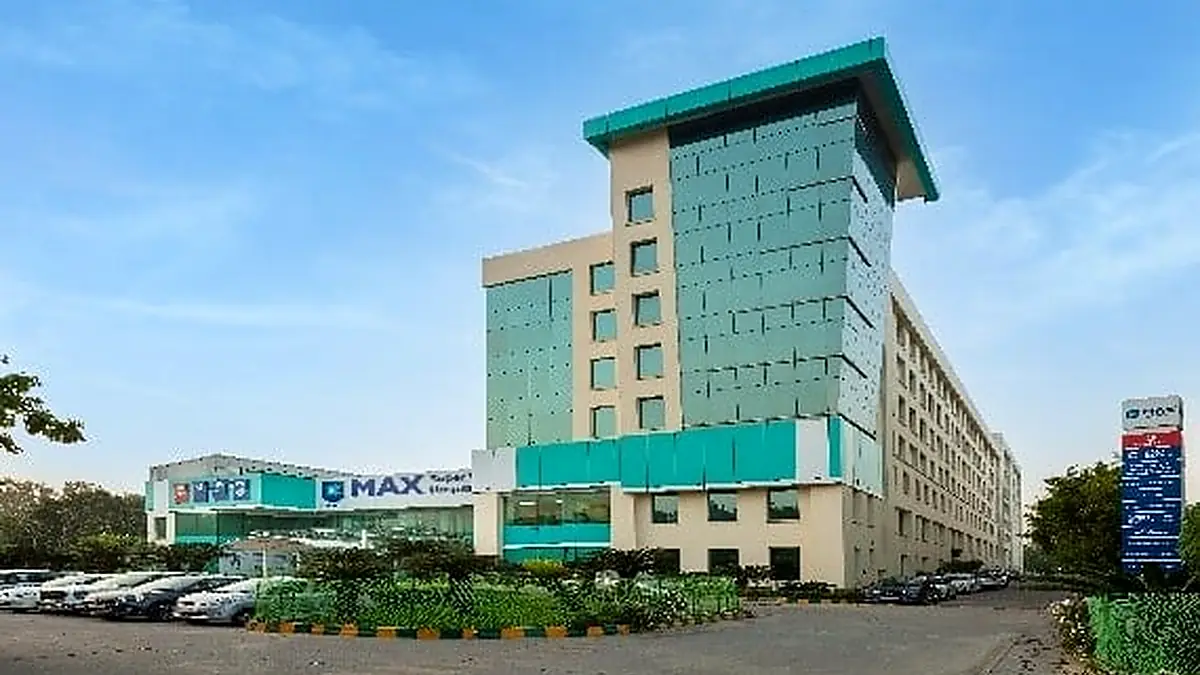
In the national capital, Max Super Speciality Hospital, Saket in South Delhi sits roughly twenty-five minutes off Indira Gandhi International Airport (DEL Terminal 3)—India’s busiest European widebody hub with nonstop daily arrivals from London Heathrow, Birmingham, Paris CDG, Frankfurt, Munich, Amsterdam, Zurich, Milan, Rome, Copenhagen, Helsinki, and Warsaw. Because follicular monitoring and transvaginal oocyte pick-up are outpatient and 4-hour day-care procedures rather than multi-night inpatient stays, Max Saket’s green, walkable Press Enclave district opposite Select CITYWALK gives British, French, and German couples relaxed access to artisan bakeries, supermarkets, and quiet parks in Panchsheel Park and Greater Kailash between morning scan appointments.
Crucially, both hospitals embed their IVF suites inside full quaternary medical centres backed by 24-hour intensive care, interventional radiology, laparoscopic gynaecology, and NABL blood banks. Should a patient with high-AMH polycystic ovary syndrome (PCOS) or concurrent deep endometriosis require acute fluid management or pre-IVF hysteroscopic septum/polyp resection, full multidisciplinary support sits one elevator ride away—unlike standalone retail IVF clinics.
The 21-Day Ovarian Stimulation, Oocyte Pick-Up & Transfer Calendar
Synchronizing flight dates with Menstrual Cycle Day 1 or Day 2 keeps apartment bookings tight and predictable. During a video consultation four to six weeks prior to departure, your Indian reproductive specialist audits your baseline Day-2 FSH/LH/estradiol, AMH, thyroid panel (targeting TSH below 2.5 mIU/L), vitamin D, saline sonohysterogram or 3D uterine scan, and semen parameters. For women with irregular cycle lengths, doctors frequently coordinate a 10-to-14-day oral contraceptive or luteal estradiol priming window with your home GP so Day 1 withdrawal bleeding lands within forty-eight hours of arrival in India.
| Cycle Window | Clinical Milestone in Chennai / New Delhi | Partner Presence Required |
|---|---|---|
| Cycle Days 1 – 2 | Arrival, baseline transvaginal AFC scan, serum E2/P4, NABL viral serology & ART consent; begin evening rFSH/hMG pens. | Wife (Husband may fly in later) |
| Cycle Days 5 – 10 | Alternate-day 20-min morning follicular ultrasounds; GnRH antagonist (Cetrotide/Orgalutran) added around Day 6. | Wife (remote work friendly) |
| Cycle Days 11 – 12 | Lead follicles reach 18–20 mm; dual trigger or OHSS-safe GnRH agonist (Lupride) administered at exact timed hour. | Both spouses on ground by Day 11 |
| Cycle Day 14 (35–36h post-trigger) | Ultrasound-guided transvaginal oocyte retrieval under 20-min propofol TIVA sedation; fresh sperm prep & ICSI. | Both spouses (4-hr day-care) |
| Cycle Days 15 – 18 | Closed EmbryoScope culture to Day-5 blastocyst; daily Embryologist updates; vaginal/IM progesterone initiated if fresh transfer. | Rest in serviced apartment |
| Cycle Day 19 | Ultrasound-guided single/double blastocyst transfer OR trophectoderm PGT-A biopsy + Cryotop freeze-all. | Wife (Husband optional post-Day 15) |
| Cycle Days 21 – 22 | 90-day luteal pharmacy pack, cold-chain customs letter & Fit-to-Fly note; serum beta-hCG test 10 days later back home. | Return flight to UK / Europe |
Two practical scheduling adaptations make this 21-day timetable far easier for working European couples. First, if the husband has limited annual leave in London, Dublin, or Zurich, the wife can fly out on Day 1 accompanied by her mother or sister—or work remotely from a serviced apartment—while the husband flies in from Day 10 to Day 15 (five nights total) to complete statutory bloodwork, sign ART registry forms, and provide the fresh sample on retrieval morning. Second, whenever ovarian stimulation produces more than 15 follicles, serum progesterone rises prematurely above 1.5 ng/mL, or PGT-A NGS chromosomal sequencing is requested (requiring 10 to 14 days for genetic reporting), doctors strongly favour a freeze-all segmented cycle. Using a GnRH agonist trigger eliminates severe OHSS risk, and the wife returns six to eight weeks later for an easy 7-to-8-day hormonally prepared frozen embryo transfer (FET) costing roughly $950 to $1,350 (£750 to £1,065).

e-Medical Visas, Cold-Chain Hormone Pens & Three-Week Serviced Apartment Living
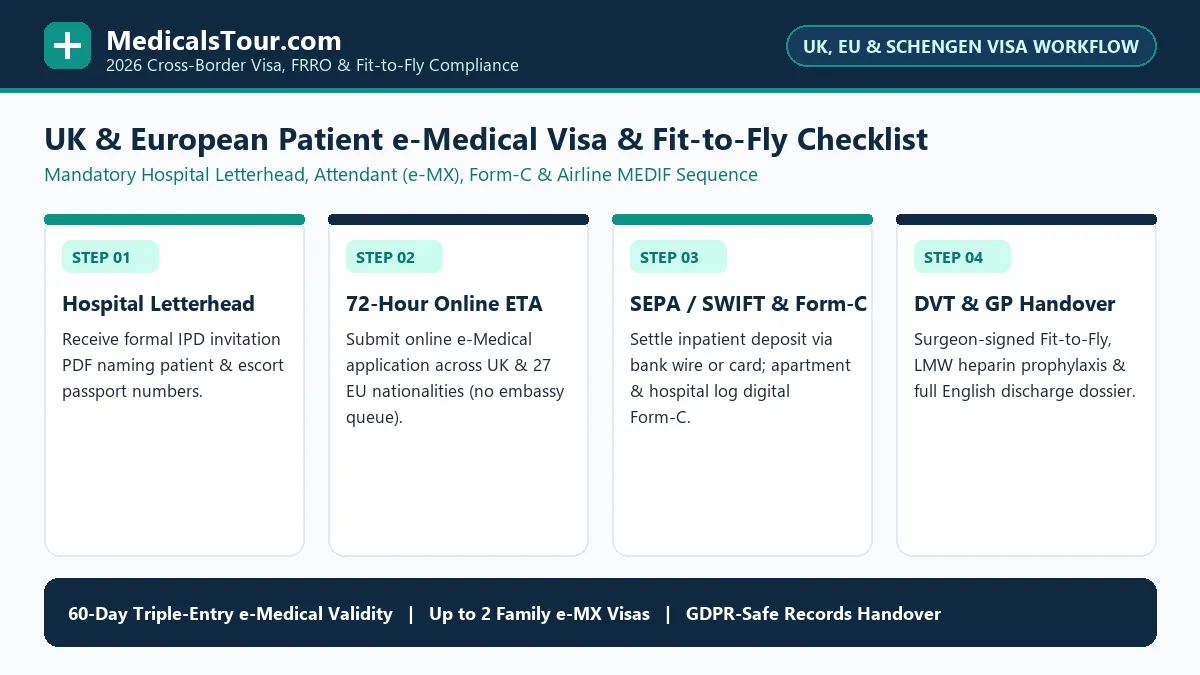
Citizens of the United Kingdom and every EU/EEA nation qualify online for India’s e-Medical Visa (60-day validity, triple-entry—ideal if returning within two months for a frozen embryo transfer) alongside the e-Medical Attendant Visa. Ask the hospital’s international fertility coordinator to issue the official Visa Invitation Letter (VIL) listing both spouses’ passport numbers, dates of birth, and homologous ART diagnosis. Exact document upload sizes and processing timelines are covered in our India e-Medical Visa Guide for UK, US & Western Citizens, while broader surgical wait-time strategies across Britain and Europe sit inside our International Medical Corridors Hub including our UK NHS Waitlist to India Playbook.
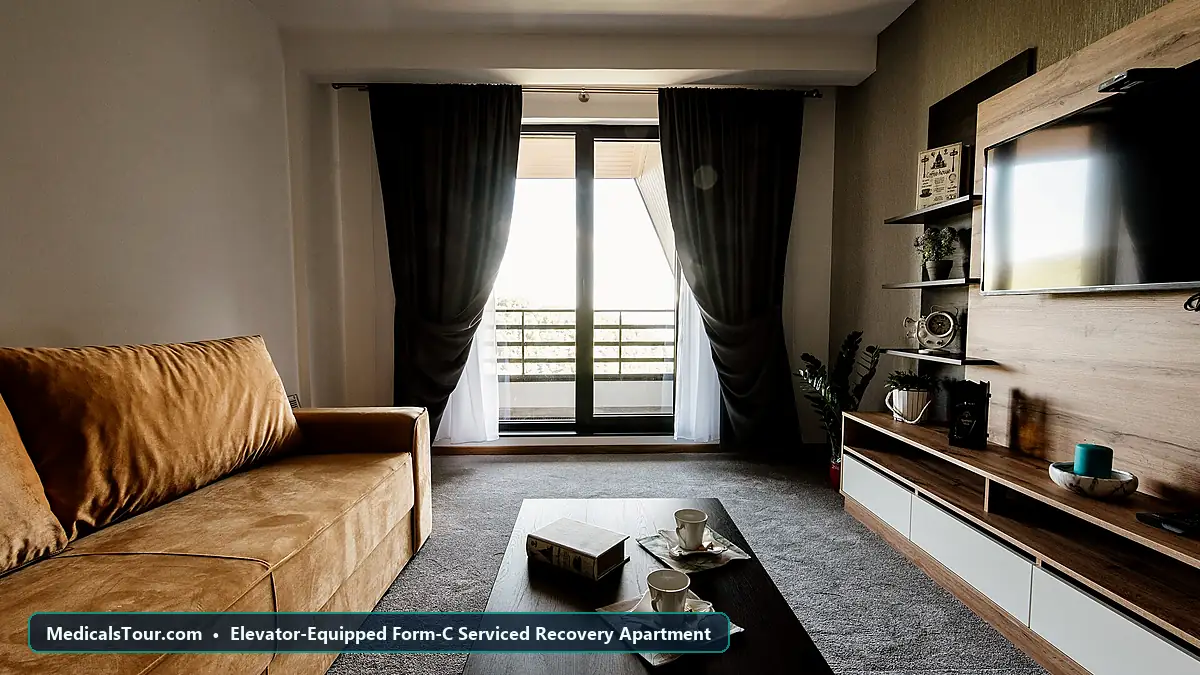
Spending twenty-one consecutive nights in a compact business hotel room without a kitchen, washing machine, or dedicated refrigerator thermometer quickly wears couples down during hormonal stimulation. Book a licensed 1BHK serviced apartment in Alwarpet, Nungambakkam, or Boat Club Area (10 to 18 minutes by Uber Premier from MGM Healthcare in Chennai, $55–$95/night) or in Saket, Panchsheel Park, or Greater Kailash II (5 to 12 minutes from Max Saket in New Delhi, $65–$110/night). Confirm in writing before booking that the property files electronic Bureau of Immigration Form C foreign guest registration within 24 hours of arrival, and test that the apartment refrigerator maintains a steady 2°C to 8°C on a middle shelf rather than freezing Gonal-F or Cetrotide pens against an ice-box coil.
Before heading back to Heathrow, Schiphol, or Charles de Gaulle after transfer, collect a stamped hospital prescription, itemised pharmacy receipt, and physician customs letter covering ten weeks of luteal support: micronized vaginal progesterone capsules, aqueous subcutaneous progesterone (25 mg vials, which avoid painful oil-based intramuscular lumps), estradiol valerate tablets, and prophylactic low-molecular-weight heparin prefilled syringes if prescribed. Pack all injectable vials and needles strictly inside cabin hand luggage in a medical gel-pack cooler pouch, never in checked hold baggage.
Realistic 21-Day GBP & EUR Total Trip Budgets Including Flights and Contingency
Settling hospital charges smoothly requires avoiding high-street European bank retail exchange spreads. Wire your primary cycle package in USD or EUR via SWIFT 5 to 7 business days before Cycle Day 2 directly against the hospital’s Proforma Invoice, or pay outpatient pharmacy milestones using a fee-free multi-currency card (such as Wise or Revolut within set daily limits) while always selecting local Indian Rupees (INR) on the payment terminal to decline 3.5% Dynamic Currency Conversion markups—a step-by-step rule explained in our Hospital Wire Transfer & Forex Billing Guide. You can stress-test custom apartment tiers, companion flights, and PGT-A options using Medical Tour’s interactive Medical Trip Budget Planner.
- Homologous IVF + ICSI + rFSH/Antagonist Meds + Blastocyst Culture: $3,300 – $4,900 (£2,600 – £3,860 / €3,050 – €4,520)
- Optional Trophectoderm Biopsy + PGT-A NGS (up to 5 Blastocysts) + Vitrification: $1,450 – $2,100 (£1,140 – £1,655 / €1,340 – €1,940)
- Two Return Economy Flights (LHR / CDG / FRA / AMS to DEL or MAA): $1,350 – $2,100 (£1,065 – £1,655 / €1,245 – €1,940)
- 21 Nights 1BHK Serviced Kitchen Apartment + Groceries & Local Taxis: $1,650 – $2,550 (£1,300 – £2,010 / €1,520 – €2,350)
- 10-Week Luteal Take-Home Pharmacy Stock + Mandatory Day-1 Serology & Visas: $450 – $720 (£355 – £570 / €415 – €665)
Adding every single travel and pharmacy line item together, a British or European couple invests roughly £5,320 to £8,095 (€6,230 to €9,475) for a complete 21-day homologous IVF-ICSI journey—or £6,460 to £9,750 with full PGT-A chromosomal sequencing. Compared against £11,500 to £15,000 for hospital bills alone in London or Dublin, couples gain cleanroom hospital embryology alongside substantial financial margin for their growing family.
Before departing India, ensure your discharge binder contains five documents for your home obstetrician or NHS midwife: your signed stimulation drug chart, oocyte maturity and ICSI fertilization log, EmbryoScope morphokinetic grading sheet with blastocyst photographs, Cryotop inventory certificate listing straw identification codes for any banked embryos, and your NABL viral serology printouts. Having that complete embryology dossier in hand allows your local European antenatal team to pick up routine 7-week viability scanning and 12-week nuchal translucency care without repeating costly private diagnostic baselines.