Open an NHS Referral-to-Treatment (RTT) update letter in Surrey, Greater Manchester, or the West Midlands in 2026 and the arithmetic on the page rarely matches the lived reality in your joints or spine. On paper, NHS England’s constitutional standard pledges consultant-led elective treatment within 18 weeks. On the ground—across more than seven million open incomplete pathways—first waiting four months for a musculoskeletal physiotherapy triage slot, another three months for an outpatient 1.5T MRI, four months to see an orthopaedic or spinal registrar, and nine more months on an inpatient theatre list routinely stretches total suffering to 15 to 22 months, punctuated by last-minute winter bed cancellations when A&E pressures spike.
Historically, frustrated British pensioners and self-employed tradespeople turned straight to domestic private hospital groups—Spire Healthcare, Circle Health Group, Nuffield Health, or Ramsay Health Care UK. Yet post-inflation UK self-pay fixed-price packages now shock middle-income households: a single robotic knee or ceramic hip replacement bills £14,800 to £18,900 ($18,800–$24,000 USD), a one-level lumbar microdiscectomy or fusion climbs to £15,500 to £22,500 ($19,700–$28,600 USD), and even routine laparoscopic gallbladder or complex hernia surgery commands £6,800 to £9,200—before counting £275 initial consultant appointments and £650 private MRI scans.
Drawing on Medical Tour’s 2026 UK-to-India surgical corridor audit, this guide explains why thousands of British passport holders—both non-resident British Asians and multi-generational UK retirees with zero prior ties to South Asia—are flying 8.5 hours nonstop from London Heathrow to access JCI-accredited quaternary hospitals in New Delhi and Mumbai for £3,300 to £6,150 ($4,200–$7,800 USD) under FRCS-trained senior consultants.
From 18-Week Promises to 18-Month Reality: Inside the NHS Elective Backlog
Waiting eighteen months for a “non-urgent” elective operation is not a benign inconvenience; it exacts measurable clinical and financial compounding damage. An electrician in Birmingham or a schoolteacher in Leeds sidelined by extruded L4–L5 lumbar disc radiculopathy or bone-on-bone medial knee osteoarthritis loses £25,000 to £45,000 in household income over a year and a half, develops contralateral hip and lower-back compensation, gains weight from forced sedentarism, and spends months taking prescription co-codamol, naproxen, or pregabalin that irritate gastric mucosa and cloud daytime focus.
Meanwhile, post-Brexit rules quietly closed the old EU S2 / European Cross-Border Healthcare Directive reimbursement route that British patients once used to claim NHS funding in France or Belgium, while private medical insurance (PMI) policies from Bupa, AXA Health, and Aviva exclude pre-existing arthritic joints or herniated discs diagnosed prior to policy inception. Even NHS England’s domestic Right to Choose and Independent Sector Treatment Centre (`ISTC`) outsourcing schemes routinely screen out patients whose Body Mass Index sits between 35 and 39, whose `HbA1c` hovers near 64 mmol/mol, or who carry mild coronary stents—bouncing higher-complexity adults straight back onto the slowest acute hospital lists. Self-funding becomes the only realistic exit ramp.
What surprises first-time British researchers comparing Lithuania, Poland, or Turkey against India is clinical depth: India shares the exact British Commonwealth postgraduate medical architecture, English-language hospital governance, and Royal College fellowship culture as the NHS—meaning your operating consultant in South Delhi or Bandra very likely completed four years of higher surgical registrar training in London, Edinburgh, Sheffield, or Cardiff before returning home to lead a 500-case-per-year quaternary unit. British patients specifically researching knee arthroplasty can also consult our dedicated UK-to-India Knee Replacement Corridor Guide.
2026 GBP & USD Tariff Audit: Indian JCI Hospitals vs Spire, Circle & Nuffield UK
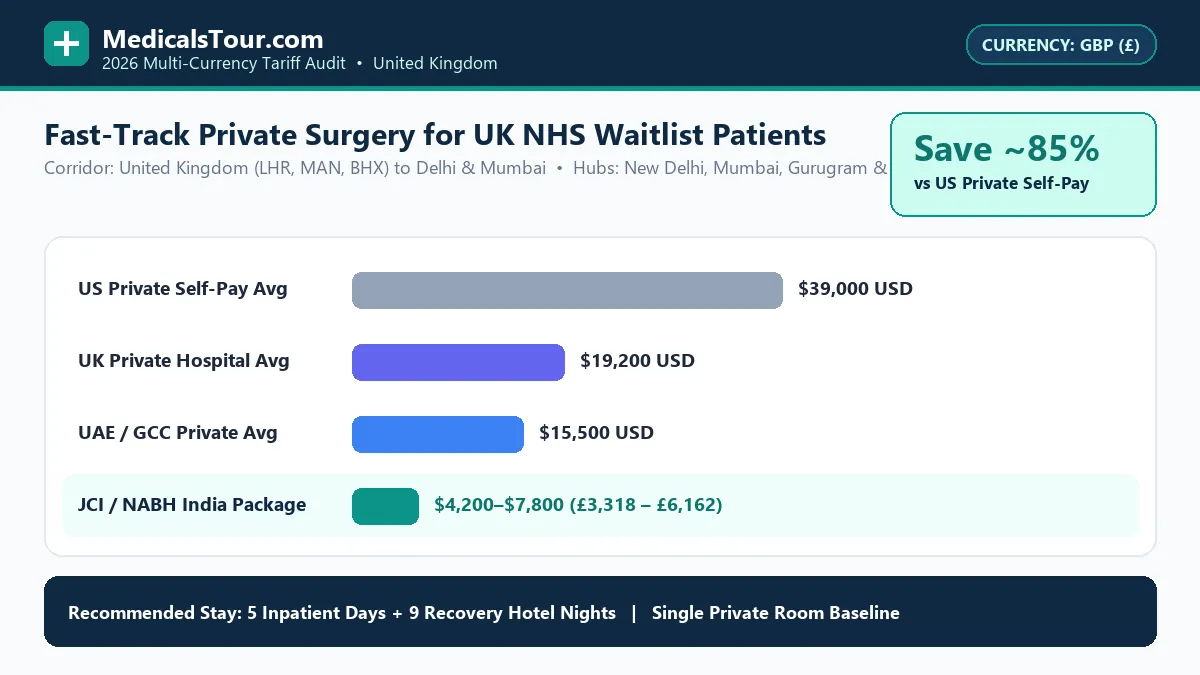
To make apples-to-apples household budgeting effortless, the table below benchmarks 2026 UK domestic private self-pay guide prices (converted at ~£1 = $1.27 USD) against all-inclusive Standard Single Private Room surgical packages at flagship JCI hospitals in New Delhi, Gurugram, Mumbai, and Chennai. Test your own flight class and hotel preferences inside our Medical Trip Budget Planner alongside detailed procedure audits in our Robotic Knee Replacement Cost Guide and Minimally Invasive Spine Surgery Cost Breakdown.
| Elective Surgical Procedure | Typical NHS Real-World Wait | UK Private Self-Pay (Spire / Circle / Nuffield) | India JCI Hospital Package (GBP £ / USD $) |
|---|---|---|---|
| Robotic Unilateral Total Knee Replacement (Stryker Mako / Zimmer Persona Implant) |
12 – 20 Months | £14,800 – £18,200 ($18,800 – $23,100) |
£3,600 – £4,950 ($4,600 – $6,300) | 5 Hosp nights |
| Uncemented Ceramic Total Hip Replacement (DePuy Corail/Pinnacle or Stryker Trident) |
12 – 18 Months | £14,500 – £18,500 ($18,400 – $23,500) |
£3,800 – £5,350 ($4,800 – $6,800) | 5 Hosp nights |
| Endoscopic / Microscopic Lumbar Discectomy | 10 – 16 Months | £10,500 – £14,800 ($13,300 – $18,800) |
£3,300 – £4,400 ($4,200 – $5,600) | 3–4 Hosp nights |
| 1-Level O-Arm Lumbar Spinal Fusion (TLIF) | 14 – 24 Months | £17,500 – £24,000 ($22,200 – $30,500) |
£4,550 – £6,150 ($5,800 – $7,800) | 5 Hosp nights |
| Laparoscopic Cholecystectomy / Complex Hiatus Hernia | 9 – 15 Months | £6,900 – £10,400 ($8,750 – $13,200) |
£2,350 – £3,600 ($3,000 – $4,600) | 2–3 Hosp nights |
| Beating-Heart Coronary Bypass (CABG) | 4 – 9 Months (Elective) | £26,500 – £36,000 ($33,600 – $45,700) |
£4,400 – £6,600 ($5,600 – $8,400) | 7 Hosp nights |
What UK Private “Fixed-Price” Quotes Leave Out vs Indian Bundles
When comparing a £16,200 UK private hip or knee quote against a £4,400 Delhi package, read the fine print on inpatient stay length and diagnostics. Domestic UK private hospitals frequently discharge joint patients after just 36 to 48 hours to free beds, billing pre-op 3T MRI (£550–£800), histology, take-home anticoagulants, and unexpected HDU nights extra unless tightly bundled. Worse still, Britons who spread an £18,000 Spire or Circle quote across a 48-month domestic patient-finance loan at 10.9%–12.9% APR end up repaying over £22,300 from pension or self-employed post-tax savings. In contrast, Indian JCI packages include 4 to 5 full inpatient nights in an en-suite Single Private Room with daily consultant rounds and twice-daily bedside physiotherapy—settling debt-free out of ordinary ISA cash; budget merely £220 to £420 ($280–$530) extra for Day-1 outpatient pre-anesthesia echocardiograms, viral blood panels, and thirty days of discharge pharmacy packs.
CQC Ratings vs JCI Accreditation—and Why Level-3 ITU Backup Matters
Here is an operational truth about UK private healthcare that rarely surfaces until a family reads surgical consent forms carefully: outside central London’s Harley Street/Marylebone cluster, the majority of regional private hospitals across England, Scotland, and Wales are 30-to-60-bed elective surgical centres that do not maintain a 24/7 Level-3 Intensive Therapy Unit (ITU) on site. If a seventy-one-year-old British patient undergoing private spinal decompression or hip arthroplasty in a suburban UK private hospital suffers perioperative myocardial ischemia, pulmonary embolism, or unanticipated blood loss at 2:00 AM, staff must dial 999 for an emergency blue-light transfer into the nearest overstretched NHS acute trust.
Multi-specialty co-management exposes another stark cost contrast. If an older British surgical patient in a domestic private hospital develops transient post-operative atrial fibrillation or labile blood sugars requiring an inpatient cardiologist or endocrinologist review, independent UK specialist chambers bill £250 to £350 per five-minute bedside visit plus separate pathology fees. Inside an Indian quaternary institute, cross-specialty physician consultations cost roughly £25 to £40 ($32–$50) and happen within ninety minutes because every sub-specialty department works full-time inside the same building.
When you book surgery at a flagship Indian quaternary institution holding dual Joint Commission International (JCI) Gold Seal and NABH accreditation, you are admitted inside a 350-to-750-bed acute medical township—comparable in critical-care depth to St Thomas’, Addenbrooke’s, or Queen Elizabeth Birmingham, yet delivered in quiet private suites. On-site 24/7 consultant intensivists, interventional cardiology cath labs, NABL blood banks, and 3T MRI/CT suites operate around the clock under the same roof. Review how international hospital audit metrics compare to Care Quality Commission (CQC) inspection domains in our JCI vs NABH Hospital Accreditation Guide.
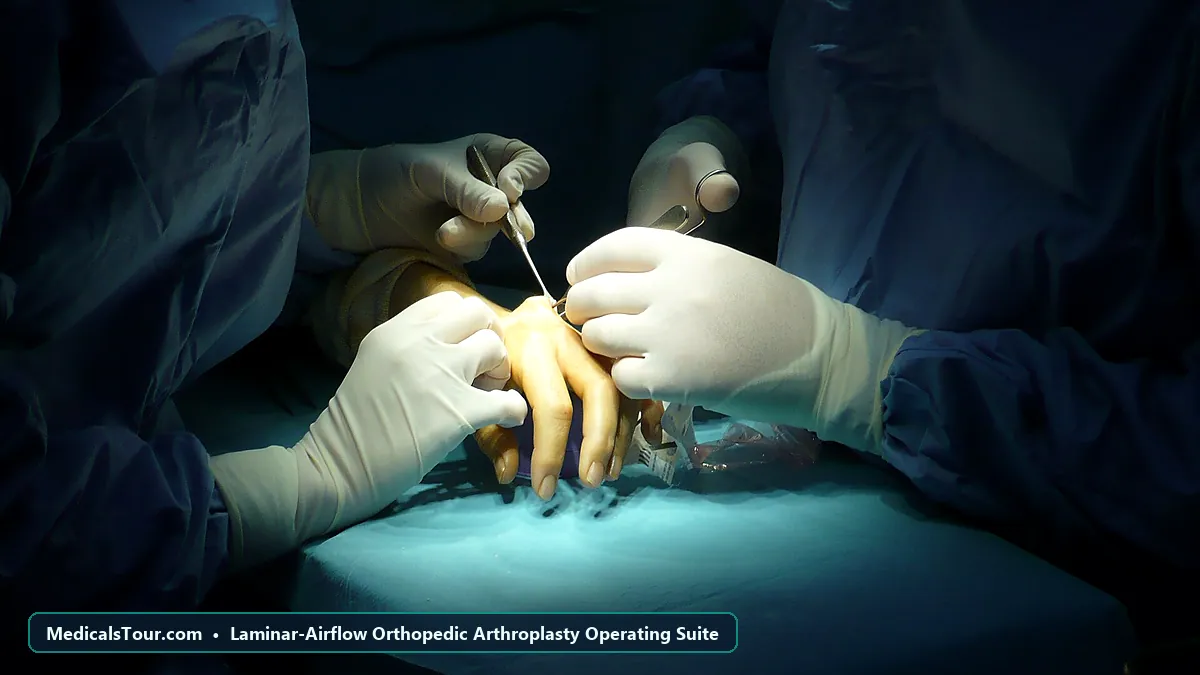
FRCS-Trained Consultants & Clinical Governance at Apollo Delhi and Lilavati Mumbai
In the UK private sector, NHS consultants typically rent operating sessions during evenings or Saturdays around their substantive public trust commitments, while junior Resident Medical Officers (RMOs) cover overnight private wards. At India’s premier corporate hospitals, Heads of Department and Senior Consultants practice full-time inside a single dedicated institute—supported by fellowship-trained registrars, infection-control nurses, and antimicrobial stewardship teams.
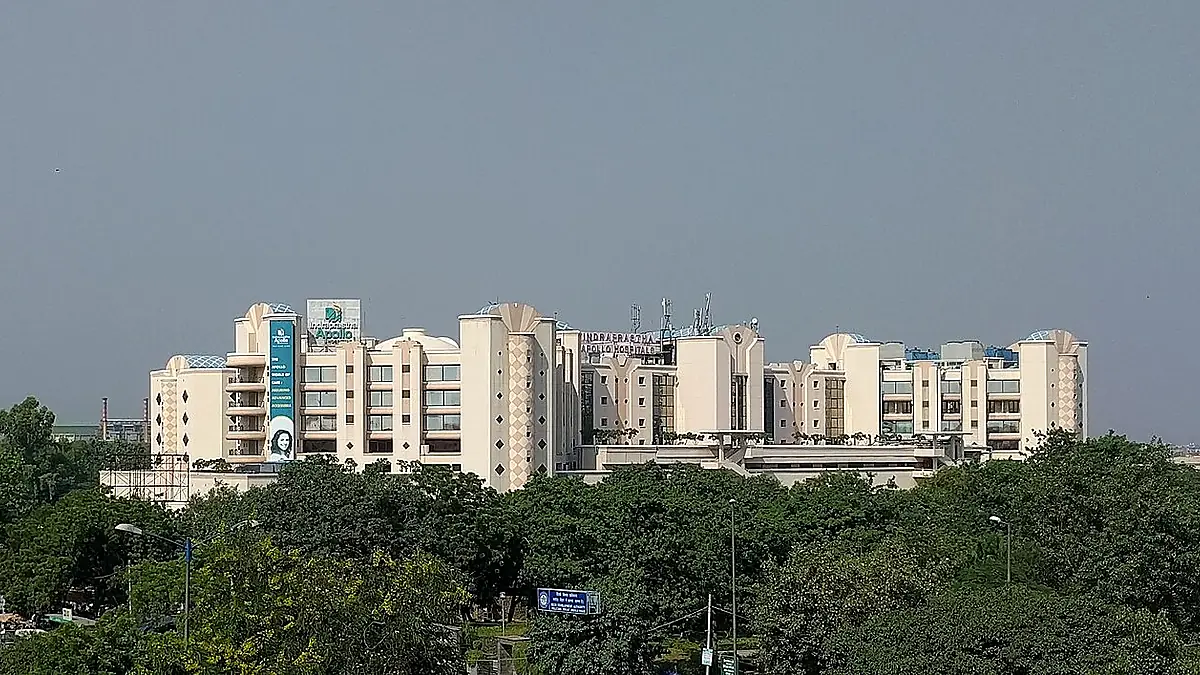
Two landmark campuses illustrate why British families adapt quickly. Along Mathura Road (NH-19) in Southeast Delhi, Indraprastha Apollo Hospital, Sarita Vihar—India’s longest-standing JCI-accredited hospital, entered via dedicated International Gate 10—fields dozens of senior orthopaedic, spinal, cardiothoracic, and urological surgeons holding FRCS (Royal College of Surgeons of England, Edinburgh, or Glasgow) or MRCP (UK) credentials earned during multi-year NHS rotations. On India’s west coast, Lilavati Hospital and Research Centre in Bandra West, Mumbai sits at Bandra Reclamation five minutes from the Arabian Sea promenade and Taj Lands End, combining laminar-flow modular theatres and surgical ICUs with leafy, walkable recovery hotels twenty-five minutes from Mumbai Terminal 2.
First-time travellers from Kent, Devon, or Yorkshire who have never previously visited India are routinely reassured by how familiar daily ward routines feel: room-service kitchens prepare mild British/continental poached eggs, toast, clear soups, and Earl Grey tea alongside vegetarian trays, every bedside nurse and physiotherapist communicates in fluent clinical English, and an accompanying spouse sleeps comfortably on the built-in companion couch inside the Single Private room at zero extra accommodation charge. Clinical vocabulary mirrors home too, citing NICE-aligned venous thromboembolism prophylaxis, WHO surgical safety checklists, National Joint Registry-tracked prostheses (DePuy Synthes, Stryker, Zimmer Biomet, Smith+Nephew), and standard British Pharmacopoeia / INN generic drug nomenclature.

Pulling NHS App Records, Hospital PACS Scans & British Citizen e-Medical Visas
Even if you are stuck at Month 9 on an NHS waiting list without a surgery date, you have already paid through National Insurance for valuable diagnostic work—and UK data law entitles you to carry every file abroad free of charge. Under the UK GDPR and Data Protection Act 2018, submit a formal Subject Access Request (SAR) to your local NHS Hospital Trust’s Access to Health Records / PACS Imaging Office requesting your raw `.dcm` DICOM MRI, CT, or X-ray files via electronic Image Exchange Portal (IEP) download link or CD; Information Commissioner’s Office (ICO) rules mandate fulfilment within one calendar month, and most NHS radiology desks email an IEP link within seven to ten working days. Simultaneously, open the NHS App on your smartphone to export your GP Summary Care Record, repeat medication list, and recent blood test results (`HbA1c`, `eGFR`, `FBC`, `Ferritin`) as clean PDFs to email straight to Delhi or Mumbai for a free 48-hour consultant video review.
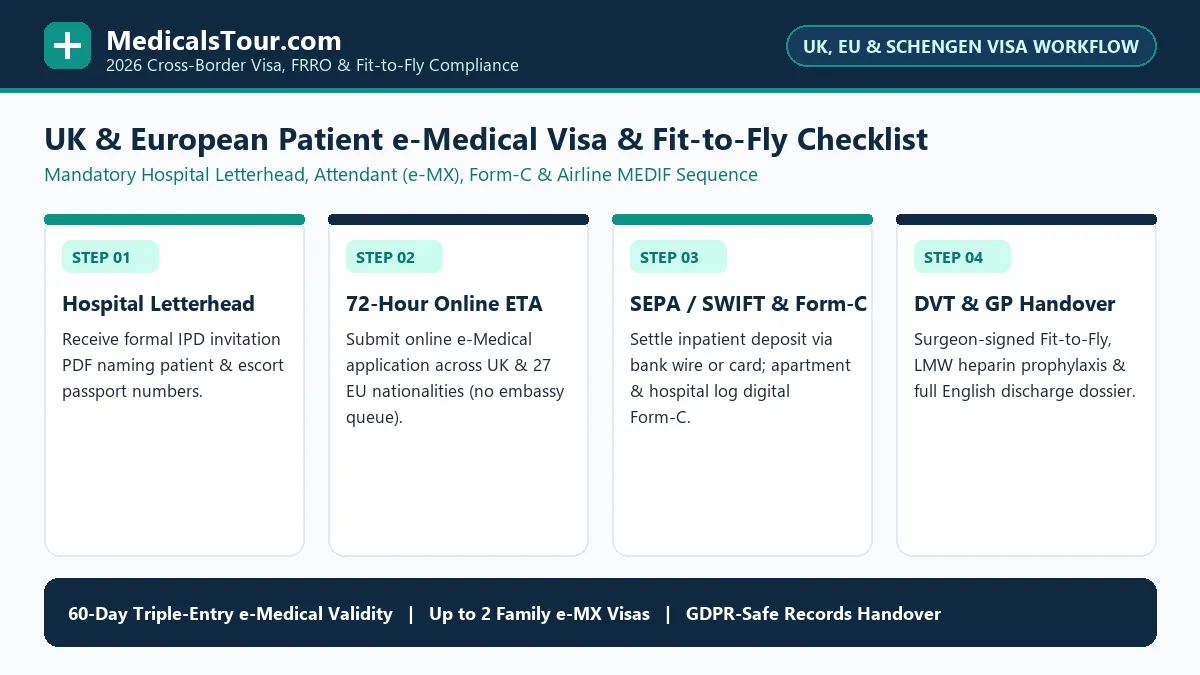
Once you select a hospital and receive an official Medical Visa Invitation Letter addressed to the High Commission of India, check that your burgundy or navy British Citizen passport carries at least six months of remaining validity and two blank pages, then apply online through the Government of India’s official `indianvisaonline.gov.in` portal for an e-Medical Visa (valid 60 days from arrival, triple entry, ~$80 / ~£63 government fee). An accompanying spouse or adult son/daughter applies in parallel for an e-Medical Attendant Visa quoting the patient’s application ID. Following full restoration of UK electronic visa processing, approvals routinely land via email within 48 to 96 hours without visiting a VFS Global centre in Hounslow, Birmingham, or Manchester; follow our field-tested India e-Medical Visa Guide for UK, US & Canadian Citizens to avoid third-party copycat agency websites.
Nonstop Heathrow (BA, Virgin Atlantic & Air India) Flight Strategy & GBP Wire Transfers
Geography gives UK patients a dramatic aviation advantage over North American travelers: nonstop flights from London Heathrow (LHR) to New Delhi (DEL) or Mumbai (BOM) take just 8 hours 25 minutes to 9 hours 15 minutes outbound—shorter than flying from London to California or Bangkok—with only a 4.5-hour GMT-to-IST time difference in summer (5.5 hours in GMT winter) so circadian jet lag barely registers.
| UK Aviation Corridor & Carriers | Flight Time & Aircraft | 2026 Typical Return Fare (GBP £) | Post-Op Cabin Recommendation |
|---|---|---|---|
| London Heathrow (LHR) → New Delhi (DEL) Nonstop (British Airways BA 143/257, Virgin Atlantic VS 300/302, Air India AI 162/112 A350) |
~8h 35m Out / ~9h 30m Back | £540 – £780 (Econ) £1,150 – £1,550 (World Traveller Plus / Prem) £2,250 – £3,100 (Club Suite / Upper Class) |
Book Premium Economy outbound + one-way flat-bed Club Suite / Upper Class return for hip, spine, or cardiac patients. |
| London Heathrow (LHR) → Mumbai (BOM) Nonstop (British Airways BA 139/199, Virgin Atlantic VS 354, Air India AI 130/128) |
~8h 55m Out / ~9h 45m Back | £530 – £760 (Econ) £1,100 – £1,500 (Premium) £2,200 – £2,950 (Business) |
Ideal warm-winter gateway (Nov–Mar 28°C dry coastal breeze) for Lilavati or Kokilaben admissions. |
| Birmingham (BHX) / Gatwick (LGW) / Manchester (MAN) (Air India direct BHX/LGW routes; Emirates/Qatar 1-stop from MAN/EDI/GLA) |
8h 45m Direct or ~12h 1-Stop | £560 – £820 (Econ) £2,150 – £2,850 (Business) |
Avoid 90-minute Heathrow M25 coach transfers from the Midlands/North; request `WCHR` Special Assistance across all hubs. |
Terminal selection at London Heathrow also shapes day-of-travel comfort for stiff hips or lumbar spines: British Airways departs from Terminal 5 (`BA 143` / `BA 257`), Virgin Atlantic from Terminal 3 (`VS 300` / `VS 302`), and Air India’s brand-new flagship Airbus A350-900—equipped with 1-2-1 sliding-door Business suites and wide 2-4-2 Premium Economy recliners—departs from Terminal 2 (`AI 162` / `AI 112`). Pre-booking Heathrow Passenger Assistance (`WCHR`) guarantees electric buggy transport across the long satellite pier walkways in all three terminals.
When settling a £4,500 ($5,700) hospital invoice from a UK Barclays, Lloyds, NatWest, Santander, or HSBC current account, avoid high-street bank 3.5% retail sterling-to-dollar FX markups and check daily Faster Payments transfer limits (£10,000–£25,000) ahead of time. Sending an FCA-regulated international SWIFT transfer via Wise, Revolut, or specialist currency broker directly to the hospital’s corporate USD or INR beneficiary account—quoting your hospital UHID and passport number five working days pre-admission—cuts currency friction below 0.5% and spares you 2.75% foreign hospital card terminal surcharges.
Returning to Your NHS GP Practice: Suture Checks, Blood Monitoring & Fit Notes
A persistent myth on British patient forums claims that opting out of an NHS waiting list to pay privately in India somehow “strikes you off” NHS GP care on your return. Under the NHS Constitution and Department of Health & Social Care guidance on patients paying for additional private care, British residents retain 100% of their entitlement to free NHS primary care, emergency care, and routine community follow-up once back in the UK—provided the surgery performed abroad is an established, clinically recognized intervention rather than an experimental cosmetic implant.
Set up a smooth domestic handoff with three practical courtesies. First, ask your Indian surgeon to address a concise “Dear GP Colleague” Discharge Letter listing exact SNOMED/ICD-10 diagnoses, operative details, ODEP/FDA implant serial stickers, VTE prophylaxis stop dates (e.g., rivaroxaban Day 14 or Day 35), and specific post-op requests—such as Practice Nurse wound inspection or clip check (though most patients stay in India 12–14 days until staples/sutures are already removed!) and Day-21 Full Blood Count / U&Es. Second, hand that PDF to your GP surgery reception so it is scanned into EMIS Web or SystmOne, allowing your NHS GP to issue statutory Statement of Fitness for Work (`MED3` Fit Notes) for UK Statutory Sick Pay or employer occupational health sign-off, and submit a self-referral into your local NHS Integrated Care Board’s community Musculoskeletal (`MSK`) outpatient physiotherapy gym if ongoing progressive strengthening is desired.
Two tiny everyday British travel habits round out a calm two-week trip: pack a universal UK three-pin Type-G to Indian round-pin Type-D adapter for CPAP machines or iPads (India runs on identical 230V / 50Hz voltage as the UK, so British hairdryers and electric toothbrushes need zero voltage transformers!), and activate an inexpensive £8 Indian data eSIM alongside your UK EE, Vodafone, or O2 number so Barclays/HSBC banking one-time passcodes and family WhatsApp video calls work effortlessly from the ward. Carry your routine NHS repeat tablets (ramipril, atorvastatin, levothyroxine, lansoprazole) in their original Boots or LloydsPharmacy dispensed boxes paired with your printed NHS App prescription slip.
In Medical Tour’s 2026 UK patient outcome tracking, even when a retired couple flies Premium Economy or Business Class from Heathrow and spends nine post-discharge nights in a four-star South Delhi or Bandra hotel, total household spend lands between £6,200 and £8,900 all-in—saving £8,000 to £14,000 versus Spire or Nuffield while reclaiming over a year of pain-free mobility. Explore all regional travel routes inside our International Medical Travel Corridors hub.