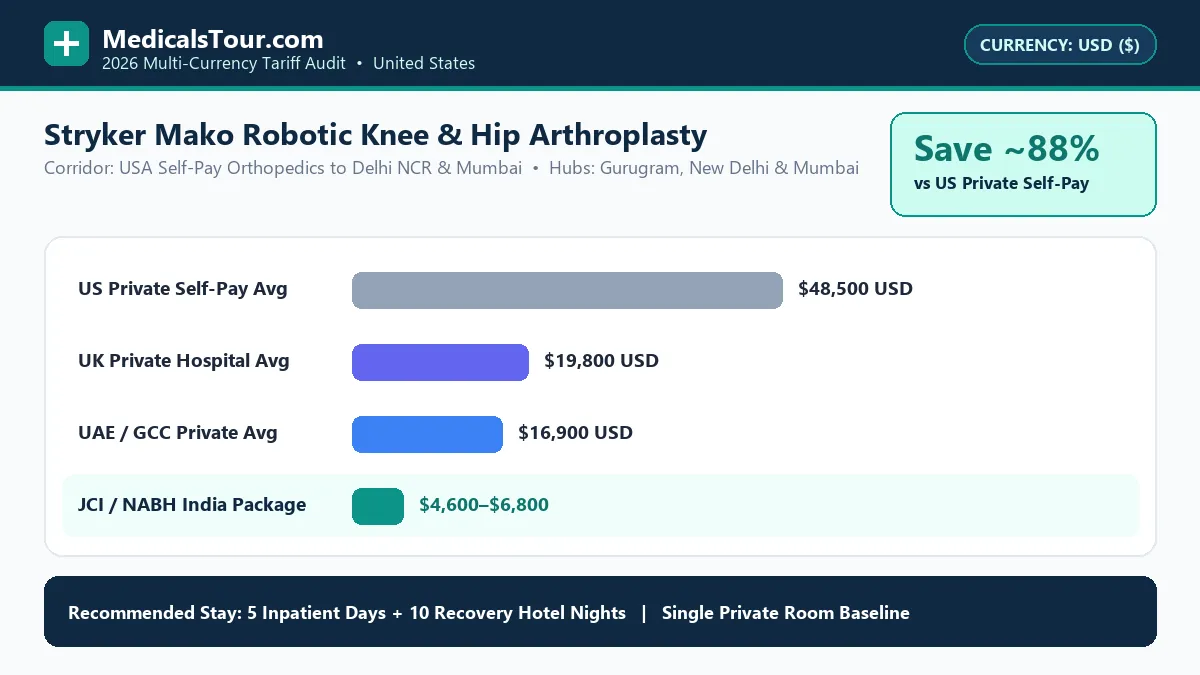
Inside the pre-operative orthopedics lounge at Fortis Memorial Research Institute in Gurugram Sector 44, a 60-year-old custom cabinetmaker from Tacoma, Washington asks to inspect the sealed implant carton before signing his final surgical consent. The circulating nurse places the unopened box on the desk: a US-manufactured Stryker Triathlon cementless tibial and femoral assembly paired with a Mako SmartRobotics CT-guided plan—carrying the exact FDA 510(k) clearance code and REF barcode billed at $49,200 self-pay by an outpatient surgery center back in Puget Sound. His all-inclusive five-night Single Private package in Gurugram, including robotic calibration, adductor-canal pain blocks, and daily bedside physiotherapy, totals $5,450 USD.
Bone-on-bone osteoarthritis of the knee or avascular necrosis of the hip traps tens of thousands of working-age Americans in a brutal financial squeeze. Too young at 54 or 61 to qualify for Medicare, exhausted from years of diminishing cortisone or hyaluronic-acid gel shots, and warned by primary care doctors that daily meloxicam or ibuprofen is straining their kidneys, self-pay patients carrying $12,000+ deductibles or narrow-network exclusions routinely save $36,000 to $45,000 by flying to JCI-accredited joint-replacement institutes in Gurugram, New Delhi, or Mumbai before severe quadriceps muscle atrophy sets in.
Orthopedic travel across 8,000 miles only makes clinical sense when three engineering details are locked down before departure: genuine sub-millimeter robotic alignment rather than marketing buzzwords, zero-compromise cleanroom infection controls, and a disciplined hematology protocol protecting freshly operated veins on the long-haul return flight. Waiting another eighteen months on bone-on-bone varus collapse only forces deeper tibial bone grafts and slower post-op gait retraining. Every hospital campus, implant tray, and recovery hotel strategy below reflects how seasoned orthopedic coordinators plan safe 16-day arthroplasty trips from Seattle, Chicago, Denver, and New York.
2026 Joint Replacement Tariff Matrix: Unilateral, Bilateral & Ceramic Hip Bundles
Orthopedic proforma estimates in India separate surgical fees cleanly from implant tier selection so patients never wonder whether a lower quote hides a generic domestic prosthesis. Through Medical Tour’s 2026 hospital fee benchmarks—and detailed line-item comparisons in our Robotic Knee Replacement Cost Guide and Total Hip Replacement Cost Guide—every major US and European implant family is readily stocked on consignment at flagship centers.
| Arthroplasty Procedure & Bearing Tier | US Self-Pay Cash Average | India JCI Single Private Package | Implant Brands & Stay Cadence |
|---|---|---|---|
| Robotic Unilateral Total Knee Replacement (1 Knee) | $42,000 – $56,000 | $4,600 – $6,400 | Stryker Mako / Smith+Nephew CORI + Zimmer Persona, DePuy Attune, or Triathlon; 4–5 Hosp + 9 Hotel nights. |
| Robotic Bilateral Total Knee Replacement (Both Knees) | $68,000 – $94,000 | $7,800 – $9,900 | Simultaneous or 48-hour staged admission for medically fit candidates; 6–7 Hosp + 11–12 Hotel nights. |
| Oxinium / Hypoallergenic Knee Upgrade | $46,000 – $60,000 | $5,300 – $6,800 | Smith+Nephew Legion/Genesis II Oxinium oxidized zirconium for nickel-allergic or under-58 patients. |
| Uncemented Ceramic-on-Poly Total Hip Replacement | $41,000 – $54,000 | $4,900 – $6,700 | CeramTec Biolox delta ceramic femoral head + Vitamin-E highly crosslinked polyethylene liner; 4–5 Hosp + 9 Hotel nights. |
| Dual-Mobility or Complex Revision Hip Arthroplasty | $58,000 – $86,000 | $6,800 – $9,600 | Stryker MDM or Zimmer G7 dual-mobility cup minimizing dislocation risk on flights & deep sitting. |
When reviewing hospital estimates, confirm three line-item specifics up front: first, whether the robotic consumable surcharge ($550–$850 per joint for sterile optical tracker pins, reflection spheres, and disposable burrs) plus gentamicin-loaded bone cement or 3D-printed porous Tritanium press-fit biological fixation is already included inside the headline figure—at Fortis Gurugram and Kokilaben Dhirubhai Ambani Hospital in Mumbai, international robotic quotes bundle tracker arrays explicitly; second, budget $320 to $520 for Day-1 outpatient ortho clearance (standing hip-to-ankle scannogram X-rays, 2D echocardiogram, MRSA nasal culture, urine culture ruling out silent bacteriuria, and HbA1c); third, keep your inpatient booking in a Standard Single Private Room to avoid 25% Deluxe room tariff multipliers.
How Stryker Mako CT-Guided Robotics & Bearing Metallurgy Impact Recovery Speed
Not every “robotic” knee advertisement means the same technology inside the operating room. Understanding the mechanical difference helps American travelers ask sharper questions on pre-departure Zoom calls:
- CT-Based Haptic Robotics (Stryker Mako SmartRobotics): Before surgery day, you undergo a thin-slice pelvic-to-ankle CT scan. The software builds a 3D virtual model of your exact osteophytes and native joint line, letting the surgeon size the implant to within 0.5 millimeters and establish haptic virtual boundaries. During bone resection, the robotic arm physically prevents the saw blade from straying even 1 millimeter outside the planned plane—sparing periarticular soft tissues, posterior cruciate ligaments, and patellar tendons.
- Imageless Handheld Robotics (Smith+Nephew CORI / Zimmer ROSA): Uses intraoperative optical mapping without a pre-op CT scan to balance flexion and extension ligament tension dynamically across the entire arc of motion—popular for personalized kinematic alignment that respects natural pre-arthritic constitutional varus rather than forcing every leg onto an artificial straight line.
- Less Soft-Tissue Trauma Equals Easier Long-Haul Travel: Because robotic alignment avoids drilling a 30-centimeter intramedullary alignment rod up the hollow femoral marrow canal (which triggers fat micro-emboli and hidden marrow bleeding in conventional jigs) and reduces aggressive medial collateral ligament releases, patients routinely experience less quadriceps shutdown, higher Day-2 hemoglobin, and 95° to 110° of active knee flexion before flying home on Day 14.
For total hip candidates, discuss surgical corridor options (muscle-sparing Direct Anterior Approach [DAA] on a specialized Hana traction table vs Mini-Posterior or SuperPATH approaches) alongside bearing selection: an uncemented porous titanium stem paired with a 36mm Biolox delta fourth-generation ceramic head on a Vitamin-E-infused highly crosslinked polyethylene liner (or a dual-mobility acetabular cup) slashes wear rates below 0.02mm annually and virtually eliminates dislocation anxiety during airline seat transfers. Similarly, patients with isolated medial-compartment wear and an intact anterior cruciate ligament (ACL) should ask whether robotic Unicompartmental (Partial) Knee Replacement ($4,100–$5,200) is appropriate—preserving 70% of native knee bone stock and joint proprioception with recovery nearly twice as brisk as total arthroplasty.
Simultaneous vs Staged Bilateral Knee Replacement: Honest Medical Screening
Many Americans with symmetrical grade-4 varus or valgus osteoarthritis in both knees ask whether they can replace both joints during a single trip to India—avoiding a second round of 15-hour flights, two rehabilitations, and walking unevenly for months with one straight leg and one bowed leg. While simultaneous bilateral Total Knee Replacement (both knees under one spinal-epidural anesthetic session) cuts total hospital and travel expenditure by nearly 40% compared with two separate trips, ethical Indian arthroplasty chiefs enforce strict physiological gates before approving it:
- Age & Cardiopulmonary Reserve: Generally reserved for physiologically vigorous patients under age 70 with normal left-ventricular systolic/diastolic function on echocardiogram, zero pulmonary hypertension, and negative inducible ischemia on a dobutamine stress echo.
- Metabolic, Dental & Hemoglobin Thresholds: Pre-operative HbA1c must sit strictly below 7.2% (ideally <6.8%) to prevent prosthetic joint infection, BMI below 36–38, and baseline hemoglobin above 13.0 g/dL so bilateral bone surfaces don’t require donor blood transfusions. Patients on rheumatoid or psoriatic biologics (etanercept, adalimumab, methotrexate, or JAK inhibitors) must coordinate exact rheumatology pause windows 2 to 4 weeks prior to travel, and complete routine US dental cleanings or cavity repairs at least 3 weeks pre-flight.
- The 48-to-72-Hour Staged Compromise & MRSA Decolonization: At high-volume institutes like Fortis Memorial Gurugram and Kokilaben Hospital Mumbai, borderline candidates often undergo staged bilateral arthroplasty within the same admission—Knee #1 on Monday, 72 hours of fluid stabilization and standing, followed by Knee #2 on Thursday or Friday—keeping total stay inside 19 days. Five days before departure, start daily 4% chlorhexidine gluconate body washes and intranasal mupirocin ointment if advised to eradicate skin Staphylococcus aureus colonization.
Also ask your surgeon during the video consultation how fixation and kneecap resurfacing are tailored to your bone density: vigorous men and women under 65 with dense metaphyseal bone often receive 3D-printed cementless press-fit tibial baseplates for lifelong biological bone ingrowth, whereas women over 68 with mild osteopenia achieve rock-solid immediate fixation using vacuum-mixed Palacos antibiotic bone cement. If your Indian surgeon advises doing only the more painful knee on Trip 1 due to mild anemia or sleep apnea, respect that boundary—safe orthopedic travel prioritizes zero-complication physiology over rushing two joints at once.
Laminar Airflow Cleanrooms, Space Suits & Pain-Free Day-Zero Mobilization
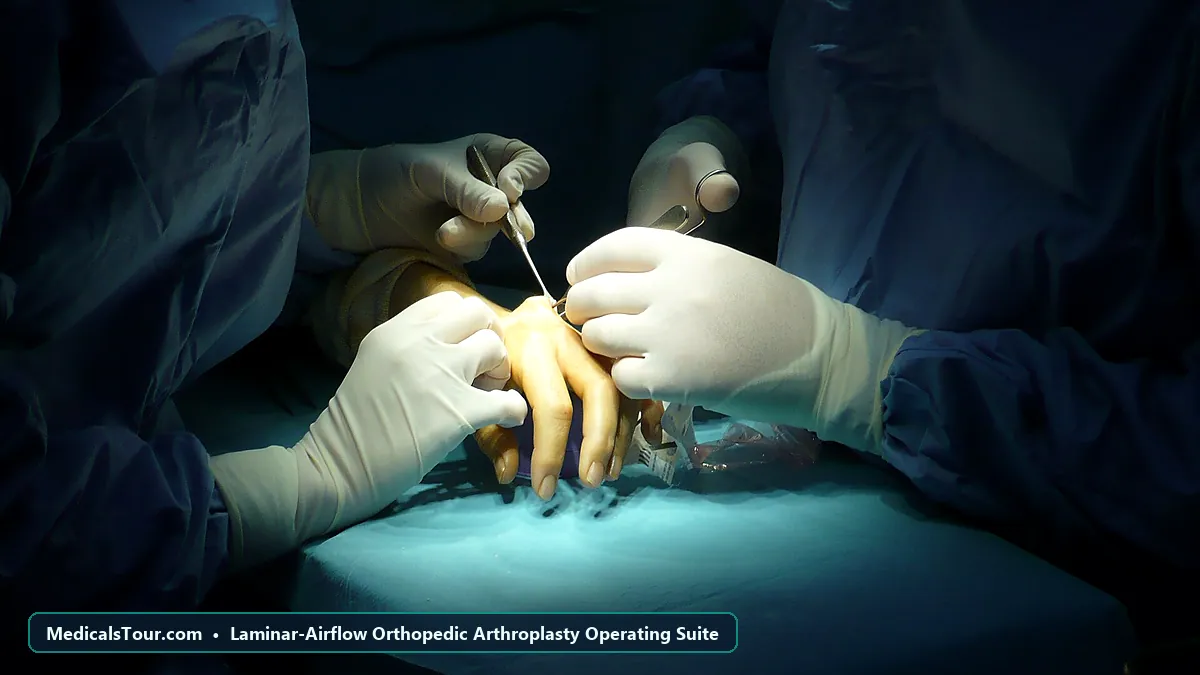
Periprosthetic joint infection (PJI) is the single complication every orthopedic surgeon respects most, because cobalt-chrome, titanium, and polyethylene surfaces carry zero intrinsic immune blood supply to fight stray bacteria. Top-tier JCI arthroplasty theaters in Gurugram and Mumbai isolate joint replacement completely onto dedicated “ring-fenced” orthopedic floors separated from general abdominal or urological suites:
- ISO Class 5 Ultra-Clean Laminar Airflow + Space Suits: Dedicated joint theaters cycle HEPA-filtered positive-pressure vertical air curtains downward over the open sterile wound 300+ times per hour while the entire scrubbed team operates inside enclosed Stryker Flyte positive-pressure helmet “space suits,” holding deep periprosthetic infection rates down around 0.2% to 0.4%.
- Neuraxial Spinal Anesthesia & Tranexamic Acid Conservation: Rather than heavy general endotracheal anesthesia that leaves older adults groggy or confused, joint teams prefer targeted spinal anesthesia paired with light propofol twilight sleep—skipping indwelling Foley urinary catheters whenever possible so bladder bacteria never seed the bloodstream. Intravenous and intra-articular tranexamic acid plus tourniquetless or ultra-brief robotic tourniquet inflation eliminates surgical wound drains in 95% of primary knees and keeps transfusion rates below 2%.
- Ultrasound-Guided Adductor Canal + iPACK Nerve Blocks: Instead of systemic IV opioids that trigger nausea and constipation—or legacy femoral nerve blocks that paralyze the quadriceps—anesthesiologists combine a motor-sparing adductor canal catheter, posterior capsule iPACK block, periarticular ropivacaine/ketorolac infiltration, and continuous Game Ready / Cryo-Cuff cold compression wraps. Patients stand beside the bed with a walker 4 to 6 hours after leaving recovery, walk 100 feet down the ward hallway on Day 1, and master a three-step practice staircase before discharge on Day 4 or Day 5.
Every surgical tray is double-wrapped and verified via biological spore indicators inside NABL/JCI-audited Central Sterile Supply Departments, while weight-based IV cefazolin (or vancomycin in penicillin-allergic travelers) is infused strictly within the 60-minute pre-incision window. By Day 3, oral pain control transitions cleanly onto scheduled acetaminophen, a selective COX-2 anti-inflammatory (celecoxib or etoricoxib), and low-dose nighttime pregabalin—keeping patients alert, regular, and enthusiastic during morning physiotherapy.
Choosing Between Gurugram Sector 44 & Mumbai Four Bungalows for Convalescence
After 4 or 5 inpatient nights, your daily comfort shifts to the 9 or 10 recovery days spent practicing heel-to-toe gait mechanics, icing four times daily, and performing seated active-assisted knee flexion slides inside your hotel or serviced apartment. Request a ground-floor or elevator-adjacent accessible room equipped with a walk-in curbless glass shower, wall grab bars, a sturdy plastic shower chair, a firm mattress standing at least 22 inches high, and a 4-inch raised toilet-seat attachment ($25 from the hospital orthotics counter—crucial after posterior hip replacement so hip flexion never exceeds 90°!).
Gurugram (Millennium City Centre / Sector 44 Belt)
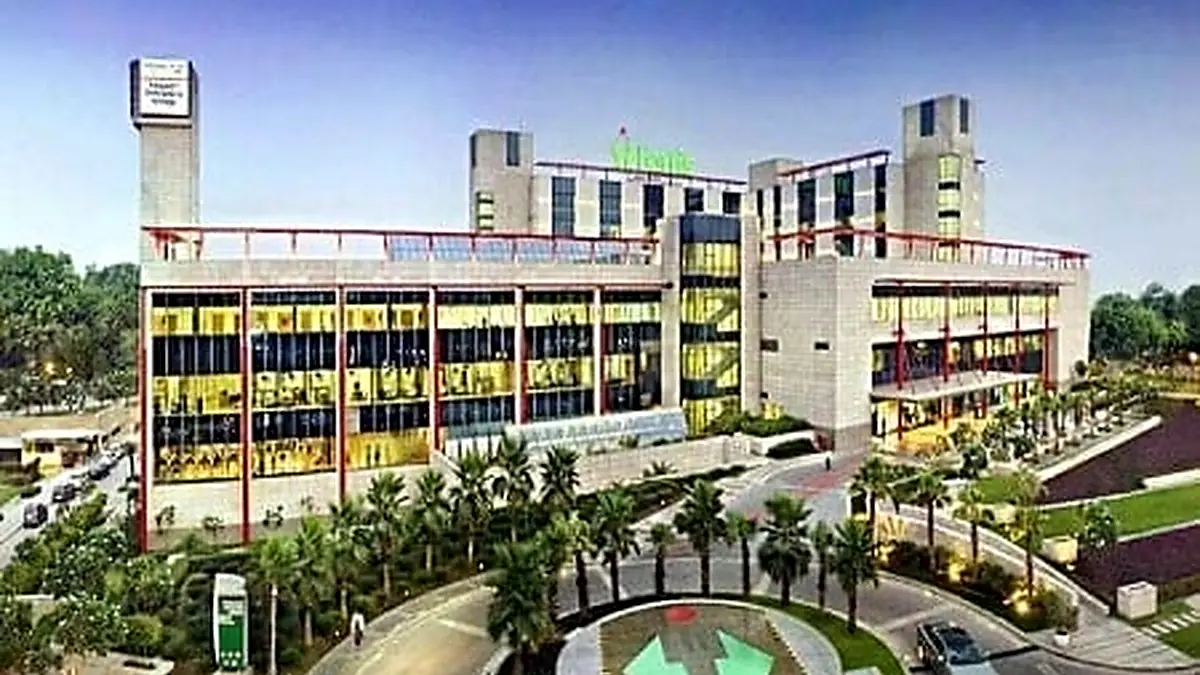
Exiting DEL Terminal 3 onto eight-lane NH-48 puts you at Fortis Memorial Research Institute in 25 to 30 minutes without entering congested central Delhi streets. Directly across wide boulevards sit Taj City Centre Gurugram, Courtyard by Marriott Sector 29, and purpose-outfitted medical serviced apartments with ramps and wide 36-inch bathroom doorways. Fortis dispatches licensed orthopedic physiotherapists directly to Sector 44 and Sector 29 hotel rooms ($22–$32 per 45-minute session) every morning on Days 6 through 13 to measure goniometer flexion degrees and supervise resistance-band quad sets while companions pick up fresh groceries and pharmacy gel ice wraps five minutes away at Galleria Market or South Point Mall.
Mumbai (Andheri West / Four Bungalows Belt)
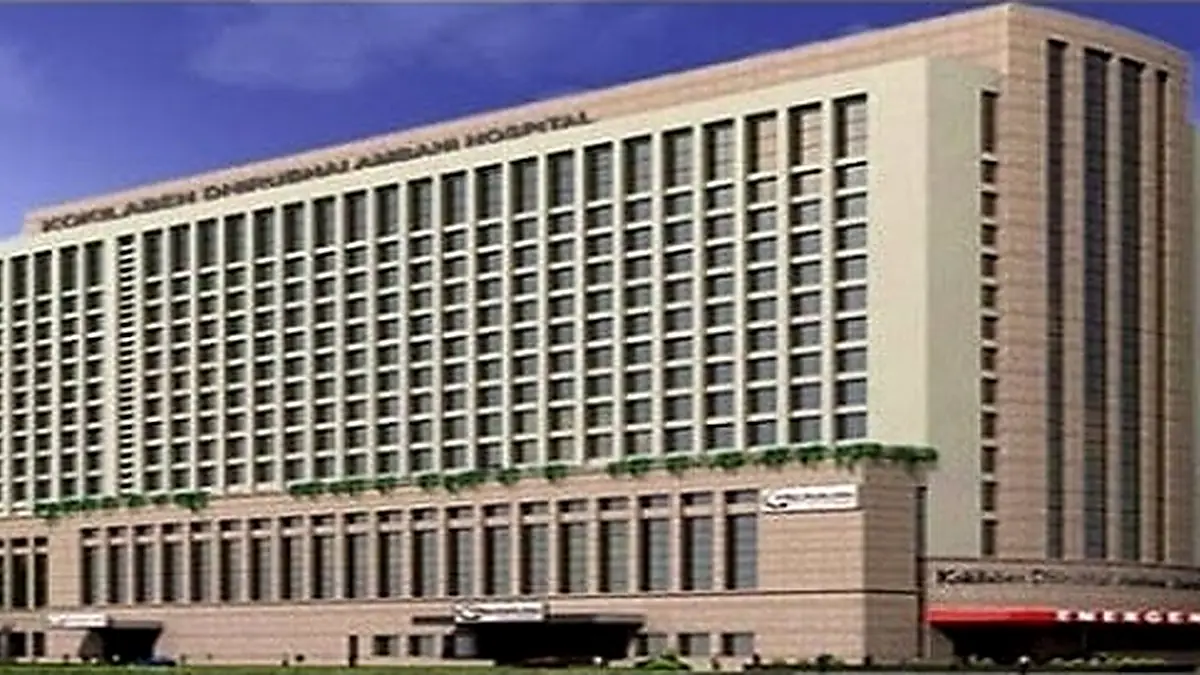
Landing nonstop from SFO or JFK into BOM Terminal 2 puts you 20 minutes from Kokilaben Dhirubhai Ambani Hospital, renowned for India’s Full-Time Specialist System (surgeons practice exclusively on campus rather than splitting hours across outside clinics) and its expansive Center for Bone & Joint Sports Medicine gym featuring NASA-engineered AlterG anti-gravity treadmills and hydrotherapy pools. Nearby Courtyard by Marriott Mumbai Airport, Svenska Design Hotel, and Lokhandwala serviced residences give spouses walkable Western supermarkets, coastal air, high-protein room-service menus (aim for 90–110 grams of daily protein to fuel incision collagen synthesis), and zero-winter-fog outdoor strolling.

Long-Haul DVT & Pulmonary Embolism Prevention Protocol for the 15-Hour Flight Home
Lower-extremity joint arthroplasty transiently activates the body’s coagulation cascade for 28 to 35 days—and sitting immobile for 15 hours across the Pacific or Atlantic multiplies venous stasis if managed casually. Note an important hematology distinction: while low-risk domestic US outpatients driving 20 minutes home often take enteric-coated aspirin 81 mg twice daily, international orthopedic chiefs routinely prescribe stronger oral Factor Xa anticoagulation when a transoceanic flight sits inside Week 2. Every American orthopedic traveler audited through Medical Tour’s clinical logistics desk follows a non-negotiable five-part thromboembolism shield before boarding:
| Safety Layer | Clinical Standard Required Before & During Return Flight |
|---|---|
| 1. Wait Minimum 12–14 Days Post-Op | Never fly long-haul on Day 6 or Day 7. Waiting until Day 13–15 allows epidermal sealing, clip/subcuticular check, knee effusion drop-off, and peak hypercoagulability decline. |
| 2. Pharmacologic Anticoagulation | Continue prescribed oral Factor Xa inhibitor—typically apixaban (Eliquis) 2.5 mg twice daily or rivaroxaban (Xarelto) 10 mg daily—for 14 to 35 days per AAOS risk tier; pack tablets in cabin bag. |
| 3. Pre-Flight Bilateral Venous Doppler | Complete an outpatient bilateral lower-limb color Doppler ultrasound ($45–$65) on Day 12 or 13 confirming 100% compressible femoral, popliteal, and calf veins before collecting your Fit-to-Fly Certificate. |
| 4. Graduated Compression & Cabin Seating | Wear medical-grade 15–20 or 20–30 mmHg thigh-high compression stockings (plus portable battery calf sequential-compression sleeves if desired); book lie-flat Business Class or extra-legroom bulkhead aisle so the operated knee never stays locked at 90° flexion. |
| 5. Hourly Calf Pumps & Hydration | Perform 20 brisk ankle dorsiflexion pumps every 45 minutes while awake, stroll the cabin galley aisle every 90 minutes when seatbelt signs allow, drink 250 mL water hourly, and skip alcohol and zolpidem sleeping pills. |
If your home journey involves a Gulf or European connection (such as Doha, Dubai, London, or Frankfurt) rather than an Air India nonstop into JFK, Newark, Chicago, or San Francisco, insist on a minimum 2.5-to-3.5-hour transit layover and pre-assign IATA wheelchair code WCHR on every flight coupon. Rushing through a tight 75-minute concourse transfer on a two-week-old prosthetic joint risks slips on polished terminal floors, whereas electric airport buggies carry you effortlessly from gate to business-lounge recliner.
Implant Barcodes, Airport Metal Detectors & Connecting With Your US Physical Therapist
One critical pre-trip rule deserves highlighting before you even buy airfare: never accept an intra-articular corticosteroid or hyaluronic-acid gel injection into the target knee or hip within 90 days prior to arthroplasty, as recent steroid joint injections double periprosthetic infection risk and will force an ethical Indian surgeon to postpone your surgery date. Before departing for Gurugram or Mumbai, pre-schedule your first domestic outpatient physical therapy appointment at a sports/orthopedic rehab clinic near your US home for Day 18 to Day 20 post-surgery (two or three days after landing back in America). Weeks 3 through 8—transitioning from a front-wheeled walker or single cane onto zero-resistance upright stationary cycling, closed-chain mini-squats, and full 0° knee extension to 120° flexion—lock in lifelong range of motion before scar remodeling stiffens the joint capsule. Most left-knee/hip patients resume automatic-transmission driving around Week 2–3 once off strong analgesics, while right-leg patients typically clear brake-reaction testing around Week 4–5, returning to doubles pickleball, golf, swimming, and hiking by Month 3—with Australian (AOANJRR) and UK National Joint Registry data documenting 94% to 96% 15-to-20-year implant survivorship for Triathlon, Persona, and Attune bearings.
Handing your home physical therapist and PCP a crisp surgical binder bridges the hand-off effortlessly:
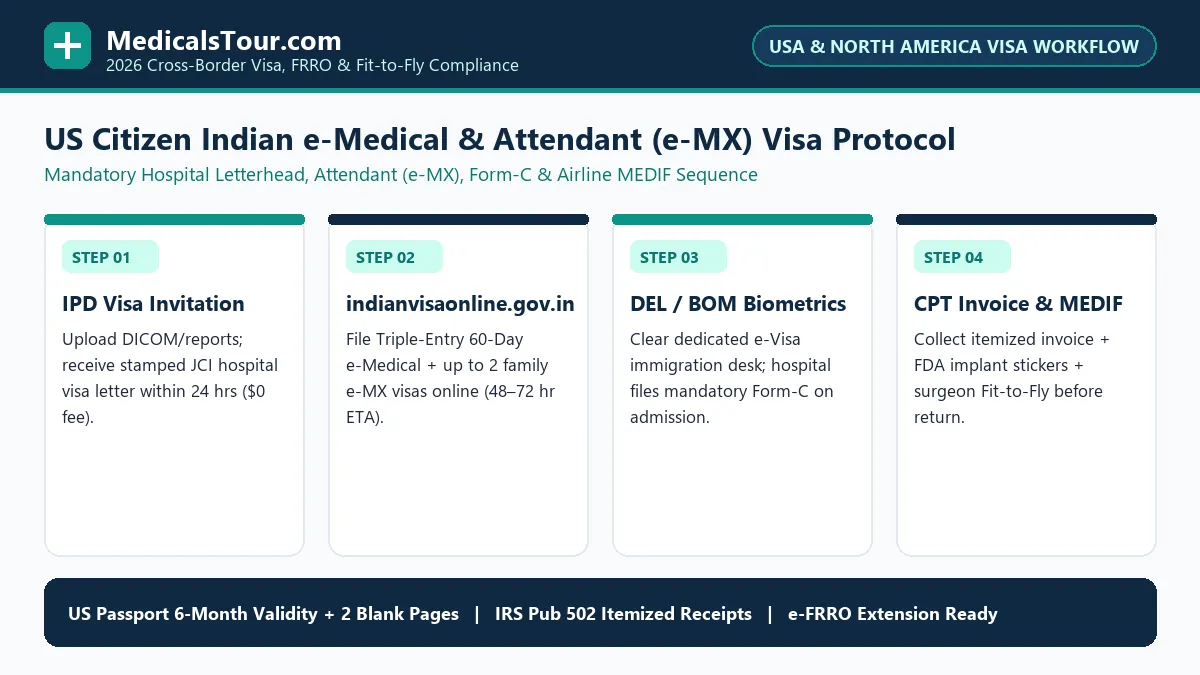
- Original Implant Peel-Off Stickers: Verify your discharge packet holds the physical holographic manufacturer labels for femoral component, tibial tray, polyethylene insert thickness (e.g., 9mm or 10mm), patellar button, or acetabular shell/liner/stem sizes so any US orthopedic surgeon 20 years from now knows exact screwdriver and bearing compatibility.
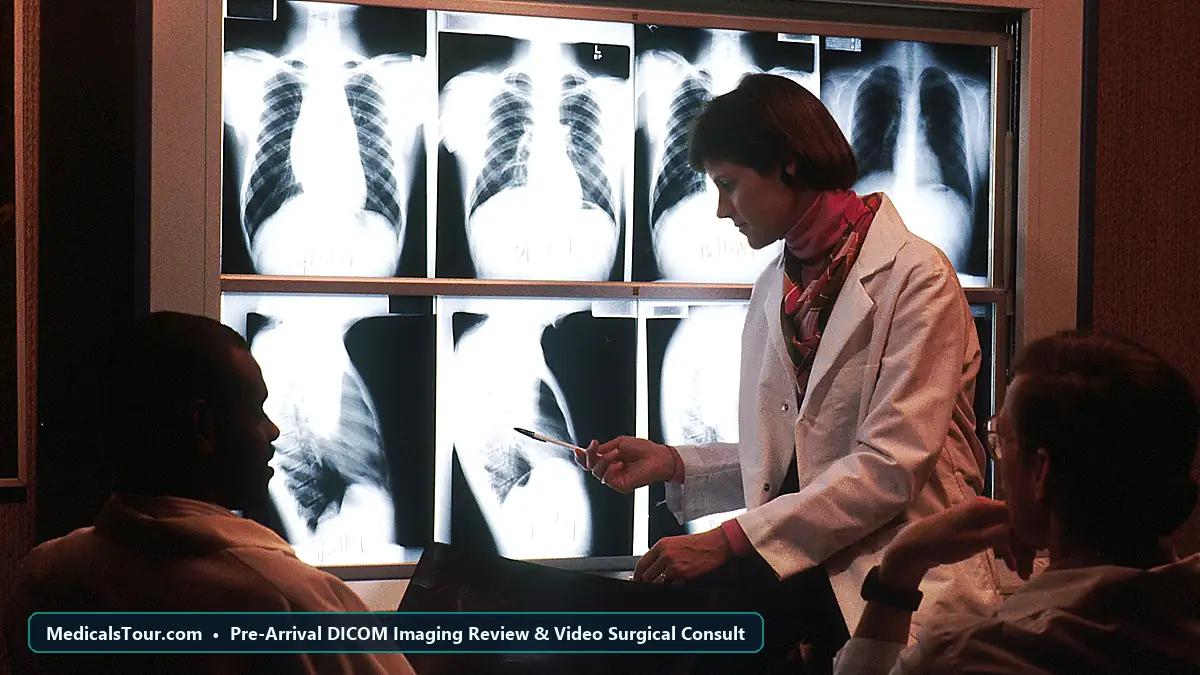
- Standing Long-Leg Alignment X-Rays: Carry digital DICOM files and JPEGs of pre-op and post-op weight-bearing hip-to-ankle AP and lateral radiographs proving neutral mechanical/kinematic axis restoration.
- TSA & Airport Body Scanners: Cobalt-chrome and titanium implants trigger walk-through metal detectors; simply alert CISF officers at DEL/BOM and TSA officers at US ports of entry so you step into millimeter-wave imaging.
- Dental Prophylaxis & Total Trip Math: Clarify with your surgeon whether 2g oral amoxicillin is advised before deep dental scaling during Year 1, and calculate your door-to-door net savings in our Medical Trip Total Budget Planner or review companion routes across our cross-border surgery corridors.