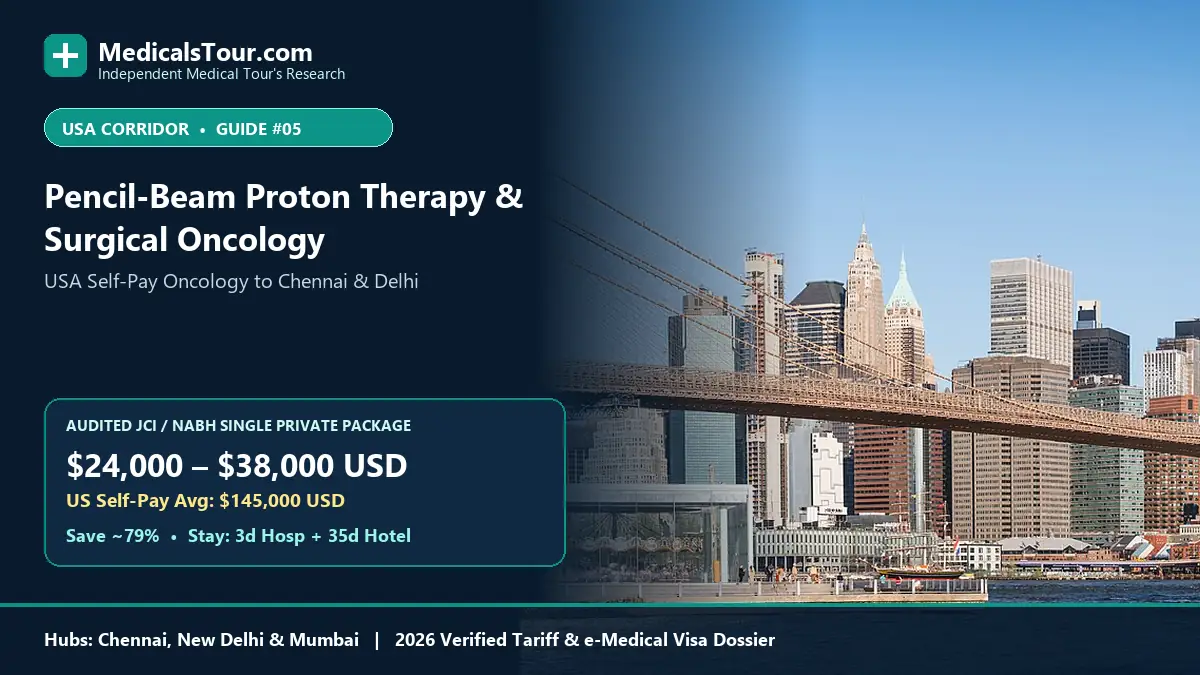
Few letters in American medicine feel more demoralizing than a commercial health insurer’s prior-authorization denial for Pencil-Beam Scanning Proton Therapy. Even when a radiation oncologist at a major academic center recommends intensity-modulated proton therapy (IMPT) to spare a child’s developing brain, protect the optic chiasm beside a skull-base chordoma, or shield the heart and lungs during left-sided breast or esophageal irradiation, utilization-management reviewers routinely stamp the claim “not medically necessary over conventional photon IMRT.” Appealing through external review boards can drag on for six to ten weeks while tumor cells divide—and paying cash at a US proton center triggers upfront self-pay deposit demands of $125,000 to $210,000 USD.
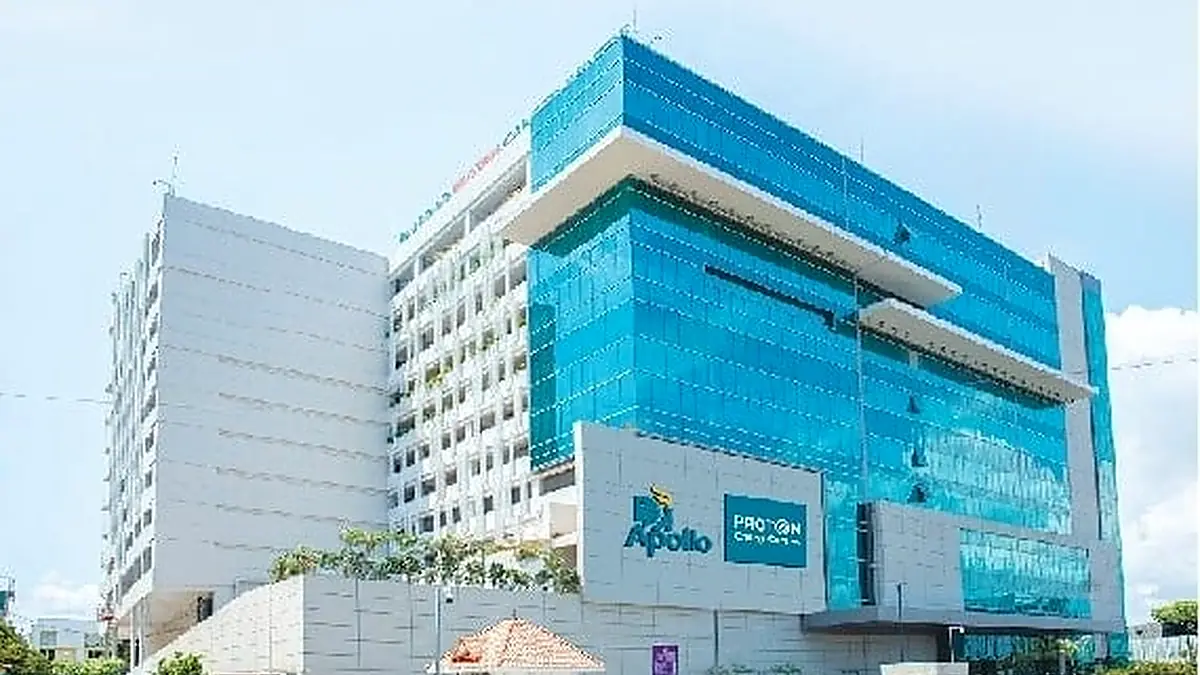
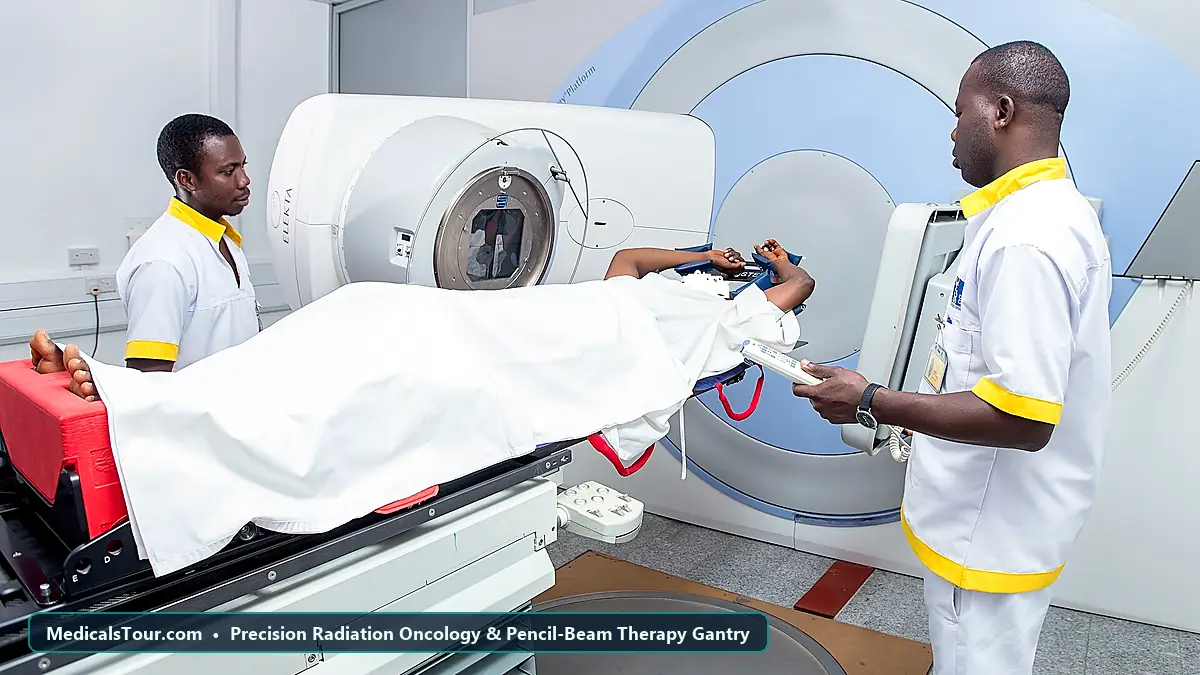
Along the IT Expressway on Old Mahabalipuram Road (OMR) in Taramani, Chennai sits South and Southeast Asia’s first JCI-accredited proton facility: Apollo Proton Cancer Centre (APCC), powered by a multi-room Belgian IBA ProteusPLUS cyclotron delivering sub-millimeter pencil-beam scanning across three gantry treatment rooms. Paired with high-volume robotic surgical and hemato-oncology centers like BLK-Max Super Speciality Hospital on Pusa Road in New Delhi, India gives self-pay Americans rapid access to multidisciplinary tumor boards without six-figure financial ruin.
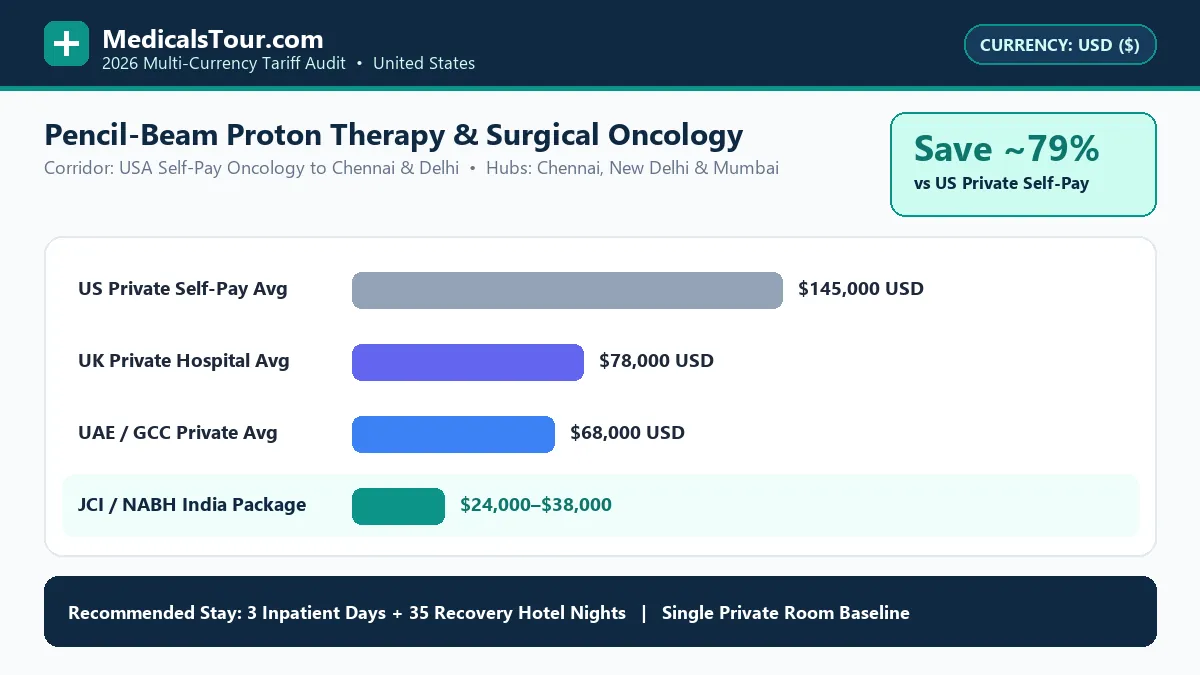
Full 25-to-35-fraction Proton Beam Therapy courses in Chennai run $24,000 to $38,000 USD all-inclusive of 4D CT/3T MRI simulation, custom thermoplastic immobilization, and RayStation Monte Carlo treatment planning, with immobilization mold crafting typically starting within 48 hours of landing and Beam-On beginning 7 to 9 days later. Rather than draining retirement equity or waiting months on futile third-level appeals while a skull-base or pediatric tumor encroaches on cranial nerves, families fly east with physics certainty in hand. Below is how American oncology families evaluate physics suitability, six-week apartment housing, FRRO visa extensions, and RT-DICOM continuity before flying.
2026 Oncology Tariff Audit: Pencil-Beam Proton, CyberKnife, VMAT & Robotic Surgery
Not every malignancy requires charged-particle proton therapy; in many solid tumors, modern image-guided stereotactic body radiotherapy (SBRT), CyberKnife S7 robotic radiosurgery, or Da Vinci Xi organ-sparing resection paired with targeted immunotherapy delivers equivalent clinical control at a fraction of the cost. Reviewing Medical Tour’s 2026 oncology tariff benchmarks alongside our PET-CT, Radiation & Surgical Oncology Cost Guide helps families match physics to budget.
| Oncology Modality / Diagnostic Workup | US Self-Pay / Cash Quote | India JCI Cancer Center Tariff | Treatment Duration & Clinical Setting |
|---|---|---|---|
| Pencil-Beam Proton Therapy (25–35 Fractions, IMPT) | $125,000 – $210,000 | $24,000 – $38,000 | 5–7 Weeks Outpatient (Mon–Fri daily 25-min gantry sessions at APCC Chennai). |
| Pediatric Proton Therapy (With Daily Anesthesia Team) | $160,000 – $245,000 | $29,000 – $42,000 | 5–6 Weeks Outpatient; includes dedicated pediatric propofol sedation & recovery bay. |
| CyberKnife S7 / Varian Edge Stereotactic Radiosurgery (1–5 Fx) | $38,000 – $68,000 | $5,200 – $8,400 | 1–2 Weeks Outpatient; brain metastases, acoustic neuroma, early lung/prostate SBRT. |
| Image-Guided VMAT / IMRT Photon Radiation (25–33 Fx) | $34,000 – $62,000 | $4,400 – $6,900 | 5–6 Weeks Outpatient on Varian TrueBeam STx or Elekta Versa HD linacs. |
| Da Vinci Xi Robotic Onco-Surgery (Whipple / LAR / Radical Hysterectomy) | $55,000 – $115,000 | $6,800 – $11,500 | 5–8 Inpatient Nights + 10 Hotel Nights; includes ICU & surgical staples. |
| Whole-Body FDG or Ga-68 PSMA Digital PET-CT + NGS Panel | $7,500 – $13,500 | $850 – $1,650 | $360–$520 for digital PET-CT + $500–$1,150 for 500-gene liquid/tissue NGS profiling. |
Clarify installment milestones and fraction flexibility before sending your SWIFT wire: for select localized low-to-intermediate-risk prostate cancers or small hepatocellular carcinomas, ask whether ultra-hypofractionated 5-fraction stereotactic proton therapy ($16,500–$21,000 over 2.5 weeks) is clinically appropriate versus classic 28-to-35-fraction schedules. APCC Chennai typically collects an initial simulation and physics planning deposit (~25%–30%) upon Day-1 arrival—bundling mid-course adaptive physics re-planning if tumors shrink significantly—with the remaining radiation tariff settled prior to Fraction #1. Confirm upfront whether concurrent weekly radiosensitizing chemotherapy infusions, speech-and-swallowing rehabilitation visits, and end-of-treatment restaging MRI scans are itemized separately ($1,200–$2,400 combined) or wrapped inside your master oncology estimate so your family tracks cash outlays down to the dollar.
Bragg Peak Physics: Which Tumor Sites Justify Travelling to Chennai for Proton Therapy?
Conventional X-ray (photon) linear accelerators fire high-energy electromagnetic beams that pass completely through the human body, depositing entrance dose in healthy skin and muscle upstream of the tumor and spraying “exit dose” into normal organs downstream. Protons are heavy positively charged subatomic particles accelerated to roughly two-thirds the speed of light inside a 230-MeV superconducting cyclotron. Because of the physical phenomenon known as the Bragg Peak, protons deposit minimal radiation along their entry path, release their maximum DNA-breaking energy at the exact millimeter tissue depth programmed by medical physicists, and stop dead—delivering virtually zero exit radiation dose beyond the target margin.
Beyond protecting single critical organs, proton beams reduce total whole-body “integral radiation dose” by 50% to 70%—sparing circulating T-lymphocytes inside pelvic, vertebral, and sternal bone marrow, which oncologists increasingly recognize helps preserve host anti-tumor immunity when patients receive adjuvant PD-1 immunotherapy. On pre-travel virtual tumor boards at Apollo Proton Cancer Centre, radiation oncologists confirm maximum clinical benefit in five high-stakes scenarios—while candidly advising standard SBRT or surgery if protons offer no dosimetric edge:
- Skull-Base & Central Nervous System Tumors: Clival chordomas, chondrosarcomas, cavernous-sinus meningiomas, craniopharyngiomas, acoustic neuromas, and IDH-mutant low-grade gliomas abutting the brainstem, pituitary, cochlea, or optic chiasm where 2 millimeters of photon exit scatter risks blindness or permanent hearing loss.
- Pediatric Solid Malignancies: Medulloblastoma requiring craniospinal irradiation (where protons completely spare a child’s heart, lungs, thyroid, bowel, and ovaries anterior to the vertebral bodies!), ependymoma, rhabdomyosarcoma, and Ewing sarcoma—dramatically lowering lifetime secondary radiation-induced cancer risk and IQ decline.
- Head, Neck, Sinonasal & Salivary Cancers: Sparing contralateral parotid glands, oral cavity mucosa, and swallowing pharyngeal constrictors—cutting gastrostomy feeding-tube dependency by more than 50%.
- Re-Irradiation of Previously Treated Recurrences: Safely delivering curative salvage doses to pelvic, paraspinal, thoracic, or head-and-neck recurrences in tissues that already hit lifetime spinal-cord or brachial-plexus photon limits years earlier.
- Localized High-Risk Prostate, Hepatocellular & Left-Sided Thoracic Cancers: Paired with perirectal SpaceOAR hydrogel spacers in prostate cases, or respiratory-gated deep-inspiration breath-hold keeping mean heart dose below 1 Gray in left breast, thymoma, and esophageal tumors.
Inside the IBA ProteusPLUS Workflow: Simulation, RayStation QA & Daily Fractions
Understanding the 7-to-10-day physics ramp-up before Beam-On Day prevents scheduling surprises for accompanying spouses and remote employers. Proton beam dosimetry cannot be rushed like a diagnostic CT scan; even after you land in Chennai on Day 1, actual radiation delivery normally begins around Day 8 to Day 10:
- Days 1–2 (Site-Specific Tumor Board & Restaging): Multidisciplinary consultation with organ-specific radiation, medical, and surgical oncologists; repeat thin-slice 1mm 3T MRI and digital time-of-flight PET-CT fusion if your US scans are older than 21 days, plus NABL immunohistochemistry slide verification and baseline audiometry/endocrine/ophthalmology checks for skull-base cases.
- Days 3–4 (Custom Immobilization & 4D Planning CT): Radiation therapists mold your sub-millimeter perforated thermoplastic head-and-shoulder mask, bite-block, or vacuum body cradle (Vac-Lok) and acquire respiratory-gated 4D dual-energy CT scans mapping tissue stopping-power ratios. Thoracic, liver, and left-breast patients practice spirometry-guided Deep Inspiration Breath-Hold (SDX) coaching, while prostate patients complete transperineal gold fiducial and SpaceOAR hydrogel placement plus standardized bladder-filling (drinking 400 mL of water 45 minutes prior) so pelvic anatomy reproduces identically every afternoon.
- Days 5–9 (Monte Carlo Inverse Planning & Ion-Chamber Phantom QA): Medical physicists contour every organ-at-risk and run RayStation Monte Carlo robustness optimization across ±3.5% range-uncertainty and ±3mm setup scenarios, followed by firing your exact patient treatment plan into a water/ion-chamber matrix phantom late at night to verify 99%+ gamma-index agreement.
- Weeks 2–7 (Monday–Friday Daily Fractions + Adaptive Verification Scans): Each weekday, you enter the rotating 360° gantry room, undergo AlignRT optical surface tracking and robotic 6-degree-of-freedom Leoni couch alignment verified by daily CBCT imaging, and receive painless layer-by-layer spot-scanning delivery in 20 to 30 minutes—plus weekly repeat verification CTs ensuring tumor shrinkage, weight shifts, or sinus mucus changes never alter proton stopping depth!
Patients never feel heat, electrical sensation, or radioactivity during a pencil-beam session, and unlike radioactive iodine brachytherapy seeds, charged proton particles leave zero residual radiation in your body once the beam switches off—meaning you can hug your spouse, grandchildren, or caregiver immediately upon stepping out of the gantry suite.
Combining Robotic Surgical Oncology, HIPEC & Biosimilar Immunotherapy in Delhi & Chennai
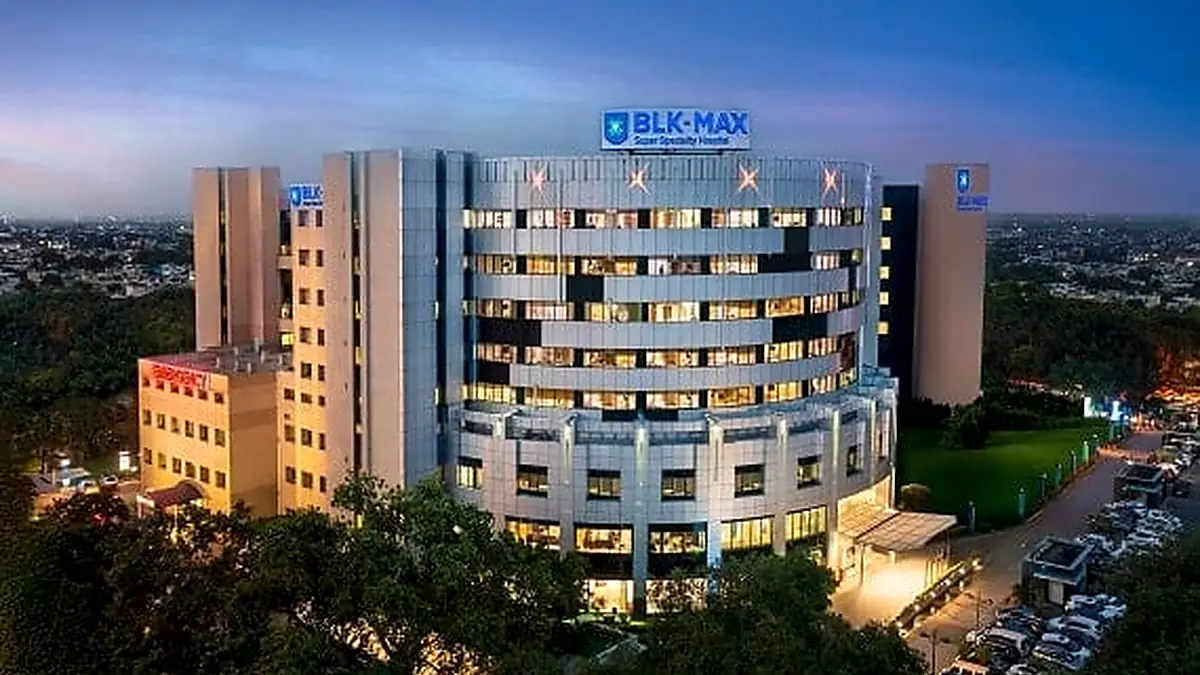
Many American self-pay cancer patients require multimodal sequencing—either neoadjuvant chemoradiation downsizing followed by resection, or upfront organ-sparing surgery in New Delhi at BLK-Max Super Speciality Hospital followed four weeks later by adjuvant proton or VMAT radiation. BLK-Max’s Pusa Road campus near Rajendra Place Metro houses dedicated Da Vinci Xi dual-console surgical oncology theaters (performing nerve-sparing radical prostatectomies, Indocyanine Green [ICG] near-infrared fluorescence sentinel lymph-node mapping, sphincter-preserving ultralow anterior rectal resections, robotic transthoracic esophagectomies, and Whipple pancreaticoduodenectomies), closed/open Hyperthermic Intraperitoneal Chemotherapy (HIPEC) perfusion suites ($9,500–$14,200 vs $110,000+ in US academic centers), and one of North India’s largest HEPA-isolated Bone Marrow & Stem Cell Transplant units ($18,000–$32,000 for autologous myeloma/lymphoma transplants).
Every tumor resection uses live intraoperative frozen-section pathology to verify negative microscopic margins (R0 resection) before the patient leaves the operating table, backed by NABL molecular pathology labs running Illumina 500-gene comprehensive genomic profiling (BRCA1/2, HRD, EGFR, ALK, ROS1, KRAS G12C, HER2-low, PD-L1, and MSI-H/TMB) within 10 business days. Head-and-neck and breast surgical oncology teams also incorporate immediate microvascular free-flap reconstruction (radial forearm, anterolateral thigh, or fibula osteocutaneous flaps monitored via implantable Cook-Swartz venous Dopplers) under a single anesthetic session.
Systemic infusion economics also merit a frank conversation during your video consult. While imported US-patented PD-1/PD-L1 checkpoint inhibitors like pembrolizumab (Keytruda) or nivolumab (Opdivo) carry global manufacturer pricing, authorized tiered patient-assistance programs in India—combined with DCGI-approved oral targeted tyrosine kinase inhibitors (osimertinib, alectinib, palbociclib, olaparib, lenvatinib) and WHO-prequalified trastuzumab, pertuzumab, bevacizumab, and rituximab biosimilars—routinely reduce per-cycle drug expenditure by 55% to 78% compared with US hospital outpatient infusion markups. Note that Indian medical oncologists infuse IV biologics strictly inside hospital day-care oncology bays via Bard/PowerPort central access—never shipping bulk temperature-sensitive IV vials across US Customs. Patients already carrying an implanted chest Mediport from America should bring their wallet port-identification card so oncology nurses confirm power-injectable CT contrast compatibility (5 mL/sec rating) before simulation scans.
Living Comfortably for 6 Weeks in Taramani (Chennai) or Rajendra Place (New Delhi)
Spending 35 to 45 nights abroad during daily radiation requires residential calm, reliable elevators, in-unit washing machines, and an equipped induction kitchen where a spouse can blend mild, high-protein meals if taste buds dull or mild dysphagia develops around Week 4 of head-and-neck or thoracic radiation. Standard hotel rooms grow confining fast over six weeks; experienced US families book 3 initial hotel nights on arrival so they can tour and inspect a quiet monthly serviced apartment in person:
| Accommodation Zone | Proximity to Cancer Center | Monthly Rate Range (USD) | Neighborhood Practicalities for US Families |
|---|---|---|---|
| OMR / Perungudi / Taramani Serviced Suites (Chennai) | 5–12 min cab to Apollo Proton | $1,350 – $2,400 / month | Modern IT-corridor gated high-rises (Citadines OMR, Turyaa, Holiday Inn OMR, Somerset Greenways in nearby MRC Nagar) with full kitchens, 100% generator power & Form-C registration. |
| Adyar & Thiruvanmiyur Coastal Belt (Chennai) | 12–18 min to Apollo Proton | $1,500 – $2,800 / month | Tree-lined residential avenues, clean sea breezes off Elliot’s Beach, Amethyst/organic grocers, Western cafés & low traffic horn noise. |
| Pusa Road / Karol Bagh / Diplomatic Enclave Fringe (Delhi) | 5–15 min to BLK-Max Hospital | $1,600 – $3,100 / month | Jaypee Siddharth (5-min drive to BLK-Max), Taj Palace / ITC Maurya medical long-stay corporate rates, or Chanakyapuri serviced flats with HEPA room purifiers. |
Ask your radiation coordinator on Simulation Day to lock in a fixed morning (8:30 AM) or early-evening (5:30 PM) gantry time slot so you avoid Chennai’s midday coastal sun and keep predictable remote-work or rest hours. Observe strict neutropenic food hygiene throughout treatment—drinking only sealed bottled or boiled RO water, avoiding raw restaurant salads or pre-cut unpeeled fruits, and cooking fresh proteins at your apartment. Factor monthly housing, dedicated app-based Uber Premier sedans ($3–$6 each way), weekly nadir CBC/creatinine blood draws ($18–$28 when receiving concurrent weekly radiosensitizing cisplatin or daily oral temozolomide), psycho-oncology/speech-swallowing therapy, and companion groceries inside our Medical Trip Total Budget Planner.
Managing the 60-Day e-Medical Visa Window & Online FRRO Extensions
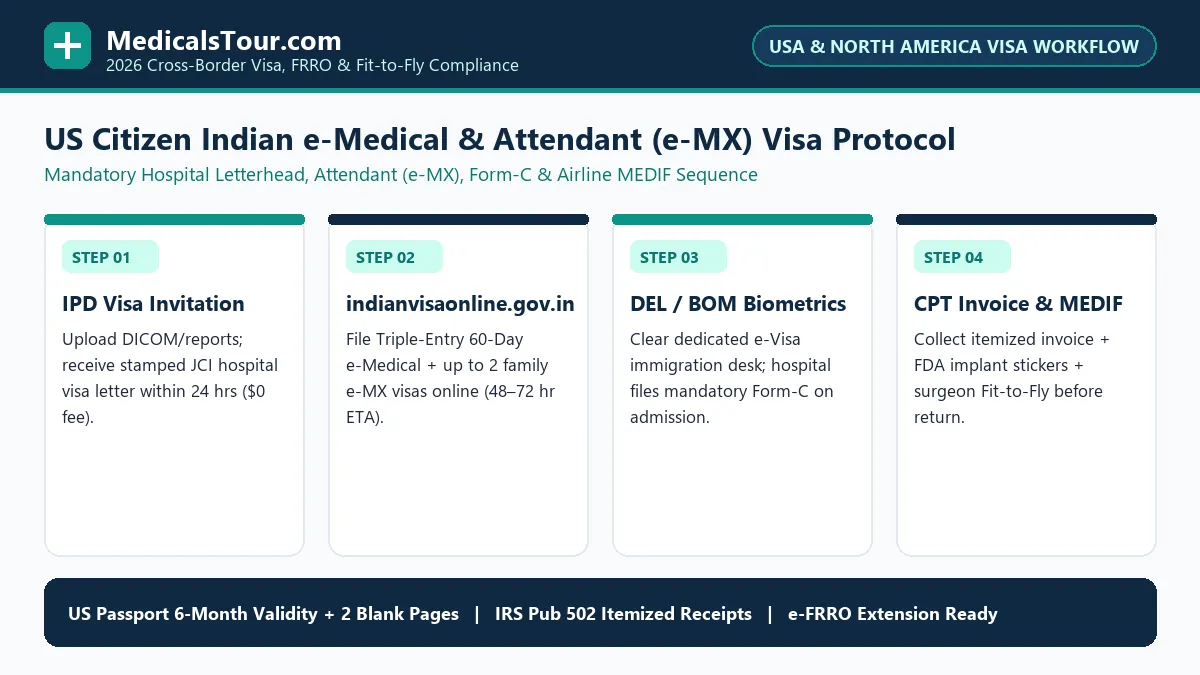
Here is a critical logistical trap that catches proton therapy families off guard if nobody flags it on Week 1: a standard Indian e-Medical Visa grants 60 calendar days of stay from your airport arrival stamp. When you add 2 pre-simulation days + 8 physics planning days + 33 weekday fractions (nearly 7 calendar weeks once Saturdays, Sundays, and occasional cyclotron maintenance or national holidays are counted) + 4 post-radiation recovery days before flying, a complex 35-fraction skull-base chordoma or craniospinal course easily reaches 56 to 64 total days.
Do not wait until Day 57 to check your passport stamp! Pick up a local Indian Airtel or Jio SIM card at the Chennai (MAA) or Delhi (DEL) airport arrivals kiosk on night one so your phone receives hospital patient-portal and government e-FRRO SMS one-time passwords without roaming glitches. Under Medical Tour’s long-stay oncology protocol—and explained step by step in our FRRO Medical Visa Extension & Registration Guide—take three proactive safeguards:
- Insist on Immediate Digital Form-C at Check-In: Whether staying at Somerset Greenways in Chennai or a serviced apartment near Pusa Road, ask reception on Day 1 for a printed copy of your Bureau of Immigration Form-C acknowledgment number. Unregistered private Airbnb hosts often lack Form-C credentials, blocking online FRRO extensions completely.
- File e-FRRO Extension at Day 42 If Needed (Or Obtain a 6-Month Paper Medical Visa Pre-Trip): If your preliminary radiation estimate specifies 33+ fractions or surgery followed by adjuvant proton therapy (~75–85 days total), apply pre-departure through VFS Global in the US for a 6-month Regular Paper Medical Visa, or let the hospital International Desk upload a stamped Radiation Oncologist Treatment Continuation Certificate, passport bio/stamp scans, and address proof onto
indianfrro.gov.inat least 14 days before Day 60. - Keep Attendant Visas Synchronized: Remember to submit the accompanying spouse’s e-Medical Attendant Visa extension simultaneously in the same online e-FRRO family packet so neither traveler incurs overstay exit holds at MAA or DEL immigration.
Bringing RT-DICOM Dose Maps & Pathology Blocks Home to Your US Oncologist
Your local American medical oncologist, neurosurgeon, and radiation oncologist will oversee your 3-month surveillance MRIs, PSA curves, or PET-CT scans for years after you return home—and even when a domestic commercial insurer denies overseas proton radiation, follow-up diagnostic imaging, port flushes, and lab surveillance back on American soil remain covered under your standard US policy. Before boarding your return flight from Chennai or Delhi, ensure your oncology hand-off kit includes:
- Complete RT-DICOM Export on Encrypted USB + Cloud Link: Ask the medical physics department for the complete four-part radiation dataset—
RT-Plan,RT-Dose,RT-Struct, and Simulation CT—alongside a signed color PDF of your Dose-Volume Histogram (DVH) recording exact Cobalt-Gray-Equivalent (GyRBE) maximum, mean, and D95 doses delivered to the Clinical Target Volume (CTV) and every adjacent critical structure (optic chiasm, brainstem, cochlea, heart, rectum). Having exact 3D isodose lines is vital at Month 3 and Month 6, when transient Bragg-peak inflammatory contrast enhancement (“pseudo-progression”) on brain or skull-base MRIs can otherwise be misread as tumor growth unless overlaid directly onto the proton dose map! - Paraffin Pathology Blocks (FFPE) & Unstained Charged Slides: If you underwent tumor biopsy or resection in India, sign out your formalin-fixed paraffin-embedded tissue block or 15 unstained positively charged glass slides plus an official hospital pathology customs clearance letter so US academic reference labs (FoundationOne CDx, Caris, Tempus, or Dana-Farber/MD Anderson) can run future clinical-trial assays without re-biopsying you.
- Acute Radiation Dermatitis & Mucositis Travel Timing: Acute radiation skin erythema and throat mucositis typically crest 5 to 10 days after the final fraction before healing rapidly; carry non-metallic Calendula/hyaluronic barrier creams, benzydamine/lidocaine oral rinses, anti-emetics, baseline pituitary/thyroid lab schedules for skull-base patients, dexamethasone taper instructions if brain edema prophylaxis applies, and direct physician-to-physician email contacts across our global cross-border care corridors. Most proton patients feel energetic enough to fly home 3 to 5 days after ringing the final-fraction completion bell, avoiding peak Week-2 post-treatment fatigue in transit while arranging a Day-14 domestic check-in with their hometown medical oncologist to review skin healing, hydration, and nutrition weight maintenance.