Talk to any hepatologist or transplant coordinator in Houston, Chicago, or Philadelphia and they will acknowledge a cruel structural blind spot inside the American UNOS organ allocation system. A fifty-eight-year-old patient with decompensated NASH cirrhosis, refractory ascites, or early multifocal hepatocellular carcinoma within Milan criteria may sit for fourteen months with a MELD-Na score of 16 or 18—debilitated by hepatic encephalopathy and repeated paracentesis taps, yet statistically too “stable” to draw a deceased-donor liver offer before variceal bleeding or tumor progression disqualifies them. Even when a healthy adult son, daughter, or sibling volunteers to donate a right hepatic lobe or single kidney, uninsured families, self-employed business owners on narrow ACA networks, or patients denied out-of-state transplant center referrals confront domestic hospital estimates ranging from $260,000 for renal transplantation to north of $575,000 for living-donor liver surgery.
Over the past two decades, quaternary transplant institutes in New Delhi, Gurugram, and Chennai have evolved into the world’s highest-volume centers for living-donor hepatobiliary and renal transplantation—routinely logging 250 to 400 living-donor liver grafts per single program annually with one-year graft and recipient survival rates matching top US academic benchmarks (90%–93% for elective living-donor liver; 96%+ for living-related kidney). Crucially, foreign nationals cannot travel to India to join a deceased-donor cadaveric queue or recruit paid strangers; every international case must bring an eligible, genetically or legally verified family donor from home.
Drawing on Medical Tour’s 2026 quaternary hospital audit, this protocol walks American families through exact recipient-plus-donor package tariffs ($14,500–$34,500), India’s Transplantation of Human Organs and Tissues Act (THOA) legal scrutiny, US Embassy New Delhi and Chennai Consulate attestation steps, and six-week post-transplant containment.
The MELD Waiting-List Trap vs Planned Living-Related Transplantation in India
In the United States, deceased organs account for roughly 92% of liver transplants, leaving living-donor right-lobe hepatectomy concentrated inside fewer than twenty high-volume academic centers nationwide. Across Asia—where cultural barriers historically limited brain-dead organ retrieval—quaternary surgical teams perfected microvascular hepatic artery reconstruction under high-power Zeiss operating microscopes, middle hepatic vein (MHV) venoplasty, and laparoscopic living-donor nephrectomy at a scale few Western programs replicate. High surgical repetition directly compresses cold ischemia time: because the donor and recipient operating theaters sit side by side behind a shared sterile corridor, cold ischemia shrinks from eight hours in cadaveric aviation transport to under forty-five minutes.
Speed matters just as much as microvascular volume once a family identifies a willing blood-group-compatible relative (aged 18 to 50 for liver; 18 to 60 for kidney, BMI typically under 28 without fatty steatosis above 10%). Once pre-travel CT triphasic liver volumetry or renal CT angiography confirms anatomical suitability via cloud review, Indian multidisciplinary transplant boards complete in-person donor workups and statutory Authorization Committee hearings in 10 to 14 days, scheduling surgery before sarcopenia, hepatorenal syndrome, or dialysis catheter sepsis erodes physiological reserve.
For American hepatocellular carcinoma (HCC) patients requiring whole-body FDG or Ga-68 staging scans to verify absence of extrahepatic spread prior to travel, cross-referencing domestic quotes with our PET-CT & Oncology Diagnostics Cost Guide and Pre-Surgical Cardiac Clearance Tariffs clarifies how Indian pre-transplant evaluation bundles save an additional $6,000 to $11,000 before admission. Families dealing with polycystic kidney disease, IgA nephropathy, or diabetic focal segmental glomerulosclerosis (FSGS) gain an equally decisive biological edge: pre-emptive living-donor kidney transplantation performed when eGFR drops below 15 mL/min/1.73m²—before years of arteriovenous fistula hemodialysis calcify iliac vessels—delivers markedly superior ten-year graft longevity.
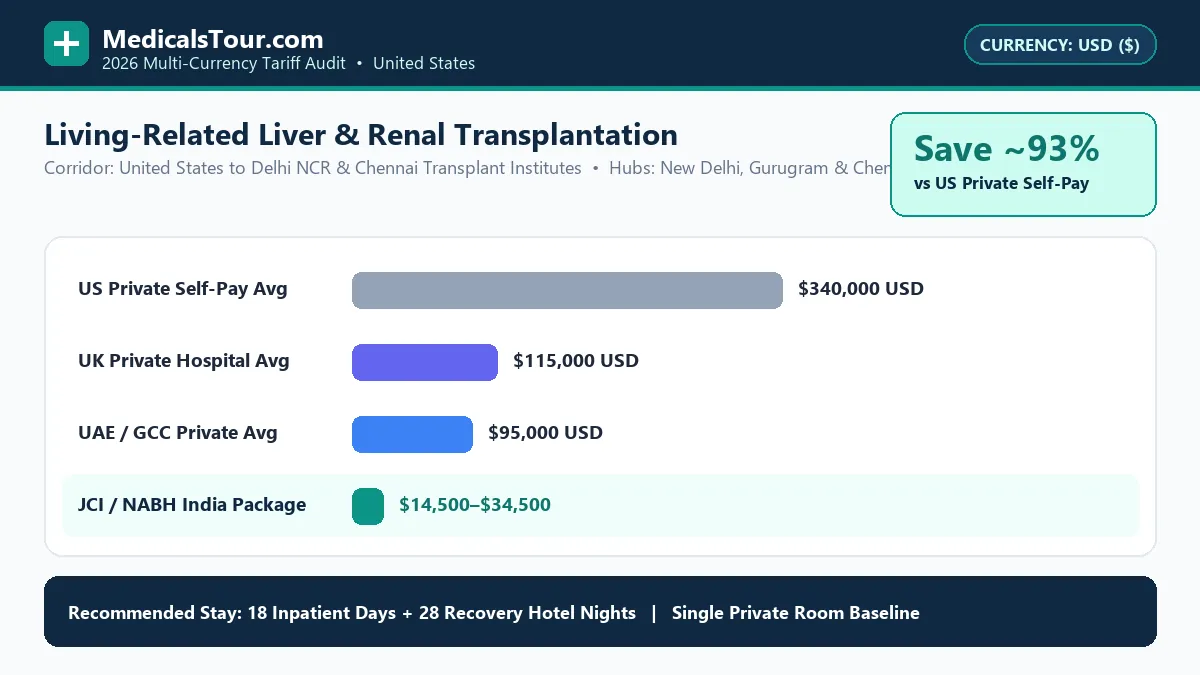
2026 Transplant Package Tariffs: Liver & Renal Bundles vs Unbundled ICU Contingencies
Every credible Indian transplant institute issues a unified Recipient + Donor Combined Package Quote anchored to a Standard Single Private Room after ICU step-down. You can model flights, companion visas, and forty-five-day apartment leases alongside these surgical baselines in our Medical Trip Budget Planner.
| Transplant Procedure (Recipient + Living Donor) | US Billed / Self-Pay Avg | India JCI Package (USD) | Included Hospital Stay & Core Clinical Scope |
|---|---|---|---|
| ABO-Compatible Living-Donor Kidney Transplant | $245,000 – $310,000 | $14,500 – $17,500 | 10–12 days recipient + 5 days laparoscopic donor nephrectomy, renal ICU, standard triple immunosuppression start. |
| ABO-Incompatible / Desensitized Renal Transplant | $315,000 – $390,000 | $20,500 – $25,500 | Adds Rituximab conditioning, 3–5 cascade plasmapheresis / immunoadsorption sessions & anti-A/B titer monitoring. |
| Adult Right-Lobe Living-Donor Liver Transplant | $480,000 – $625,000 | $28,500 – $34,500 | 18–21 days recipient (incl. 5–7 Transplant ICU days) + 7–9 days donor hepatectomy, cell-saver & daily Doppler ultrasound. |
| Pediatric Left-Lateral Segment Liver Transplant | $450,000 – $590,000 | $25,500 – $31,000 | Dedicated Pediatric Liver ICU nursing (biliary atresia / metabolic cases), parent donor stay & nutritional TPN support. |
Mandatory 15%–20% Reserve Buffer: What Base Transplant Quotes Exclude
Honest financial counseling requires separating the surgical package from pre-op clearance and ICU biological variables. Budget three explicit non-package line items before initiating a SWIFT wire:
- Pre-Transplant Donor & Recipient Workup ($2,200 – $3,800): Billed outpatient over Days 1–10; covers 640-slice CT liver volumetry/MRCP, HLA high-resolution typing, CDC/Luminex donor-specific antibody cross-match, dobutamine stress echo, pan-endoscopy, NABL DNA kinship profiling, and psychiatric/gynecological clearances.
- Induction Biologics & High-Cost Vials ($1,600 – $4,500): Basiliximab (Simulect) or Rabbit Anti-Thymocyte Globulin (ATG) in renal cases, Hepatitis B Immunoglobulin (HBIG) for HBV-cirrhosis recipients, or liposomal amphotericin/cidofovir if opportunistic viremia surfaces.
- Extended ICU / CRRT Contingency (Hold $5,000 – $8,000 Liquid Reserve): If a high-MELD recipient requires Continuous Renal Replacement Therapy (CRRT), extra apheresis platelet units beyond the package blood-bank quota, or ventilator days past Day 21, per-diem ICU charges apply.
Watch room-category upgrade multipliers closely when signing inpatient admission forms. At both Indraprastha Apollo and Gleneagles Chennai, transplant packages assume step-down recovery inside a Standard Single Private Room—an isolated, en-suite room with a full attendant couch and dedicated nursing call bell. Requesting an Executive Deluxe Suite does not merely add $130 per night in room rent; Indian hospital billing software automatically indexes surgeon fees, hepatology rounds, and diagnostic charges upward by 20% to 30%, inflating a $31,000 liver bundle by $6,500 without changing clinical sterility one iota.
THOA Statutory Law Explained: Eligible Blood Relatives, DNA Kinship & US Embassy Attestation
India enforces some of the strictest anti-trafficking transplant legislation on earth under the Transplantation of Human Organs and Tissues Act (THOA, 1994; amended Rules 2014). International patients are categorically barred from bringing an unrelated friend, employee, distant acquaintance, or compensated donor—even if that individual volunteers altruistically in the United States. Hospital Authorization Committees only approve foreign pairs where the donor is a verifiable “Near Relative”: spouse, son, daughter, father, mother, brother, sister, grandparent, or grandchild.
| Statutory Requirement | Governing Form / Authority | Practical Preparation Step Before Leaving the USA |
|---|---|---|
| Genetic Kinship Proof | THOA Form 5 + NABL STR DNA Test | Bring apostilled state birth certificates showing shared parental lineage; hospital runs mandatory cheek/blood DNA match in India. |
| Spousal Donor Proof | THOA Form 2 + Marriage Record | Apostilled county marriage certificate + wedding photos, joint tax returns (IRS 1040) or birth certificates of shared children proving long-standing marriage. |
| Diplomatic No-Objection / Form 21 | US Embassy New Delhi / Chennai Consulate | Book American Citizen Services notarial appointment (Shantipath in Delhi or Gemini Circle in Chennai) to execute notarized kinship affidavits for embassy transmission. |
| Next-of-Kin Donor Consent | Notarized Spouse / Parent Consent | If your adult sibling or child is donating, their legal spouse must sign a notarized, apostilled consent affidavit acknowledging surgical risk. |
| Authorization Committee Hearing | State / Hospital Statutory Panel | Video-recorded in-person interview confirming zero financial coercion, reviewed alongside independent external government nominees. |
Never board a flight to India with un-apostilled photocopies. Order certified long-form vital records from your state Secretary of State with Hague Apostille seals attached, plus three years of family photographs together—simple preparation that shaves five stressful days off legal clearance in Delhi or Chennai. Also scan every apostilled page to the hospital’s dedicated THOA legal coordinator ten days before departure so their medico-social worker can pre-audit name spellings across US passports, Social Security cards, and county birth registries; even a missing middle initial between a mother’s maiden name and an adult son’s birth certificate triggers a supplemental notary affidavit if caught late.
Dual-Team Donor Safety at Indraprastha Apollo Sarita Vihar and Gleneagles Chennai
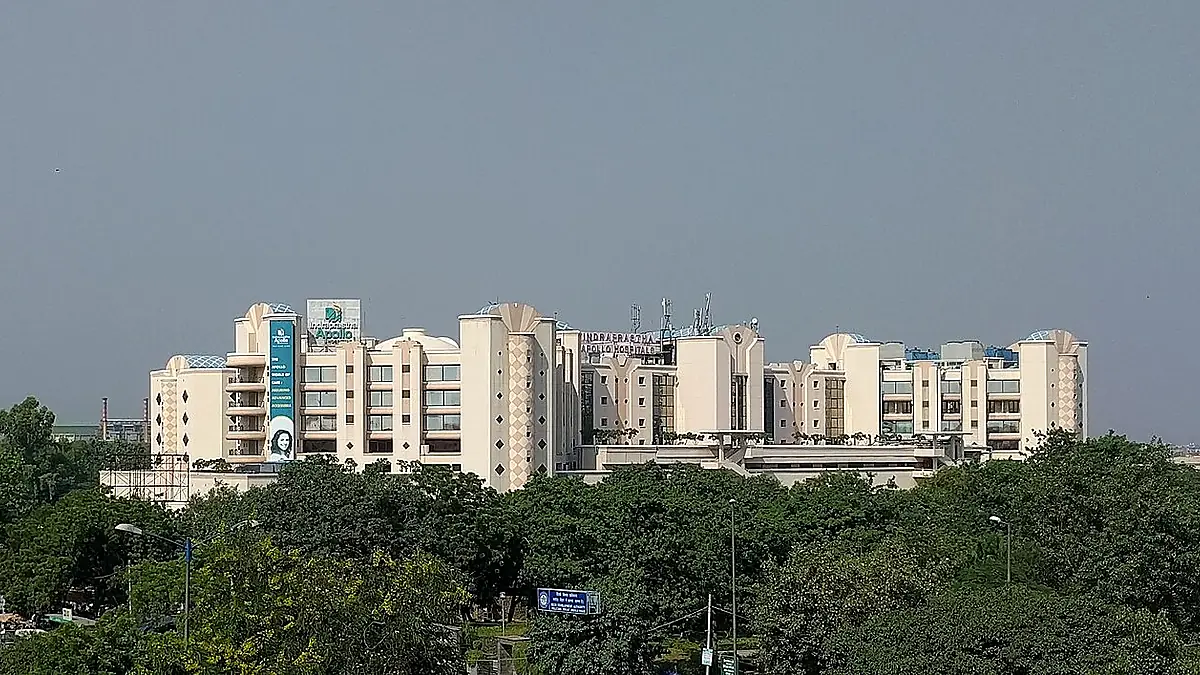
When a healthy thirty-two-year-old American daughter donates 60% of her liver or a left kidney to save a parent, her surgical safety outweighs every financial metric. Two JCI- and NABH-accredited campuses anchor the US solid-organ corridor. In Southeast Delhi, Indraprastha Apollo Hospital on NH-19 in Sarita Vihar pioneered pediatric and adult liver transplantation in India in 1998 and maintains dedicated positive-pressure transplant ICUs, 24-hour thromboelastography (TEG/ROTEM) coagulation monitoring, and standalone donor surgical teams so no conflict of interest ever arises between pushing graft harvest boundaries and protecting donor biliary anatomy.
In Southern India, Gleneagles HealthCity on Old Mahabalipuram Road (OMR), Chennai operates one of Asia’s flagship multi-organ abdominal transplant institutes across a greenfield campus thirty-five minutes from Chennai International Airport (MAA). Surgeons there utilize Cavitron Ultrasonic Surgical Aspirators (CUSA) for bloodless hepatic parenchymal transection, intraoperative indocyanine green (ICG) fluorescence cholangiography to map microscopic bile ducts, and strict Graft-to-Recipient Weight Ratio (GRWR ≥ 0.8%) plus ≥ 30% future liver remnant rules for the living donor.
Roughly one in four prospective family liver donors screened in Delhi or Chennai is initially deferred due to mild diet-related hepatic steatosis (fatty infiltration between 15% and 25% on MRI proton-density fat fraction). Rather than rejecting the family outright or gambling with primary graft non-function, Indian hepatology nutritionists place mildly steatotic donors on a supervised three-week high-protein, calorie-restricted conditioning protocol that reliably drops hepatic fat below 8% before repeat FibroScan clearance. In uncomplicated renal donations, 3D laparoscopic or robotic hand-assisted donor nephrectomy through a low Pfannenstiel bikini-line extraction incision allows the healthy donor to walk the corridor within twenty-four hours, discharge to the family apartment on Day 4 or 5, and fly back to the United States around Day 18 to 21 after surgical staple removal and stable serum creatinine verification. Right-lobe liver donors remain hospitalized 7 to 9 days while liver enzymes normalize and remnant hepatic regeneration accelerates—reaching roughly 80% of original functional volume within six weeks.

6-Week Inpatient & Serviced-Apartment Recovery Protocol: Tacrolimus Troughs & FRRO Rules
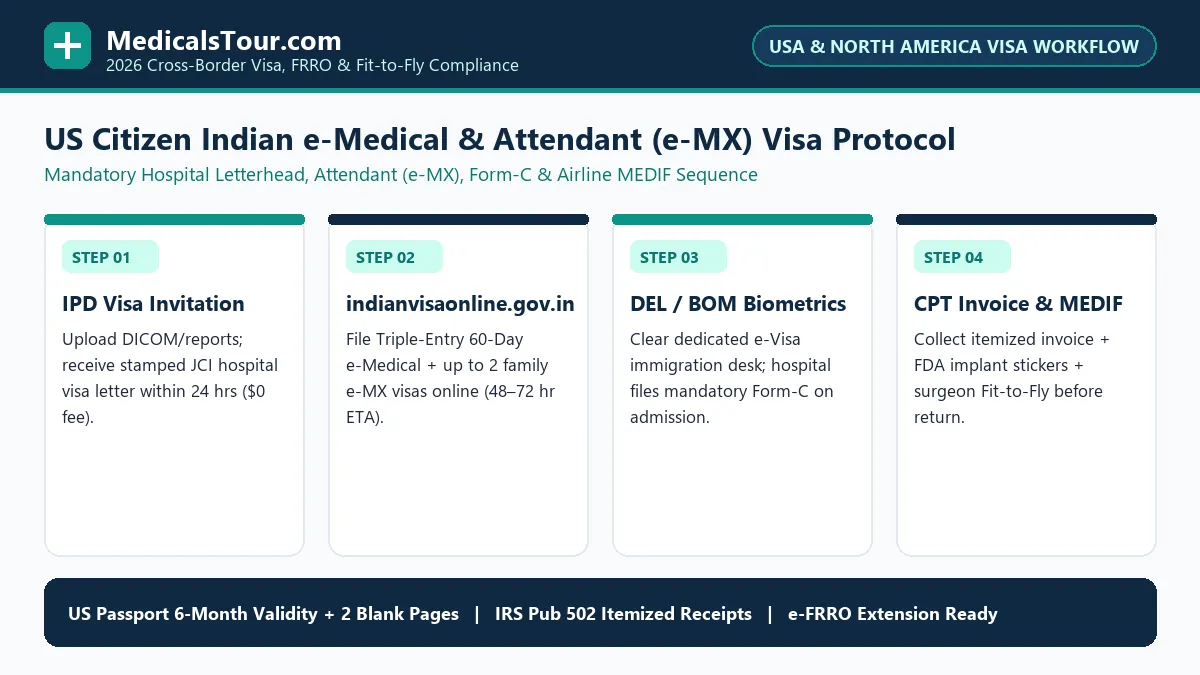
Solid-organ transplantation is never a two-week fly-in medical trip. Both the recipient and primary caregiver must budget 6 to 8 total weeks in India (roughly 12–21 inpatient days followed by 24–35 outpatient recovery days within twenty minutes of the transplant unit). Just as critically, both the patient and the living donor must enter India on full Medical Visas (MED)—a living donor cannot legally undergo organ retrieval on a Tourist e-Visa—while a third non-surgical family member travels as caregiver on a Medical Attendant Visa (MED-X). Review document pairing rules in our Medical Attendant Visa Checklist.
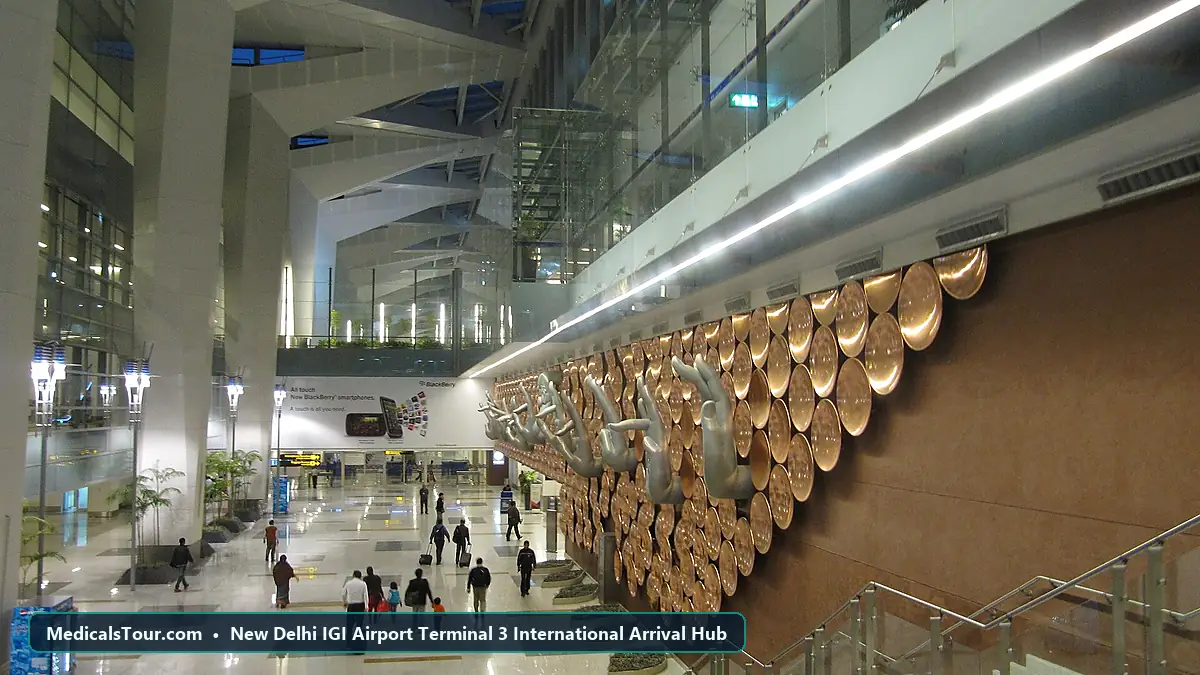
Because total stay crosses 14 days and transplant complications occasionally require staying past an initial 60-day visa window, international coordinators upload hospital tenancy letters and passport scans to India’s online e-FRRO portal within two weeks of arrival; step-by-step instructions appear in our FRRO Medical Visa Registration & Extension Guide. Keep digital scans of every visa stamp, Form-C hotel/apartment registration receipt, and hospital bonafide certificate stored in a shared family folder so exit immigration inspection at Delhi T3 or Chennai International takes under sixty seconds even after an extended medical stay.
Once discharged from the hospital ward to an elevator-equipped, bleach-sanitized serviced apartment in Jasola/New Friends Colony (near Apollo Delhi) or Perumbakkam/Sholinganallur (near Gleneagles Chennai), twice-weekly outpatient clinic mornings revolve around three precision metrics:
- Calcineurin Inhibitor Trough Calibration: Whole-blood FK506 (Tacrolimus) 12-hour morning trough levels drawn strictly before the 08:00 dose—targeting 8–10 ng/mL in early weeks—alongside Mycophenolate Mofetil and rapid prednisolone tapering.
- Graft Perfusion Surveillance: Bedside color Doppler ultrasound checking hepatic artery resistive index, portal vein velocity, or transplanted iliac renal allograft perfusion without contrast nephrotoxicity.
- Surgical Drain & Stent Milestones: Removal of abdominal Jackson-Pratt drains once ascitic/lymphatic output settles, and cystoscopic removal of the double-J ureteric stent around Week 3 to 4 in kidney recipients.
Do not underestimate caregiver bandwidth during Weeks 2 and 3. When the living donor discharges from the surgical floor five to ten days ahead of the recipient, that donor is recovering from major abdominal laparoscopy or hepatectomy and cannot lift luggage, grocery-shop in humid traffic, or manage midnight medication logs alone. Bringing one dedicated non-surgical companion—or hiring a hospital-vetted 12-hour private-duty RN ($35–$55 per day) for the apartment—keeps both surgical patients rested.
Infection Control, CRRT Reserve Budgets & Pharmacy Stockpiling Before Departure
During the first forty-five days of peak T-cell immunosuppression, environmental hygiene inside your recovery apartment matters just as much as surgical anastomosis technique. Instruct your apartment host to clean split air-conditioning evaporator coils before check-in, run a portable H13 HEPA air purifier in the recipient’s bedroom, use boiled or bottled RO water even for brushing teeth, and serve exclusively freshly pressure-cooked meals—zero raw salads, unpeeled berries, deli meats, or reheated restaurant buffets that carry Listeria, Cryptosporidium, or Hepatitis E risk.
On the banking side, transferring $20,000 to $40,000 from a US bank requires initiating an international SWIFT wire directly to the hospital’s corporate beneficiary account five business days ahead of admission, quoting your passport number and hospital UHID under RBI medical treatment inward remittance rules so zero funds get trapped in intermediary compliance queues. Read our Hospital SWIFT Wire Transfer & Forex Billing Guide before visiting your US bank branch.
Before flying home, purchase a 90-day sealed supply of brand-consistent immunosuppressants (such as PanGraf/Prograf tacrolimus, CellCept/Mycept mycophenolate, valganciclovir, and cotrimoxazole prophylaxis) directly from the hospital’s inpatient pharmacy, backed by an itemized physician prescription bearing generic chemical names and batch numbers for US Customs and Border Protection (CBP) personal-use clearance. Never switch generic tacrolimus manufacturers mid-flight without rechecking trough blood levels within 72 hours, as minor bioavailability shifts can trigger subclinical rejection or acute calcineurin nephrotoxicity. Pack 100% of anti-rejection capsules in your cabin personal item alongside a digital pill-timer set to UTC elapsed hours—because crossing ten time zones between New Delhi and Chicago scrambles local wall-clock “8 AM / 8 PM” dosing unless you maintain a strict 12.0-hour physiological interval across the Atlantic.
Handing Off Post-Transplant Hepatology and Nephrology Care Back in the United States
The single smartest step an American family can take before flying to Delhi or Chennai is scheduling a frank pre-departure consultation with a local US transplant nephrologist, hepatologist, or university-affiliated internist to arrange post-return lab continuity. Under federal EMTALA emergency statutes and Medicare Part B immunosuppressive drug rules (for ESRD-eligible beneficiaries meeting statutory criteria) or private ACA coverage, domestic physicians routinely manage long-term lab surveillance once acute surgical recovery stabilizes—provided they receive an exhaustive, English-language clinical dossier rather than handwritten notes.
In Medical Tour’s cross-border transplant coordination experience, smooth domestic handoffs depend on carrying both digital cloud links and printed binders containing donor and recipient operative reports, cold/warm ischemia timestamps, HLA typing and DSA Luminex sheets, pathology biopsy slides (if performed), serial tacrolimus/creatinine/bilirubin flowcharts, and surgical stent removal logs. Also verify CMV (Cytomegalovirus) and BK virus quantitative PCR baseline titers within seventy-two hours of discharge so your home specialist has a clean day-zero viral reference point. On the 15-hour return flight—ideally booked in lie-flat business class to permit leg elevation and minimize shared lavatory exposure—the recipient wears an N95 respirator throughout airport terminals, walks the cabin aisle with compression socks every two hours, and maintains timed hydration.
Remember to arrange structured follow-up for your living donor back in the United States as well. Even though kidney and right-lobe liver donors recover rapidly and require zero anti-rejection medication, responsible aftercare calls for basic metabolic and liver-function blood panels plus incision inspection at Month 1, Month 6, and Month 12 through their home primary care physician. Keep itemized hospital receipts, SWIFT bank confirmations, and boarding passes for both the recipient and the living donor: under IRS Publication 502, qualified surgical, diagnostic, and transportation expenses incurred by a living organ donor are deductible medical expenses for the US taxpayer paying the bill, and pre-tax Health Savings Account (HSA) funds may be applied toward hospital surgery charges when properly documented with CPT/ICD-10 coding. To compare visa timelines, hospital campus layouts, and companion logistics across other high-acuity surgical specialties, explore our complete International Patient Corridors Directory before contacting hospital transplant coordinators.