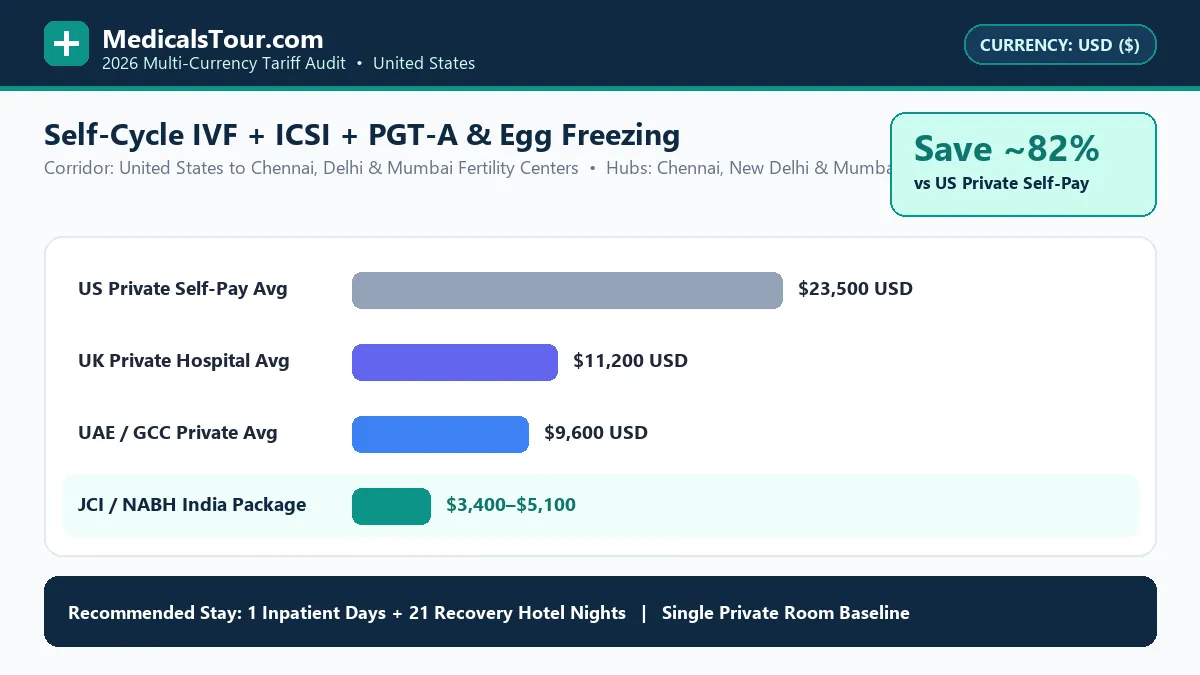
Despite state-level fertility mandates expanding on paper, more than half of American couples working at mid-sized firms, startups, or self-employed households still carry zero insurance coverage for In Vitro Fertilization (IVF). Walk into a private reproductive endocrinology clinic in San Jose, Boston, or Chicago and the financial math compounds fast: a $14,800 base retrieval cycle swells by $5,200 for pharmacy gonadotropins, $2,400 for ICSI sperm injection, and $4,500 for PGT-A chromosomal biopsy—pushing a single attempt to $23,500 to $28,000 USD, with biological statistics often requiring two or three retrievals for a cumulative live birth.
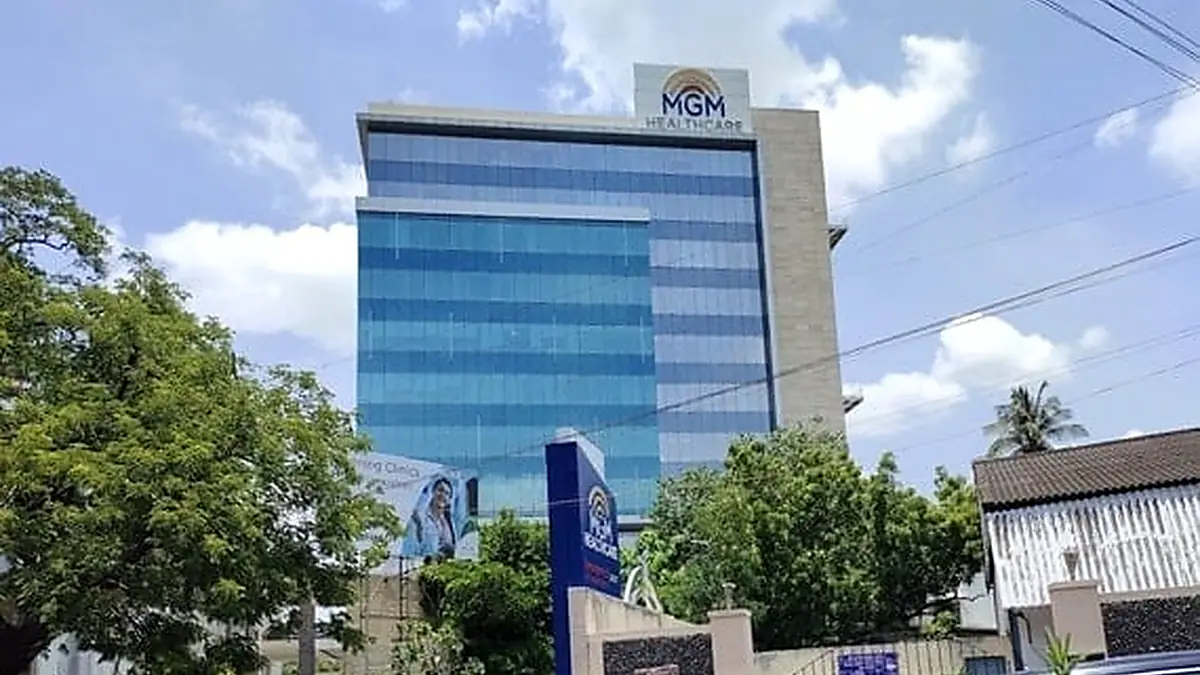
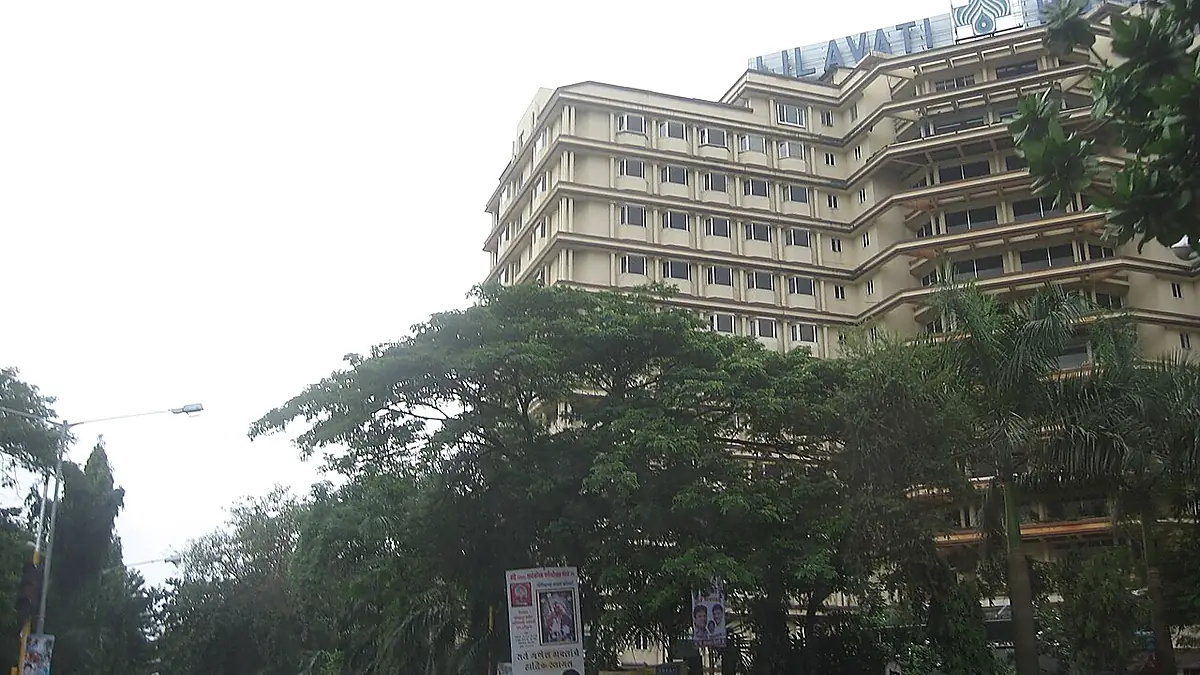
Across hospital-integrated fertility centers in Chennai, Mumbai, and New Delhi—including MGM Healthcare on Nelson Manickam Road in Chennai and Lilavati Hospital & Research Centre at Bandra Reclamation in Mumbai—senior embryologists run ISO Class 5 cleanroom IVF laboratories equipped with identical Vitrolife EmbryoScope+ time-lapse incubators, Eppendorf micromanipulators, electronic RFID witness barcoding, and Merck/Ferring recombinant hormone pens for $3,400 to $5,100 USD per complete self-cycle. Unlike assembly-line clinics that force twenty women onto arbitrary oral-contraceptive batching calendars so the embryologist only works one weekend a month, hospital ART wings tailor ovarian stimulation strictly to your individual Anti-Müllerian Hormone (AMH) and Day-2 antral follicle count.
Planning reproductive care in India in 2026 requires understanding two realities upfront: the biological rhythm of a 21-day ovarian stimulation and blastocyst transfer trip, and the crystal-clear statutory boundaries of India’s Assisted Reproductive Technology (Regulation) Act, 2021 so no American couple travels on outdated legal assumptions. Because emotional calm and clear clinical communication matter enormously when administering evening hormone injections far from home, hospital-based units assign a dedicated English-speaking fertility nurse navigator on WhatsApp from Cycle Day 1 through your 6-week ultrasound back in America.
2026 Fertility Cost Breakdown in USD: Self-Cycle IVF, ICSI, PGT-A & Egg Freezing
Many American clinics quote an attractive base IVF fee while burying recombinant injectable medications, anesthesia, assisted hatching, and blastocyst freezing on separate third-party pharmacy and lab invoices. Auditing Medical Tour’s 2026 reproductive medicine tariff index—alongside our granular Chennai IVF Package Cost Guide, PGT-A Genetic Embryo Screening Cost Guide, and Egg Freezing Cost Guide—shows exactly where US couples save $18,000+ per cycle:
| Reproductive Procedure / Add-On | US Cash Clinic + Pharmacy Total | India Hospital ART Unit (USD) | What the Indian Hospital Bundle Covers |
|---|---|---|---|
| Homologous IVF + ICSI + Fresh/Freeze-All Cycle | $19,500 – $25,000 | $3,400 – $4,600 | Follicular scans, recombinant FSH/hMG pens (up to standard IU cap), propofol egg retrieval, ICSI & Day-5 blastocyst culture. |
| IVF + ICSI + NGS PGT-A Chromosomal Screening | $24,500 – $31,000 | $4,600 – $5,900 | Trophectoderm laser biopsy + Next-Generation Sequencing ($220–$320 per blastocyst) + vitrification. |
| Social / Elective Mature Egg Freezing (1 Cycle) | $12,500 – $17,800 | $2,300 – $3,200 | 10–12 days stimulation meds, transvaginal retrieval, Kitazato Cryotop vitrification & Year-1 liquid nitrogen storage. |
| Subsequent Frozen Embryo Transfer (FET Visit) | $4,200 – $6,400 | $850 – $1,350 | Endometrial estradiol/progesterone priming, assisted warming & ultrasound-guided catheter transfer. |
| Micro-TESE Surgical Sperm Retrieval (Male Factor) | $8,500 – $14,000 | $1,250 – $1,950 | Operating microscope testicular microdissection by reproductive urologist under general/spinal anesthesia. |
Ask your coordinator to itemize three helpful add-ons before arrival: first, standard packages bundle roughly 2,250 to 2,700 IU of recombinant gonadotropins, while women over 38 or with diminished ovarian reserve (AMH < 1.0 ng/mL) pay transparent hospital-pharmacy rates ($450–$780 extra, not $5,000+) if higher daily doses are needed; second, microfluidic sperm sorting (ZyMot/MACS, $140–$220) and laser-assisted zona hatching ($160) cost a tenth of US clinic fees; third, low-reserve patients can perform DuoStim (back-to-back follicular + luteal-phase stimulation) inside a single 26-day trip to double euploid blastocyst yield before flying home.
Indian ART Regulation Act (2021) & PCPNDT Law: What US Citizens Can & Cannot Do
Outdated blog posts from a decade ago still confuse prospective fertility travelers about Indian reproductive law. Since Parliament enacted the Assisted Reproductive Technology (Regulation) Act, 2021 and the Surrogacy (Regulation) Act, 2021, every registered hospital IVF clinic operates under National ART & Surrogacy Registry oversight with unambiguous rules for foreign passport holders:
- 100% Permitted — Married Heterosexual Couples Using Own Gametes: Foreign married couples (bringing an apostilled or county-registrar certified marriage certificate and valid passports) can freely undergo homologous IVF, ICSI, TESA/Micro-TESE, blastocyst vitrification, and embryo transfer, subject to statutory age caps (female partner aged 21 to 50 years; male partner aged 21 to 55 years).
- 100% Permitted — Social or Oncological Egg Freezing: Adult women within the statutory age bracket—including unmarried American professionals—can legally stimulate and cryopreserve their own mature MII oocytes for future fertility preservation.
- Donor Gamete Scarcity Under the 2021 Act: Because Indian law now restricts anonymous oocyte donors to donating only once in their lifetime (maximum seven oocytes retrieved through a Registered ART Bank, with mandatory 12-month donor health insurance funded by the commissioning couple), legal donor-egg waitlists in India take 3 to 6 months and forbid known relative donations. Most American travelers therefore come specifically for homologous own-egg IVF/ICSI or autologous egg banking.
- Strictly Prohibited — Commercial or Foreign-National Surrogacy: Foreign citizens (unless holding OCI status meeting narrow altruistic domestic statutory criteria—always verify current board rulings) cannot commission gestational surrogacy in India. Any unlicensed broker promising surrogacy to US tourists is operating illegally.
- Zero Embryo Sex Disclosure (PCPNDT Act): Even when performing 24-chromosome NGS PGT-A screening for trisomy 21, 18, or 13 or monogenic PGT-M disorders (cystic fibrosis, beta-thalassemia, sickle cell, Tay-Sachs), Indian labs legally mask X/Y sex chromosomes on the report. Family-balancing gender selection is a criminal offense in India.
- Cross-Border Gamete & Embryo Shipping Reality: Exporting frozen eggs or embryos out of India in dry-shipper dewars requires complex Indian Council of Medical Research (ICMR) NOC clearances. Plan to complete your embryo transfer in India—either fresh or on a brief 8-day return FET trip—rather than expecting courier shipment back to a US lab.
Inside Cleanroom Embryology Labs: EmbryoScope+ Time-Lapse, Recombinant Pens & Vitrification
Pregnancy rates per euploid blastocyst transfer hinge far more on volatile organic compound (VOC) air filtration and incubator stability inside the embryology laboratory than on marble lobby chandeliers. At hospital units like MGM Healthcare Chennai and Lilavati Hospital Bandra, embryology labs sit behind positive-pressure airlocks scrubbed by activated-carbon and potassium-permanganate ZANDAIR/Coda towers with zero-perfume staff policies:
- Electronic Radio-Frequency Witnessing (RI Witness / Matcher): Every petri dish, sperm tube, biopsy straw, and embryo transfer catheter carries a microchip RFID tag or 2D optical barcode tied electronically to both partners’ wristbands—triggering an instant visual-and-audio lock inside the laminar hood if mismatched samples ever enter the workspace, eliminating human mix-up anxiety completely.
- Closed Time-Lapse Morphokinetics (EmbryoScope+ / Geri): Built-in micro-cameras photograph each developing embryo every 10 minutes across five days at physiological low-oxygen tension (5% O₂, 6% CO₂, 89% N₂) without ever opening incubator doors to room air—helping senior embryologists weed out direct unequal cleavages or reverse-cleavage embryos that static daily peeks miss.
- Advanced Male-Factor Sperm Selection (ZyMot & PICSI): When male partners carry elevated Sperm DNA Fragmentation (>20% DFI from varicocele, oxidative stress, or age >42), high-speed density-gradient centrifugation can shear fragile sperm chromatin further. Indian labs route semen through microfluidic ZyMot chambers or hyaluronan-binding PICSI dishes to isolate genetically intact, motile spermatozoa prior to piezoelectric or conventional ICSI injection.
- Authentic Recombinant Gonadotropins & Freeze-All Safety: Ovarian stimulation uses genuine cold-chain Merck Gonal-F, Pergoveris, Ferring Menopur, Rekovelle, and Cetrotide GnRH antagonists. For PCOS or high-AMH patients yielding 15+ oocytes, Indian specialists routinely trigger with a GnRH agonist (eliminating Ovarian Hyperstimulation Syndrome risk almost entirely) and vitrify all Day-5/Day-6 blastocysts on ultra-rapid Kitazato Cryotop straws (>98% post-thaw survival) for a calm frozen transfer.
During your pre-travel Zoom consultation, ask the lab director directly about three published quality metrics: their mature MII fertilization rate with ICSI (benchmark >75%–80%), Day-5 usable blastocyst conversion rate per fertilized 2PN zygote (benchmark >45%–55% in women under 37), and elective Single Embryo Transfer (eSET) policy avoiding high-risk twin gestations whenever a euploid blastocyst is transferred.

Synchronizing Your 21-Day US-to-India Fertility Calendar Without Wasting Vacation Days
Working American couples rarely have six weeks of remote-work flexibility, so pre-cycle synchronization with your Indian reproductive endocrinologist compresses time on the ground in Chennai or Mumbai to 19 to 22 days for a fresh cycle—or splits cleanly into a 14-day retrieval trip plus an 8-day frozen transfer trip if doing PGT-A genetic biopsy (since NGS sequencing results take 10 to 14 days). Sixty to ninety days prior to flying, optimize gamete quality in the US by verifying serum TSH strictly below 2.5 mIU/L, replenishing Vitamin D3 (>35 ng/mL), starting ubiquinol CoQ10 (200 mg twice daily) plus methylated folate, and completing an office hysteroscopy or saline infusion sonohysterogram (SIS) locally so silent uterine polyps, fibroids, or chronic endometritis never derail transfer week:
| Cycle Phase | Location & Days | Clinical Milestones & Partner Attendance |
|---|---|---|
| Pre-Cycle Baseline & Priming | In the USA (3–4 Weeks Prior) | Complete AMH, Day-2 FSH/LH/E2, TSH, prolactin, rubella/infectious serology, uterine cavity SIS/hysteroscopy & semen DNA fragmentation locally; optional 12–14 day OCP/estradiol luteal timing alignment. |
| Controlled Ovarian Stimulation | India Days 1 – 11 | Land on Cycle Day 1 or Day 2; baseline transvaginal AFC scan; daily evening subcutaneous pen injections + 15-minute morning follicular & estradiol checks every 48–72 hours (remote laptop work friendly). |
| Trigger & Oocyte Retrieval (OPU) | India Days 12 – 14 | Exactly 35–36 hours post-trigger: 20-minute ultrasound-guided retrieval under gentle IV propofol sedation. Male partner only needs to be in India for Days 12–16 if work restricts travel! |
| Blastocyst Transfer or PGT-A Biopsy | India Days 18 – 21 | If fresh transfer (endometrial trilaminar lining ≥7.5mm & progesterone <1.5 ng/mL): painless Day-5 blastocyst transfer + 48 hours quiet rest before flying home. If PGT-A or Freeze-All: fly home 48–72 hours post-retrieval! |
Women flying in later for a dedicated 8-day Frozen Embryo Transfer (FET) enjoy an even lighter travel footprint: you start oral estradiol tablets (or letrozole/natural-cycle tracking) at home in the US on Cycle Day 2, verify a ≥8mm trilaminar endometrial lining at a local US ultrasound clinic on Day 11, begin timed progesterone on the exact hour instructed by your Indian specialist, land in Chennai or Mumbai two days before transfer, and fly home 48 hours later.
Remote-Work Serviced Apartments in Chennai (Nungambakkam/Aminjikarai) & Mumbai (Bandra West)
Unlike major orthopedic or cardiac patients, fertility travelers feel physically normal for 90% of their stay—meaning fiber-optic Wi-Fi for US time-zone Zoom calls, a full-sized domestic refrigerator with a reliable middle-shelf thermometer for 2°C–8°C Gonal-F and Cetrotide pens (never store hormone pens in tiny hotel minibars whose exposed back cooling plates accidentally freeze and denature recombinant proteins!), and walkable leafy cafés shape your emotional sanity. Both primary hubs excel at three-week stays:
Chennai: MGM Healthcare (Nelson Manickam Road / Nungambakkam Belt)
MGM Healthcare’s LEED Platinum green campus sits 10 minutes west of Nungambakkam’s boutique dining avenues, Taj Coromandel, and quiet Form-C serviced apartments in Chetpet and Alwarpet ($65–$115/night with induction kitchens, dual-ISP fiber internet, and 24/7 backup generators so refrigerator cold-chains never warm up during brief monsoon grid switches). Morning follicular scan and E2 blood-draw appointments at 8:00 AM wrap up before 9:15 AM IST, leaving daytime hours calm before US East Coast workdays wake up at 6:30 PM IST.
Mumbai: Bandra Reclamation & Bandra West
Choosing Lilavati Hospital at Bandra Reclamation places couples at the edge of Bandra West, Pali Hill, and Carter Road Seaface—arguably India’s most cosmopolitan, walkable neighborhood packed with organic grocers, artisanal bakeries, Taj Lands End, and high-speed Wi-Fi apartments. Stick strictly to freshly cooked proteins (lentils, paneer, eggs, grilled fish), avocados, electrolytes, and sealed bottled water—avoiding raw street chutneys or unwashed greens that could trigger gastrointestinal cramps mid-cycle—and skip high-impact running, hot yoga, or abdominal twisting from Stimulation Day 7 onward while enlarged ovaries remain vulnerable to adnexal torsion. If you ever feel nervous self-injecting evening subcutaneous pens at your apartment, walk into the hospital’s 24-hour outpatient nursing bay five minutes away where fertility nurses administer injections free of hassle. Estimate 21-night lodging, medications, and airfare inside our Medical Trip Total Budget Planner.

Visa Documentation, Cold-Chain Medication Carry-On & Flying After Embryo Transfer
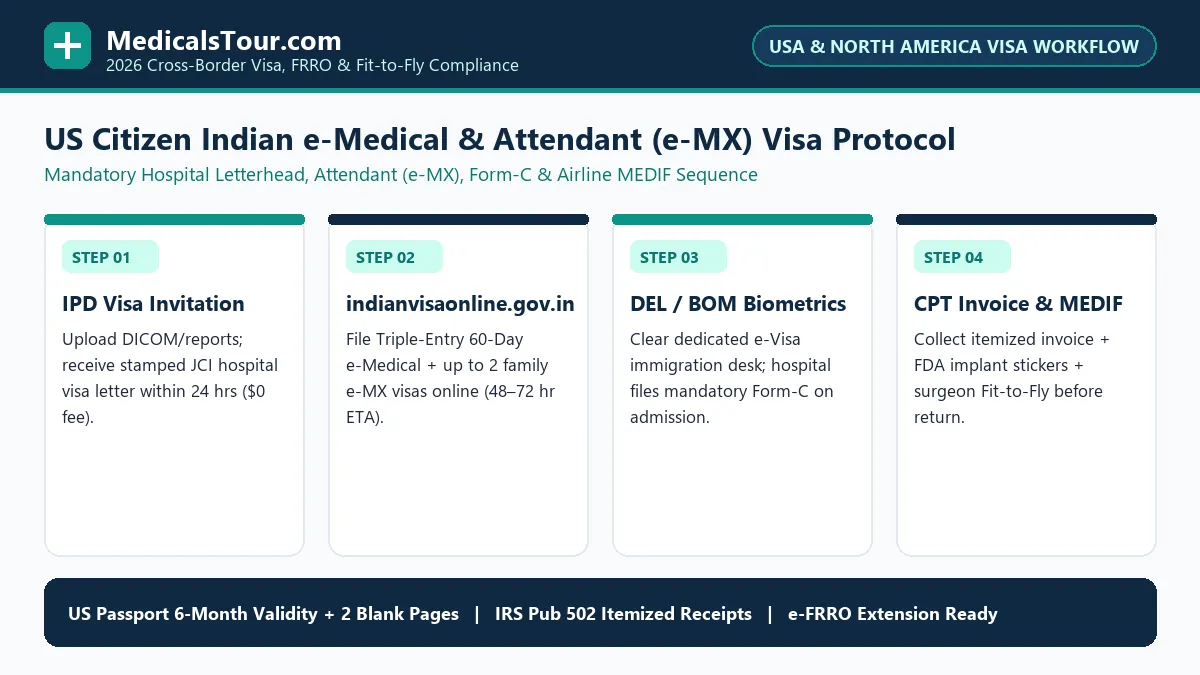
Before departure, both partners should apply online for the official India e-Medical Visa (patient + attendant) using the hospital’s ART Invitation Letter—remembering that the 60-day Triple-Entry e-Medical Visa conveniently covers both a 14-day egg-retrieval trip and an 8-day PGT-A frozen embryo transfer trip if completed within the same 60-day window! Carry an original or certified copy of your marriage certificate alongside passport copies for mandatory National ART Registry enrollment on Day 1.
When flying back to the United States after blastocyst transfer, Medical Tour’s fertility logistics team recommends four practical travel habits:
- Does Flying Harm Implantation? Peer-reviewed reproductive medicine literature confirms that commercial cabin pressurization and airport millimeter-wave security scanners do not impair blastocyst implantation (always opt for millimeter-wave or pat-down rather than X-ray if nervous, though luggage X-rays are strictly for bags). Waiting 48 hours post-transfer simply lets post-catheter uterine cramping settle and avoids rushing through airport concourses on transfer day.
- Luteal Progesterone & Time-Zone Clock Management: Many Indian fertility specialists now pair micronized vaginal progesterone capsules with water-soluble subcutaneous aqueous progesterone 25 mg injections (Lubion/Prolutex)—sparing women painful 1.5-inch intramuscular sesame-oil buttock needles on airplanes! Map out a gradual 2-hour-per-leg shift across UTC/IST time zones so progesterone and estradiol doses never drift more than 3 hours apart during the 20-hour journey home, and pack a 30-day bridge supply of vials, alcohol swabs, a mini travel sharps container, and 29-gauge insulin-style syringes in an insulated carry-on pouch with a stamped hospital prescription letter detailing generic drug names for CISF and US Customs officers.
- Hydration & Thrombosis Caution: Supraphysiologic estradiol levels after ovarian stimulation transiently elevate fibrinogen and venous clotting propensity; wear knee-high 15–20 mmHg compression socks, drink 250 mL bottled water hourly, and stroll the aircraft aisle every 90 minutes.
- Post-Retrieval Comfort & Electrolyte Recovery: During the 48 hours immediately after transvaginal oocyte retrieval, mild pelvic fullness and bloating are completely normal—sip coconut water or oral rehydration salts, eat 75+ grams of cooked protein daily to draw free pelvic fluid back into the bloodstream, use acetaminophen rather than ibuprofen, and alert your fertility nurse immediately if urine output drops or sudden unilateral pelvic pain occurs.
Transitioning Beta-hCG Blood Draws & 6-Week Viability Ultrasound to Your US OB-GYN
Before leaving for India, have an honest conversation with your local American OB-GYN, midwife practice, or reproductive clinic so your Day-9/10 and Day-11/12 post-transfer quantitative serum Beta-hCG and serum progesterone blood orders are already queued at LabCorp or Quest Diagnostics near your home (always draw both serial tests at the exact same laboratory chain so immunoassay calibration confirms healthy 48-hour doubling above 66%, and resist testing early with home urine sticks before Day 8 post-blastocyst transfer, since residual ovidrel/hCG trigger traces can produce false-positive ghost lines!). Remember how obstetricians calculate IVF gestational dating: a Day-5 blastocyst transfer date counts clinically as 2 weeks + 5 days pregnant (equivalent LMP = Transfer Date minus 19 days). Indian fertility teams transmit a structured Embryology & Stimulation Summary PDF containing:
- Photographic Blastocyst Grading Sheet: High-resolution micrographs of transferred and remaining cryopreserved blastocysts graded on the Gardner scale (e.g.,
4AA,5AB) plus complete NGS euploidy reports and mosaicism callouts if PGT-A was performed (reminding your US OB-GYN that 10-week maternal blood NIPT cell-free DNA screening and 20-week fetal echocardiography/anatomy ultrasounds remain standard clinical care even after euploid PGT-A transfer). - Week-by-Week Luteal Taper Calendar: Exact generic dosages and stop dates (normally weaning smoothly between Gestational Weeks 9 and 12 once placental steroidogenesis takes over, checking serum progesterone stays above 15–20 ng/mL on initial Beta-hCG draw) for estradiol valerate, vaginal/subcutaneous progesterone, and low-dose 81 mg aspirin so your US obstetrician assumes effortless prenatal care at your 6.5-week transvaginal intrauterine fetal-heartbeat scan.
- Annual Cryostorage Renewal Protocol: If supernumerary euploid blastocysts or mature MII eggs remain banked in Chennai or Mumbai for a sibling pregnancy two or three years later, verify the annual liquid-nitrogen maintenance fee ($180–$300/year payable via online hospital link), confirm dual-witness liquid-nitrogen tank telemetry alarm protocols, keep two emergency contact emails updated on file with the hospital cryobank, and compare family travel routes across our International Medical Travel Corridors.