Sit down with twenty American families who have completed major surgery in New Delhi, Mumbai, Gurugram, or Chennai and ask what stressed them out most. Almost nobody complains about operating-theater sterility, English communication, or nursing warmth. Every single headache traces back to three unglamorous administrative oversights three weeks before departure or forty-eight hours before discharge: mailing a two-paragraph written MRI summary instead of raw multi-planar `.dcm` DICOM slices, watching a US Chase or Bank of America Visa card freeze at a hospital cashier desk at 11:00 PM due to international fraud triggers, or returning home to an unbriefed suburban primary care physician who balks at ordering routine blood counts because the patient forgot implant barcode stickers.
Cross-border healthcare is a chain-of-custody exercise. When an orthopedic surgeon in South Delhi templates a robotic knee implant, when a cardiac surgeon in Navi Mumbai evaluates left-main coronary calcifications for off-pump grafting, or when an oncologist stages retroperitoneal lymph nodes, clinical accuracy depends on zero data loss across oceans. Treating medical travel like an ordinary vacation booking—buying flights first and scrambling for records and banking rails later—turns avoidable paperwork into expensive hotel extensions.
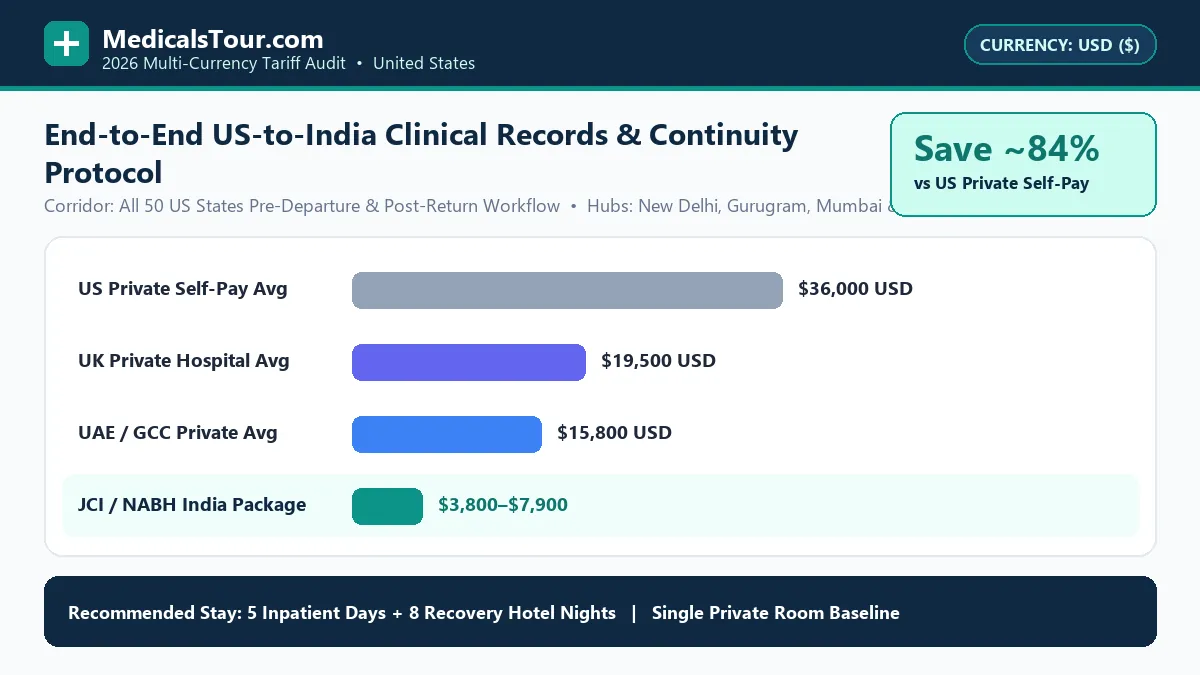
Built from Medical Tour’s 2026 operations playbook across all fifty US states, this end-to-end logistics manual walks patients and caregivers through HIPAA imaging exports, Federal Reserve SWIFT `MT103` hospital wire protocols ($3,800–$7,900 typical surgical bands), pre-departure domestic physician alignment, the mandatory seven-document discharge dossier, and 15-hour transpolar blood-clot prevention.
Why Cross-Border Surgical Outcomes Are Won or Lost Three Weeks Before Departure
In domestic American healthcare, hospital systems mask enormous behind-the-scenes coordination inside Epic Care Everywhere or Cerner health-information exchanges. Your orthopedic surgeon clicks two tabs to rotate your 3-Tesla lumbar MRI in sagittal, axial, and coronal planes, checks your cardiologist’s echocardiogram ejection fraction, and verifies clopidogrel washout dates automatically. The moment you step outside US health-system firewalls to capture $28,000 to $65,000 in self-pay surgical savings, you become the chief custodian of your clinical data packet.
Relying on a typed one-page radiologist impression from a US imaging center is the single most common pre-travel mistake we audit. Two radiologists routinely grade foraminal spinal stenosis, rotator-cuff fatty infiltration, or coronary ostial narrowing differently; an Indian department chair will never lock in a binding fixed-price surgical Proforma Estimate based solely on prose descriptions. Without raw thin-slice volumetric data before you leave Denver or Atlanta, the receiving hospital must repeat 3T MRI, 640-slice CT angiography, or diagnostic catheterization on Day 1 in India—occasionally uncovering an anatomical variation (such as needing a dual-mobility revision acetabular cup instead of a primary press-fit shell) that shifts your budget by $1,200 and delays your operating slot by seventy-two hours.
Medication washout timing creates an equally unforgiving three-week countdown in 2026. Millions of American surgical candidates now take weekly GLP-1/GIP receptor agonists (semaglutide / Ozempic / Wegovy or tirzepatide / Mounjaro / Zepbound) alongside SGLT2 inhibitors (empagliflozin / Jardiance or dapagliflozin / Farxiga) and direct oral anticoagulants. Under current American Society of Anesthesiologists (ASA) and Indian hospital anesthesia protocols, weekly GLP-1 injections frequently require a seven-day pre-operative hold to prevent delayed gastric emptying and pulmonary aspiration under induction, while SGLT2 inhibitors must pause three to four days before surgery to prevent euglycemic diabetic ketoacidosis. Locking in written drug-hold dates with both your US prescriber and Indian anesthesiologist twenty-one days out keeps your Day-2 operating room slot intact.
To benchmark how pre-verified imaging locks down exact hardware quotes across high-volume specialties, compare package structures inside our Robotic Knee Replacement Tariff Guide and Heart Bypass (CABG) Cost Breakdown alongside our Medical Trip Budget Planner.
Exporting Raw DICOM Imaging Under HIPAA Right of Access—Not Just Written Reports
Under federal HIPAA Right of Access regulations (45 CFR § 164.524), every hospital radiology department and outpatient diagnostic center in the United States is legally obligated to provide patients with complete copies of their raw digital medical images in standard DICOM (`.dcm`) electronic format—either via cloud share link (Ambra Health, Nuance PowerShare, PocketHealth, LifeImage), USB flash drive, or medical CD/DVD—for a nominal cost-based fee (typically $0 to $15).
Do not confuse Epic MyChart’s “Share Everywhere” button with a true DICOM image export. While MyChart Share Everywhere lets an overseas doctor view your typed clinical notes, pathology text, and lab tables for sixty minutes, most US health systems block full multi-gigabyte radiology downloads inside standard patient portals—meaning you still need an explicit Film Library PACS export or PocketHealth/Ambra link. Before zipping any hospital CD, test-open the folder on your home computer using a free DICOM viewer such as Horos (macOS) or MicroDicom (Windows) to confirm that hundreds of scrollable cross-sectional slices actually load rather than a blank disc or three static scout snapshots.
Follow this exact four-step technical workflow twenty-one days before booking international airfare:
- Request the Full Uncompressed DICOM Directory: Contact your US facility’s Film Library / Medical Records Release desk and specify “Complete raw DICOM study including 1mm thin-slice axial reconstructions, NOT JPEG screenshots or PDF report only.” For cardiac bypass or valve candidates, insist on the raw coronary angiogram cine-loop `.dcm` files plus full transthoracic echocardiogram video loops.
- Zip the Root Folder Intact: When copying files off a hospital CD onto a laptop (using an inexpensive $18 external USB DVD drive if needed), compress the entire root directory—including the `DICOMDIR` index file and numbered subfolders—into a single `.zip` archive without renaming internal files or stripping out viewer metadata; ignore the bundled Windows `.exe` auto-viewer, which hospital firewalls block anyway.
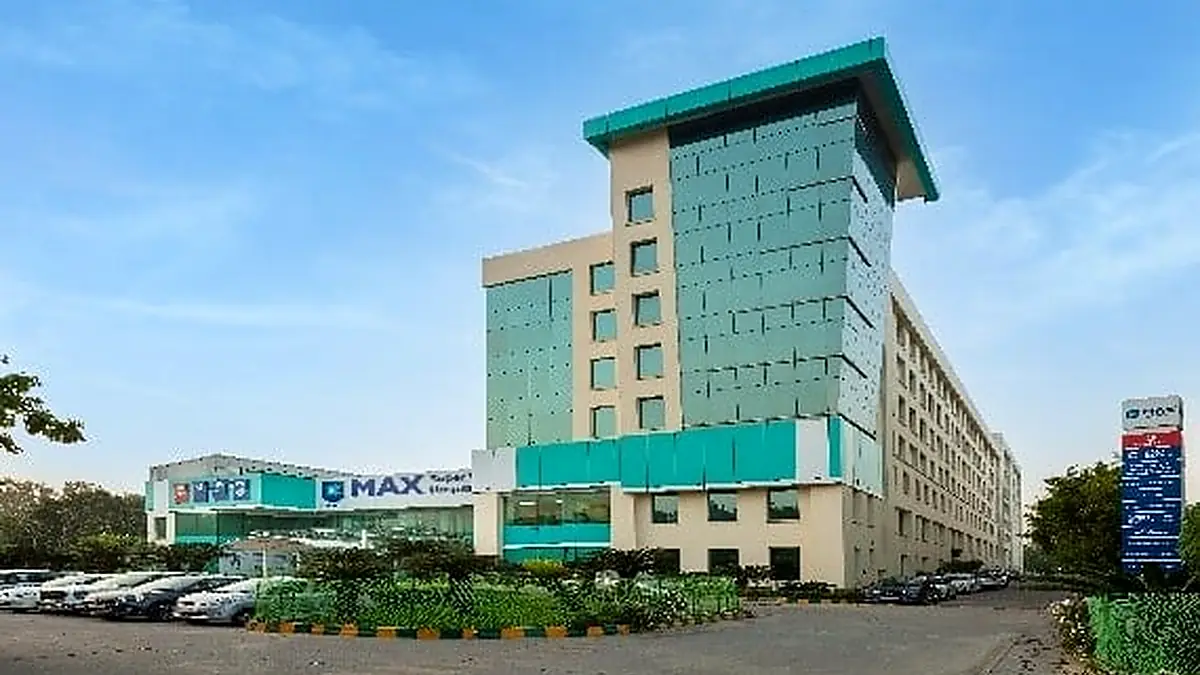
- Upload Over Encrypted Hospital PACS Portals: International Patient Desks at Max Super Speciality Hospital, Saket (New Delhi) and Apollo Hospitals, Belapur (Navi Mumbai) issue secure cloud upload links so senior surgeons can load your scans directly into 3D Stryker Mako, Brainlab, or OsiriX templating workstations within 24 hours.
- Add Medication & Allergy Reconciliation Sheets: Attach a clean one-page PDF listing every prescription drug with exact milligram dosing, over-the-counter supplements, prior surgical anesthesia reactions, implant metal allergies, and six months of lab trends (HbA1c, eGFR/creatinine, CBC, INR, TSH).
Hospital Billing Mechanics: SWIFT MT103 Wires, RBI Purpose Codes & Credit Card Caps
American medical travelers routinely assume they can tap a high-limit Chase Sapphire, Capital One Venture, or American Express Platinum card at inpatient admission to pay a $6,800 surgery bill and pocket airline miles. In practice, paying multi-thousand-dollar overseas hospital balances exclusively by plastic triggers two costly traps: first, automated US issuer fraud algorithms frequently decline $5,000+ Card-Present Indian hospital merchant category charges mid-evening despite prior travel notices; second, Indian corporate hospitals pass through international Merchant Discount Rate (MDR) gateway surcharges of 2.25% to 3.5% on foreign credit cards.
| Payment Channel | Ideal Use Case in India | Fee & FX Spread Profile | Compliance & Timing Rules |
|---|---|---|---|
| Direct Bank SWIFT Wire (`USD` to Hospital Nostro/EEFC Account) | 80%–90% of main surgical package ($3,500 – $35,000+) | $25–$45 US outgoing wire fee; zero 3% card surcharge when sent in USD under `OUR` instruction. | Initiate 5–7 business days pre-admission; quote hospital UHID, passport # & RBI medical treatment purpose (`P1101` / `S1108`); email `MT103` SWIFT copy to billing desk. |
| Zero-FTF US Visa / Mastercard Credit Card | Outpatient consults, pre-op labs, hotel nights & discharge balance (<$2,000) | 0% bank foreign fee, plus 2.25%–3.0% hospital POS surcharge if used for inpatient package. | Prefer Visa/Mastercard over Amex/Discover (wider Indian POS acceptance); enable mobile app push verification on roaming cellular data. |
| US Debit ATM Cash / Airport Currency Exchange | Local pharmacy co-pays, tips & small daily meals ($300–$600 equiv. in INR) | Charles Schwab / Fidelity ATM cards refund local ₹200 ATM fees at interbank Visa FX rate. | Foreign nationals cannot settle hospital bills >₹2,00,000 (~$2,400) in physical cash under Indian Income Tax rules; declare cash >$10,000 on US FinCEN Form 105 & Indian Customs CDF. |
Pay close attention to two operational details when wiring funds from Wells Fargo, Bank of America, Chase, or Fidelity. First, instruct your banker to code SWIFT field `71A` (Details of Charges) as `OUR` rather than `SHA` (Shared); under `SHA`, intermediary correspondent banks in New York deduct $20 to $35 in transit, leaving an irritating short-payment balance at hospital discharge. Second, keep your primary US mobile SIM active on Wi-Fi Calling or international roaming alongside a secondary local data eSIM—never pop your US physical SIM card into a hotel drawer—or you will lock yourself out of SMS one-time passcodes required to approve bank wires or Visa `3D-Secure` hospital pharmacy payments.
Read our dedicated Hospital SWIFT Wire Transfer & Forex Billing Guide before instructing your US banker. Always verify hospital beneficiary account numbers via a live video call with your assigned hospital coordinator—never act on sudden last-minute email changes to bank routing details—and confirm written refund timelines (typically 10–14 business days back to the originating US account) if any unused inpatient deposit remains at discharge.
Securing a Cooperative US Primary Care Physician and Physical Therapist Before You Fly
Nobody wants to land at Newark or Dallas-Fort Worth ten days after spinal decompression or robotic joint replacement and cold-call five local medical offices begging someone to inspect a healing incision. While emergency rooms across the United States are federally mandated under EMTALA to treat acute surgical complications regardless of where surgery occurred, private outpatient specialists retain broad legal discretion over accepting new post-operative patients whose primary procedure they did not perform.
Eliminate “orphan patient” friction completely by holding a transparent, matter-of-fact conversation with your regular US Primary Care Physician (PCP)—and, for orthopedic or spine cases, a local outpatient Doctor of Physical Therapy (DPT) clinic—before you depart. Frame the visit pragmatically: explain that due to high domestic out-of-pocket exposure, you are having surgery at a Joint Commission International (JCI) accredited tertiary hospital using standard US FDA-approved Stryker, Medtronic, or Abbott hardware, that you will stay in India through Day 12–14 until acute wound healing and suture/staple milestones are cleared, and that you will bring a complete typed English operative report plus implant lot barcodes.
Match your Indian recovery neighborhood to that extended Day-14 plan as well. In South Delhi, Max Saket sits along Press Enclave Road directly opposite the tree-lined courtyards of Select Citywalk and quiet serviced apartments in Saket J-Block; in coastal Maharashtra, Apollo Navi Mumbai anchors Sector 23 CBD Belapur off wide, uncongested Palm Beach Road—thirty-five minutes from Mumbai T2 via the Atal Setu harbour bridge—giving recuperating Americans calm, flat promenade sidewalks for daily physical therapy before boarding homeward flights. Overwhelmingly, collaborative US internists, cardiologists (for patients requiring antiplatelet bridging around prior coronary stents), and physical therapists happily schedule a Day-21 post-return check once they know acute drain and staple care was finished professionally prior to departure.

The Mandatory 7-Document Discharge & Implant Barcode Dossier
Twenty-four hours before your planned hospital discharge at Max Saket, Apollo Navi Mumbai, Medanta, or Indraprastha Apollo, ask the floor medical officer and International Patient Coordinator to assemble a duplicate clinical discharge packet—one physical ring-binder carried in your cabin backpack and one password-free PDF + DICOM folder uploaded to your cloud drive. Do not walk out the hospital lobby until you verify every item in this matrix:
| Mandatory Clinical Document | Why Your US Physician & Insurer Need It | Verification Check Before Leaving Ward |
|---|---|---|
| 1. Typed Detailed Operative Note | Documents anatomical findings, surgical approach, graft conduits / bone cuts, blood loss & closure layers. | Must be distinct from the general discharge summary; signed with surgeon’s NMC registration number. |
| 2. Original Implant Barcode Stickers | Enables 1.5T/3T MRI safety clearance in the US & proves exact prosthesis size/lot if revision is ever needed 15 years later. | Check peel-off manufacturer stickers (Stryker, DePuy, Edwards, Medtronic) affixed directly to Implant Card. |
| 3. Intra-Op Anesthesia & PACU Record | Guides future US anesthesiologists on airway grade (Cormack-Lehane), vasopressor response & drug tolerances. | Request photocopy/scan of anesthesia chart alongside ICU flow summary. |
| 4. Post-Op DICOM X-Ray / CT / Echo | Provides Day-1 baseline hardware alignment or valve gradient reference for future US comparison scans. | Verify `.dcm` files open cleanly on laptop—not merely small thermal film prints. |
| 5. Histopathology & Culture Reports | Essential for oncology staging (TNM, margins, IHC markers) or targeted antibiotic stewardship. | Confirm final NABL pathology sign-off or arrange encrypted email delivery if molecular NGS takes 10 days. |
| 6. Generic-Named Medication Schedule | Indian trade names (e.g., Ecosprin, Dytor, Pan-40) confuse US nurses unless paired with chemical INN names. | Ensure every discharge drug lists generic chemical name (aspirin, torsemide, pantoprazole), mg dose & stop date. |
| 7. Itemized Invoice + Fit-to-Fly Letter | Required for airline gate boarding, CBP prescription checks & IRS Pub 502 / HSA tax substantiation. | Cross-check passport spelling, ICD-10 diagnosis codes & IATA Fit-to-Fly date stamp. |
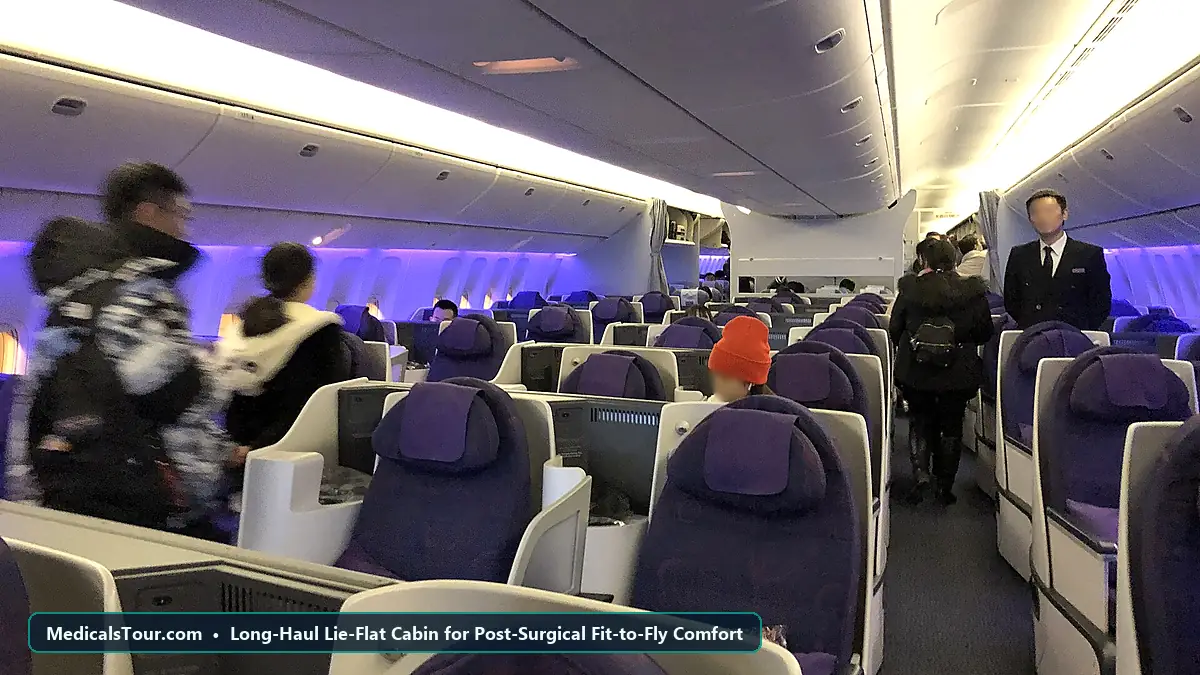
15-Hour Transpolar & Gulf-Hub Aviation Safety: DVT Prophylaxis, Oxygen & Cabin Seating
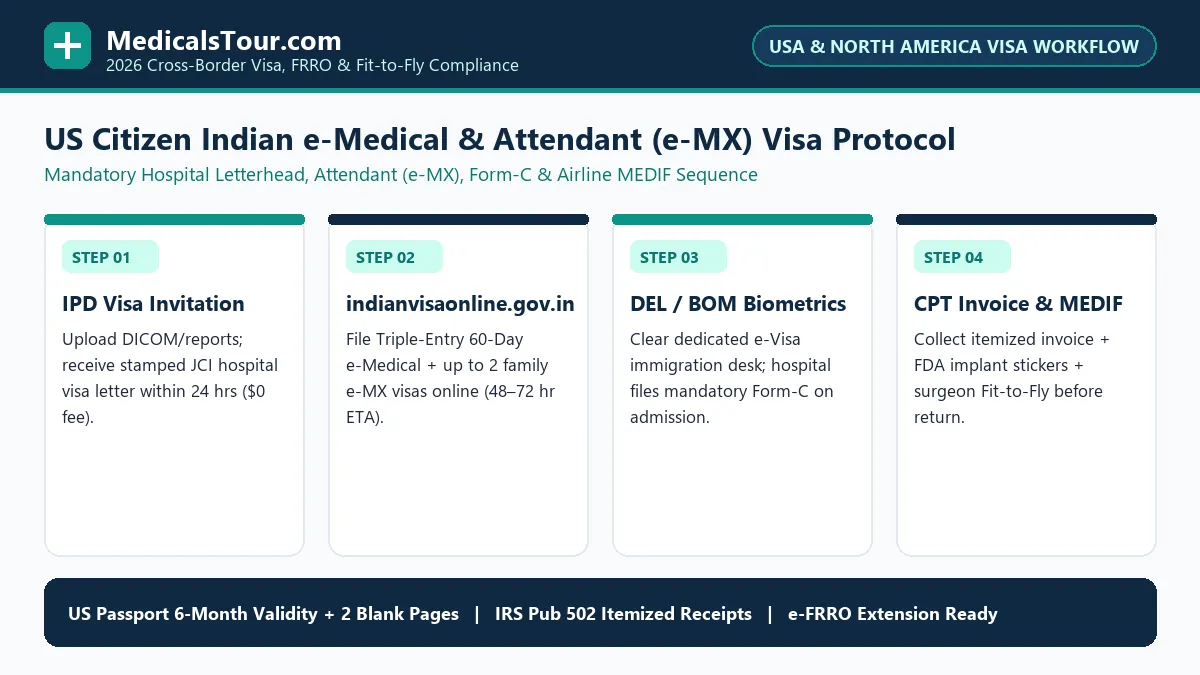
Flying from Delhi (DEL) or Mumbai (BOM) back to New York, Chicago, Houston, or San Francisco exposes post-surgical travelers to fourteen to nineteen hours of pressurized cabin immobility at an equivalent cabin altitude of 6,000 to 8,000 feet—where arterial oxygen partial pressure drops modestly and lower-extremity venous stasis peaks. Confirm visa validity and triple-entry windows first via our US Citizen India e-Medical Visa Guide, and book flexible-date airfares (`Main Cabin Flexible` or `Business Flex`) that permit penalty-free 72-hour shifts if your surgeon recommends two extra hotel recovery days.
Protect venous circulation aggressively on every long-haul return sector:
- Pharmacologic + Mechanical VTE Prophylaxis: Take your surgeon-prescribed direct oral anticoagulant (apixaban 2.5 mg BID or rivaroxaban 10 mg daily) or low-molecular-weight heparin injection right on schedule, paired with knee-high 20–30 mmHg medical graduated compression stockings put on before getting out of your hotel bed on departure morning.
- Mandatory Airport Wheelchair Assistance (`WCHR` / `WCHS`): Terminal corridors at Delhi T3, Mumbai T2, Doha, Dubai, Frankfurt, and JFK span over a mile of walking. Request complimentary airline wheelchair escort at least 48 hours pre-flight so a porter wheels you swiftly through diplomatic/medical immigration lanes without taxing fresh surgical repairs.
- Hydration & Cabin Movement Cadence: Drink 250 mL of plain electrolyte water every hour awake, skip alcohol and sedative sleeping pills (which cause motionless leg kinking against seat frames for six hours straight), perform twenty ankle dorsiflexion calf-pump circles every half hour, and book bulkhead aisle or lie-flat Business pods after major orthopedic, spinal, cardiac, or abdominal procedures.
- Supplemental Oxygen & Hub Stopover Strategy: Cardiopulmonary or lobectomy patients whose room-air pulse oximetry rests below 93% must submit an airline `MEDIF` medical information form 72 hours pre-flight and carry an FAA-labeled Portable Oxygen Concentrator (such as an Inogen One G5) packed with lithium battery capacity covering 150% of total flight duration. Families departing Seattle, Los Angeles, Dallas, or Miami often prefer a two-segment Qatar Airways (`DOH`) or Emirates (`DXB`) itinerary with an eight-hour airside transit hotel rest over a single 16.5-hour polar marathon.
30-Day, 90-Day & 1-Year Post-Return Lab Monitoring and Asynchronous Tele-Rounds
Continuity does not end once your suitcase clears US Customs. Before leaving India, lock in the exact WhatsApp/encrypted portal coordinates of your surgeon’s clinical fellow or nurse practitioner, accounting for the 9.5-to-12.5-hour India Standard Time (IST) offset (09:00 AM Eastern equals 06:30 PM or 07:30 PM IST—an easy overlap window for live evening video check-ins with Indian consultants finishing afternoon clinic).
Across Medical Tour’s longitudinal patient tracking, structured three-checkpoint domestic follow-up catches minor issues early: a Day-21 to Day-30 visit with your US PCP to confirm dry scar remodeling, discontinue post-flight anticoagulants, and check CBC/CRP/metabolic panels; a Day-90 milestone uploading weight-bearing X-rays, echocardiograms, or PSA/thyroid/liver labs back to your Indian surgical team for asynchronous sign-off; and a 1-Year annual review archiving permanent baseline stability inside your MyChart record.
Even if you are a seasonal retiree wintering in Scottsdale or Naples away from your home-state internist, consumer-authorized blood portals tied to Quest Diagnostics and LabCorp let you run a complete post-op CBC, Comprehensive Metabolic Panel, and C-Reactive Protein inflammation check within twenty-four hours for $45 to $85 cash and message the PDF straight to your surgeon in Saket or Navi Mumbai. Reconcile your home pill organizer on Day 1 back in America so you never accidentally double-dose an Indian generic statin or beta-blocker alongside your existing Walgreens bottle. Explore more hospital stay walkthroughs, specialty cost audits, and international aviation playbooks across our Medical Travel Editorial Blog and Global Patient Corridors Directory before finalizing your pre-departure folder.