Anyone trying to sleep on an osteoarthritic hip or a cuff-deficient shoulder during a damp January in Yorkshire, Bristol, or Hampshire knows how rapidly joint degeneration shrinks daily independence. End-stage coxarthrosis turns putting on socks, stepping out of a low saloon car, or climbing Victorian terraced-house stairs into a grinding groin-pain ritual; massive irreparable rotator-cuff tear arthropathy (“pseudoparalysis”) leaves an otherwise active sixty-six-year-old unable to lift a kettle, reach an overhead cupboard, or comb the back of their head without waking at 3:00 AM from deep deltoid ache. Yet across NHS England, Wales, and Scotland, routine orthopaedic referral-to-treatment waits routinely stretch fourteen to twenty months—especially for sub-specialist upper-limb shoulder lists staffed by only one or two arthroplasty consultants per regional trust.
Requesting a private self-pay quote closer to home at Spire Healthcare, Circle Health Group, Nuffield Health, or Schoen Clinic London brings an immediate financial jolt. In 2026, an uncomplicated unilateral ceramic Total Hip Replacement (THR) across UK private hospitals bills £14,900 to £18,800 ($18,900–$23,900 USD), while a 3D-templated Reverse Total Shoulder Arthroplasty (rTSA) commands £16,500 to £21,500 ($20,950–$27,300 USD)—and typically discharges you onto rainy British pavements just forty-eight hours after surgery with three brief outpatient physiotherapy vouchers.
Through Medical Tour’s 2026 UK orthopaedic corridor audit, we benchmarked actual implant serial invoices, laminar-theatre infection logs, and 14-day recovery stays in Gurugram (Delhi NCR) and Chennai. British self-pay patients are accessing FRCS-trained hip and shoulder sub-specialists using identical ODEP 13A*/15A* rated DePuy, Stryker, and Zimmer Biomet prostheses for £3,800 to £5,450 ($4,800–$6,900 USD)—complete with five hospital nights and nine days of supervised step-free hotel physiotherapy.
Why UK Self-Pay Hip and Shoulder Patients Are Looking Past £18,000 Private Quotes
Knee arthroplasty dominates British medical-travel headlines—a topic we cover separately in our UK-to-India Knee Replacement Corridor Guide—yet total hip and reverse shoulder replacements actually produce higher patient-reported satisfaction scores (`Oxford Hip Score` and `Oxford Shoulder Score`) and cleaner early travel mechanics when planned thoughtfully. Unlike total knee replacement, which demands aggressive early flexion bending across an anterior patellar incision, modern tissue-sparing hip arthroplasty lets most patients walk hospital corridors with a frame on the afternoon of surgery with minimal resting pain once bone-on-bone femoral head grinding disappears.
Reverse Total Shoulder Arthroplasty illustrates an even sharper UK supply bottleneck. When chronic supraspinatus and infraspinatus tendon tears allow the humeral head to migrate upward against the acromion, a conventional anatomic shoulder ball-and-socket fails; reversing the geometry—fixing a polished cobalt-chrome glenosphere ball onto the shoulder blade socket and a polyethylene cup onto the humerus—shifts mechanical leverage onto the intact deltoid muscle, restoring painless overhead arm elevation in a single 100-minute operation. Because imported reverse-shoulder baseplates and lateralized glenospheres carry steep UK hospital device markups, Indian institutional pricing delivers £12,000 to £15,500 in direct hardware-plus-theatre savings on a single shoulder.
Delaying surgery for another eighteen months on an NHS list also carries irreversible biological costs that radiographs alone understate. Prolonged hip coxarthrosis starves the gluteus medius abductor muscles of normal stride tension—leaving patients with a persistent Trendelenburg limp for months even after eventual replacement—while untreated cuff-tear arthropathy progressively erodes the superior glenoid bone stock (Favard E2/E3 wear) and accelerates Goutallier Grade 3–4 fatty degeneration inside remaining external rotator fibres. Intervening while bone stock and deltoid tone remain robust simplifies implant fixation dramatically.
Equally decisive for British couples aged sixty to seventy-eight is post-operative nursing unhurriedness. Instead of rushing a groggy spouse up narrow carpeted stairs at home forty-eight hours post-op while hunting for community district nurses, spending fourteen calm days between a Single Private hospital suite and a flat, elevator-equipped hotel with daily bedside MPT physiotherapists turns convalescence from an endurance test into a structured rehabilitation retreat. Cross-check granular hip hardware tiers in our Total Hip Replacement Cost Breakdown.
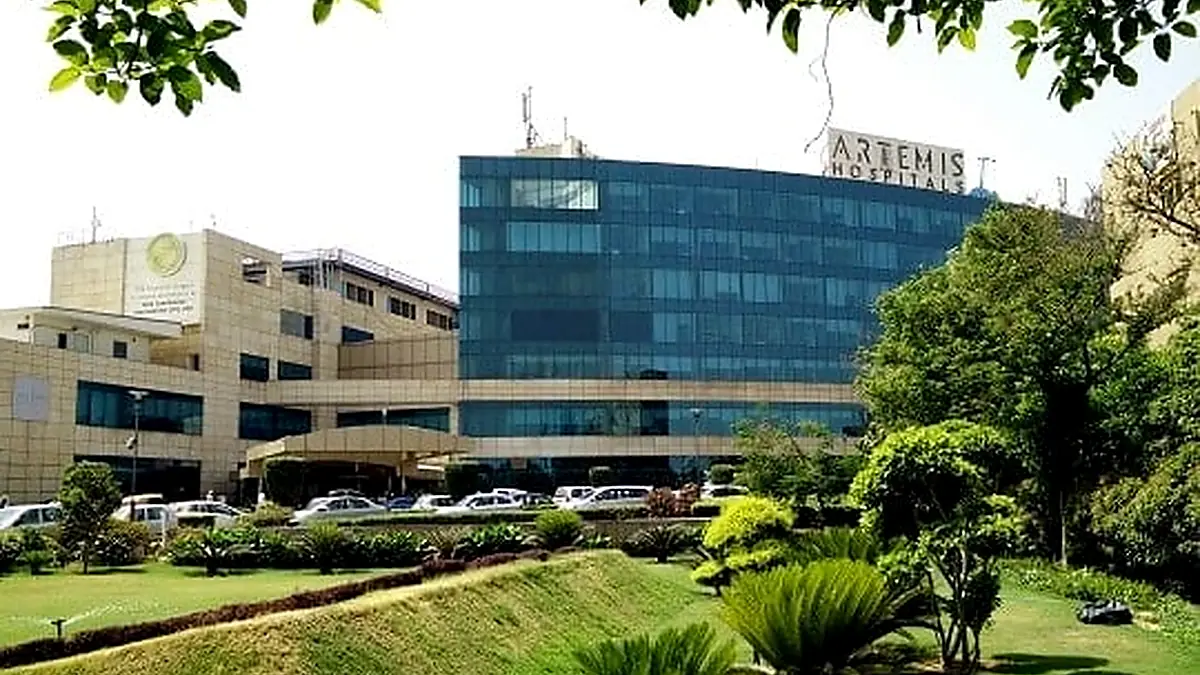
2026 Orthopaedic Package Comparison in GBP (£) & USD ($): Hip & Reverse Shoulder
All Indian package tariffs below reflect 2026 international self-pay quotes anchored to a Standard Single Private Room (5 inpatient nights) including surgeon, assistant, and MD anaesthetist fees, laminar operating theatre time, imported US FDA / UKCA / CE-cleared implants, routine bloods, inpatient medications, and twice-daily inpatient physiotherapy. Model your exact Heathrow or Manchester return airfare and companion hotel stay in our Medical Trip Budget Planner.
| Arthroplasty Procedure & Bearing Tier | UK Private Self-Pay Avg (GBP £ / USD $) | India JCI/NABH Package (GBP £ / USD $) | Implant Specification & Inpatient Stay |
|---|---|---|---|
| Uncemented Ceramic-on-Poly Total Hip (Unilateral) (BIOLOX delta Ceramic Head + Highly Crosslinked Poly Liner) |
£14,900 – £18,500 ($18,900 – $23,500) |
£3,800 – £4,850 ($4,800 – $6,150) |
5 Hosp nights; DePuy Corail/Pinnacle or Stryker Accolade II/Trident II (ODEP 13A*–15A* rated). |
| Robotic-Assisted / Dual-Mobility Total Hip (Stryker Mako 3D CT Cup Alignment or High-Stability Cup) |
£16,800 – £20,500 ($21,300 – $26,000) |
£4,450 – £5,450 ($5,650 – $6,900) |
5 Hosp nights; robotic acetabular inclination/anteversion control; near-zero dislocation risk for active seniors. |
| Bilateral Simultaneous Ceramic Total Hip Replacement (Selected Fit Patients <68 yrs, ASA I–II) |
£26,500 – £32,000 ($33,600 – $40,600) |
£6,850 – £8,200 ($8,700 – $10,400) |
6–7 Hosp nights (incl. 1 night surgical HDU monitoring), cell-saver & intensive gait rehab. |
| Anatomic Total Shoulder Arthroplasty (Stemless / Short-Stem) (Osteoarthritis with Intact Rotator Cuff) |
£15,200 – £18,900 ($19,300 – $24,000) |
£4,100 – £5,050 ($5,200 – $6,400) |
4–5 Hosp nights; interscalene brachial plexus nerve block + general anaesthesia & shoulder sling. |
| 3D-Planned Reverse Total Shoulder Replacement (rTSA) (Cuff Tear Arthropathy / Comminuted Proximal Humerus) |
£16,500 – £21,500 ($20,950 – $27,300) |
£4,500 – £5,450 ($5,700 – $6,900) |
5 Hosp nights; Tornier/Stryker Perform, Zimmer Comprehensive or Exactech 3D CT glenoid blueprint hardware. |
Transparent Pre-Admission & Hotel Add-Ons in Sterling (£)
To prevent any spreadsheet surprises, add £240 to £410 ($300–$520) for Day-1 outpatient pre-anaesthesia clearance (2D echocardiogram, bilateral leg venous Doppler, nasal MRSA swab, urine culture to rule out silent bacteriuria before joint implantation, and thin-slice 3D shoulder/pelvic CT templating) plus 30 days of discharge oral rivaroxaban/apixaban and analgesia. Nine post-hospital nights in an adjacent step-free four-star hotel with breakfast and daily visiting physiotherapist sessions typically add £650 to £980 ($825–$1,250).
Dental hygiene deserves a mandatory pre-departure tick on every UK orthopaedic checklist too: visit your local British dentist four weeks prior to leaving for Gurugram or Chennai to clear any grumbling gum pockets, cracked molars, or apical root abscesses. Transient oral bacteria entering the bloodstream from untreated periodontal disease can seed newly implanted titanium hip cups or shoulder baseplates (`haematogenous prosthetic joint infection`)—which is why FRCS joint units screen oral health rigorously before wheeling any patient into laminar theatre.
ODEP-Rated Implants & NJR Traceability: DePuy, Stryker & Zimmer Hardware Verification
British orthopaedic surgeons judge hip and shoulder implants through one gold-standard lens: the Orthopaedic Data Evaluation Panel (ODEP) rating and survival curves published in the UK National Joint Registry (NJR). An ODEP `15A*` or `13A*` benchmark signifies verified revision rates below 5% at thirteen to fifteen years across thousands of tracked patients—protecting you from experimental un-audited metalwork.
When booking hip or shoulder replacement in Gurugram or Chennai, request written confirmation on your Proforma Invoice naming the exact femoral stem, acetabular shell, ceramic head diameter (32 mm or 36 mm BIOLOX delta pink ceramic), or reverse-shoulder baseplate family. Flagship Indian joint units stock the exact same NJR mainstays used across Wrightington, Stanmore (RNOH), and Nuffield Oxford:
- Total Hip Systems (Uncemented & Hybrid Cemented): DePuy Synthes Corail hydroxyapatite-coated stem paired with Pinnacle porous titanium shell; Stryker Accolade II wedge stem with Trident II Tritanium 3D-printed cup; Zimmer Biomet Taperloc Complete / G7 system; and dual-mobility liners for patients with lumbar spinal stiffness (spinopelvic imbalance). In strict alignment with UK Getting It Right First Time (GIRFT) registry findings, FRCS-trained Indian hip surgeons also stock polished tapered cemented Stryker Exeter V40 and DePuy C-Stem AMT femoral stems with antibiotic-loaded Palacos bone cement (“hybrid THR”) for patients over age 70–72 or women with wider osteopenic Dorr Type C femoral canals—eliminating intra-operative calcar split risk.
- Reverse & Anatomic Shoulder Systems: Stryker/Tornier Perform Reversed and Aequalis Ascend Flex; Zimmer Biomet Comprehensive Reverse with mini-baseplate central screw fixation; and DePuy Delta Xtend—selected after 3D glenoid CT software calculates exact retroversion and inferior tilt so scapular notching is prevented.
Insist that the scrub nurse places all four peel-off manufacturer barcode stickers (stem, cup, liner, head/glenosphere) onto your printed Implant Passport before you leave the ward, ensuring any NHS hospital ten years hence knows every millimetre and torque screwdriver spec.
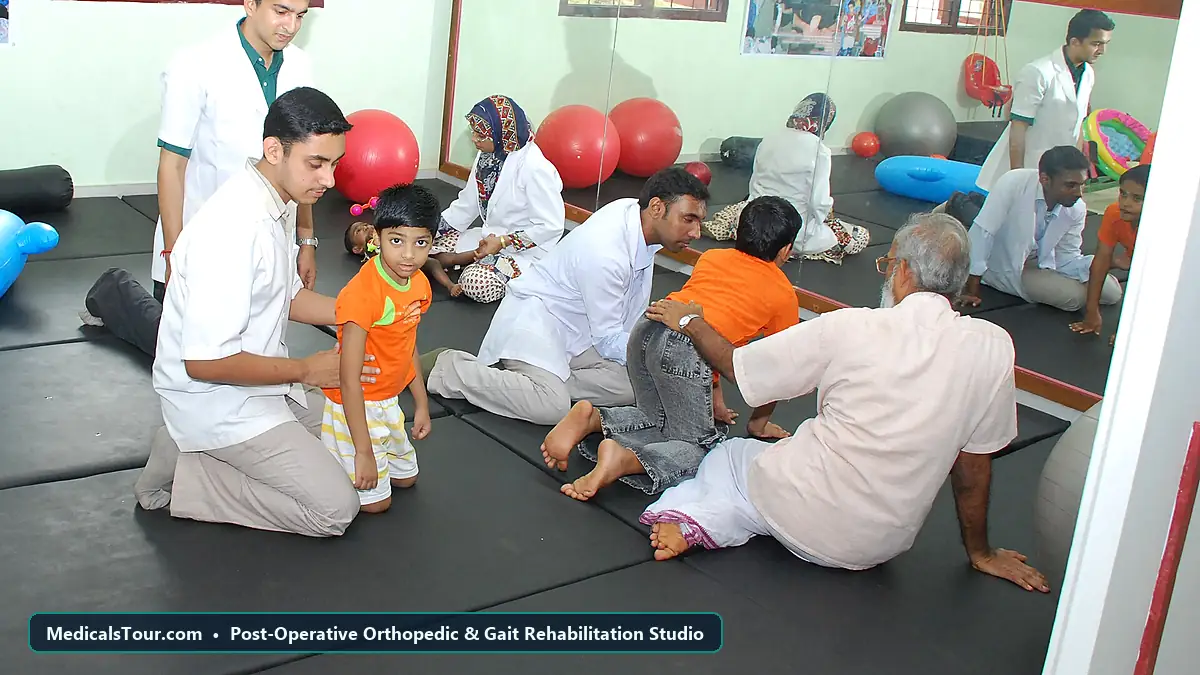
3D Glenoid Templating & Laminar Theatres at Artemis Gurugram and MIOT Chennai
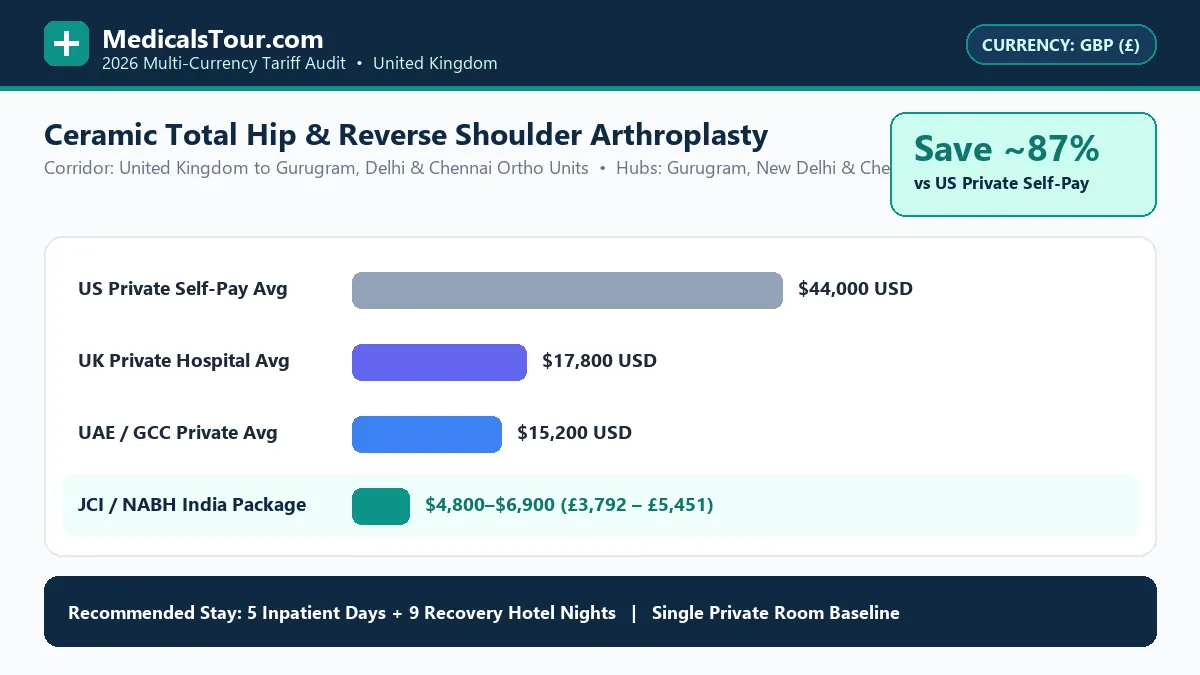
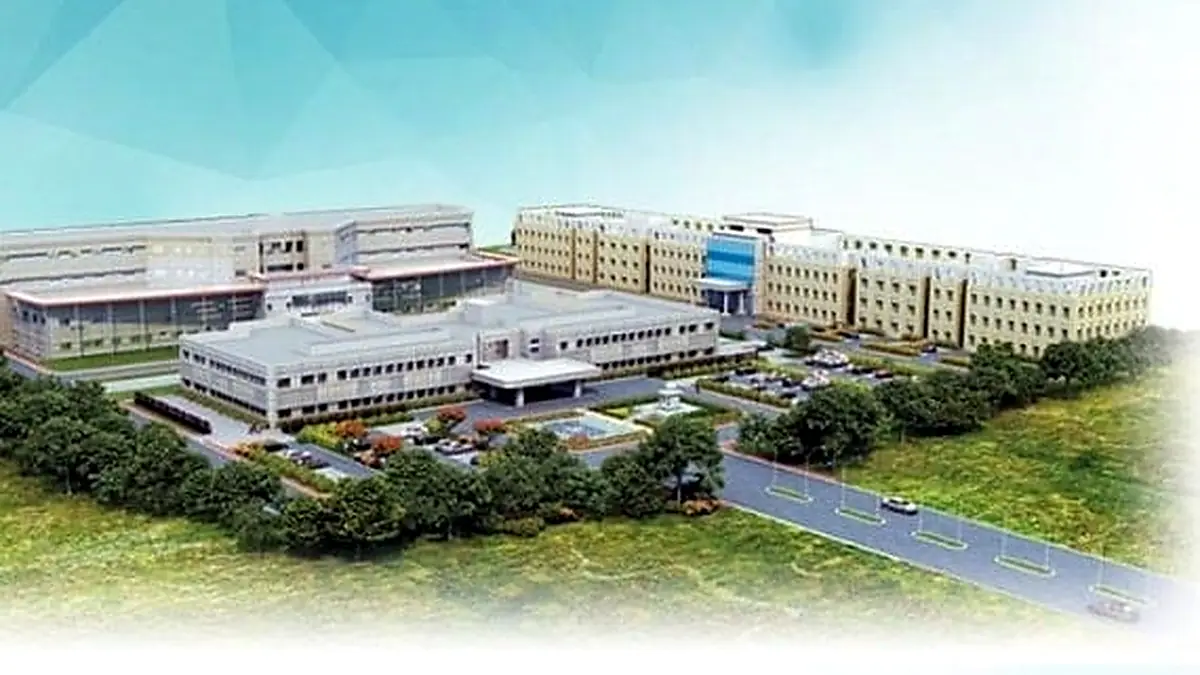
Two distinct Indian orthopaedic centres serve the bulk of UK hip and shoulder self-pay travellers, letting British families choose between direct Heathrow-to-Delhi convenience and warm coastal winter recovery in Tamil Nadu. Thirty-five minutes from Delhi IGI Terminal 3, Artemis Hospital in Sector 51, Gurugram—Gurugram’s first JCI- and NABH-accredited tertiary hospital—runs dedicated joint-replacement theatres featuring ultra-clean vertical laminar airflow canopies, body-exhaust “spacesuit” surgical helmets, robotic/computer navigation, and senior FRCS-qualified arthroplasty directors performing Direct Anterior Approach (DAA), SuperPATH, and mini-posterior hip replacements alongside complex reverse shoulder reconstructions.
In Southern India, MIOT International in Manapakkam, Chennai began specifically as the Madras Institute of Orthopaedics and Traumatology before expanding into a 1,000-bed multi-specialty referral campus. MIOT’s dedicated bone-and-joint surgical block enforces strict positive-pressure bacterial colony monitoring, automated tranexamic acid blood-conservation protocols (keeping transfusion rates below 2% in unilateral primary hips and shoulders), and ultrasound-guided pericapsular nerve group (`PENG` block for hip) or continuous interscalene catheter analgesia (for reverse shoulder) so patients sleep comfortably through Night 1 without heavy morphine nausea.
Sub-specialist surgical technique inside both theatres protects delicate peri-articular neurology. During deltopectoral reverse-shoulder exposure, senior upper-limb surgeons palpate and shield the axillary nerve inferior to the glenoid rim, angle peripheral locking screws away from the suprascapular nerve notch, and repair the subscapularis tendon peel whenever tissue elasticity allows—maximizing internal-rotation strength for everyday tasks like tucking in a shirt behind your back once your six-week sling phase concludes.
14-Day Inpatient & Step-Free Hotel Rehabilitation vs 48-Hour UK Cottage Discharges
Understanding the day-by-day arc between touchdown and your return flight to Heathrow removes every trace of logistical guesswork. First, secure your triple-entry electronic visa online using our British Citizen India e-Medical Visa Guide. Once on the ground, both hip and reverse-shoulder patients follow a structured 14-night schedule (5 hospital nights + 9 step-free hotel nights):
| Corridor Days | Total Hip Replacement Track | Reverse Shoulder Replacement Track |
|---|---|---|
| Day 1 (Arrival & Workup) | Land DEL or MAA; check into hotel; afternoon 3D pelvic calibration X-ray, 2D Echo, leg venous Doppler & anaesthetist consult. | Land DEL or MAA; thin-slice 0.6mm 3D shoulder CT glenoid blueprint scan, cuff ultrasound/MRI check & nerve-block briefing. |
| Day 2 (Surgery Day) | Spinal + light sedation anaesthesia; 75-min ceramic THR in laminar theatre; PENG analgesia block; ankle pumps in recovery bay. | Interscalene block + general anaesthesia in beach-chair position; 100-min rTSA; fitted into padded 15° abduction sling in PACU. |
| Days 3–6 (Inpatient Ward) | Full weight-bearing mobilization Day 1 post-op; transition from walker to elbow crutches by Day 4; stair-step & car-transfer drills. | Active hand/wrist/elbow fist exercises Day 1; therapist-assisted passive pendulum & scapular setting; zero active pushing off bed rails. |
| Days 7–13 (Hotel Rehab) | Step-free hotel suite (raised toilet seat provided); daily MPT gait symmetry coaching, progressive corridor walking & glute activation. | Hotel recovery learning one-handed button-shirt dressing, sleeping propped at 35° on pillow wedge & controlled passive forward elevation. |
| Day 14 (Clip Check & Clearance) | Waterproof dressing removal / subcuticular suture check, standing pelvic X-ray, Fit-to-Fly Certificate & 35-day VTE tablet pack. | Wound inspection, control AP/scapular-Y X-ray confirming glenosphere seating, sling strap check for airport security & Fit-to-Fly sign-off. |
Packing four small occupational-therapy items in your checked suitcase before leaving London or Manchester makes those nine hotel nights in Gurugram Sector 51 or Chennai Manapakkam effortless: bring hands-free slip-on trainers (eliminating any hip flexion bending to tie shoelaces), a lightweight folding long-handled reacher/shoehorn, oversized front-button cotton shirts or zip cardigans for reverse-shoulder dressing (thread the operated arm into the sleeve first, pull across your shoulders, then slip the unoperated arm in!), and pump-dispenser toiletries you can press with one hand. Nearby recovery hotels routinely fit a hospital-loaned 4-inch raised toilet-seat frame and shower grab stool prior to your Day-6 discharge.
Winter Warmth in Chennai vs Delhi NCR & CAA Fit-to-Fly Rules for Joint Patients
Seasonal weather deserves a quick mention when British couples pick between Gurugram and Chennai. From October through November and mid-February through March, Delhi NCR enjoys crisp, sunny 22°C–27°C weather with nonstop 8.5-hour Heathrow flights on British Airways, Virgin Atlantic, and Air India’s flagship A350-900. During peak mid-winter (late December and January), however, northern India experiences chilly 7°C mornings and winter fog—making Chennai’s dependable 28°C (82°F) tropical coastal warmth via British Airways `BA 035` nonstop from Heathrow Terminal 5 (or smooth Doha/Dubai connections from Manchester and Birmingham) remarkably soothing for stiff arthritic joints.
Under UK Civil Aviation Authority (CAA) and British Airways / Virgin Atlantic Passenger Medical Clearance Unit guidelines, uncomplicated hip or shoulder arthroplasty patients are medically fit to fly commercially once post-operative haemoglobin exceeds 9.5–10.0 g/dL, wound edges are dry at Day 12–14, and DVT risk is pharmacologically covered. Reverse-shoulder travellers wear their padded abduction sling over a loose front-buttoning cardigan throughout boarding (never lift cabin bags or pull overhead lockers with the operated arm for six weeks!), while posterior-approach hip patients place a firm wedge cushion on seats if needed so hip flexion stays comfortably open above 90 degrees.
Apply the classic British orthopaedic physiotherapist car-entry trick for the drive home from Heathrow along the M25 or M4: ask your driver to slide the front passenger seat all the way back and recline the backrest 30 degrees, lay a smooth plastic carrier bag or satin slide sheet over a firm square cushion, back gently onto the seat edge with your operated leg extended forward, and pivot both legs smoothly into the footwell together without twisting your pelvis.
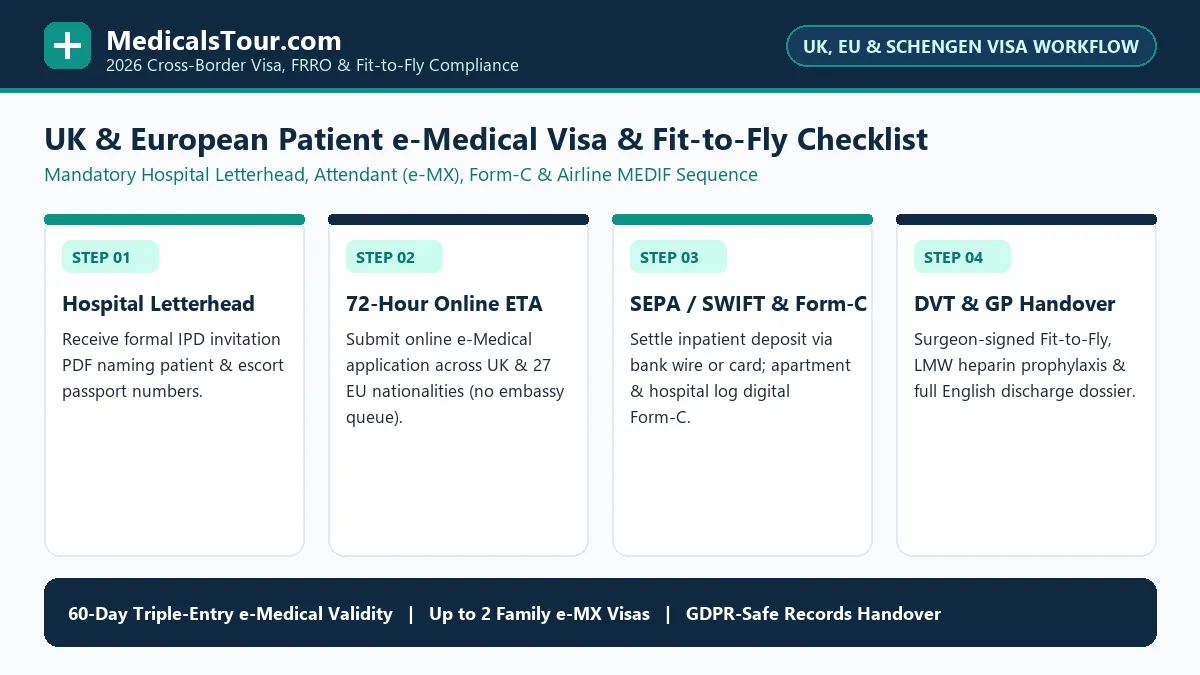
Anticoagulation on BA/Virgin Flights, Heathrow Special Assistance & NHS Physio Handoff
Venous thromboembolism prevention after lower-limb joint replacement follows identical NICE `NG89` principles in Gurugram and Chennai as inside an NHS orthopaedic ward: hip arthroplasty patients remain on prescribed oral rivaroxaban 10 mg once daily or apixaban 2.5 mg twice daily for a full 35 days post-surgery, reinforced on flight day by knee-length Class-2 anti-embolism stockings, hourly 250 mL water intake, and brief aisle walks every ninety minutes.
Book complimentary Heathrow / Manchester Airport Special Assistance (`WCHR` or `WCHS`) through “Manage My Booking” at least 72 hours ahead of departure. At both Delhi/Chennai departure gates and Heathrow Arrivals, dedicated electric buggies and wheelchair escorts carry you past long border queues straight to baggage reclaim and your pre-booked high-roof taxi or family SUV.
Prepare your British home ground floor before locking the front door on outbound departure day as well. If you live in a two-storey semi-detached or terraced house in Surrey, Cheshire, or West Yorkshire with the sole bathroom upstairs, hip arthroplasty patients comfortably climb stairs one step at a time by Day 15 using the universal British hospital mnemonic—“Good leg up to heaven, operated leg down to hell”—while holding the banister in one hand and a single NHS-style ferrule elbow crutch in the other. Reverse-shoulder patients, by contrast, must never haul their body weight up a steep banister using the operated arm; fit a sturdy handrail on your unoperated side before flying out, move tea mugs, cereal boxes, and plates down from high kitchen wall cupboards onto waist-height worktops, and keep a wedge pillow ready on your bed so Night 1 back from Heathrow requires zero midnight furniture rearranging.
Across Medical Tour’s UK orthopaedic cohort reviews, upgrading your 9.5-hour return flight to Premium Economy (extra legroom + calf footrest for ~£550 more) or a flat-bed Business Class pod (~£1,350 one-way upgrade) transforms the journey home while still leaving £8,500 to £13,000 in net bank savings compared to UK private hospital fees. Hand your Indian surgeon’s typed discharge summary and protocol sheet to your NHS GP surgery or local Chartered Society of Physiotherapy (`CSP`)-registered private physiotherapist at Week 3—making sure reverse-shoulder therapists follow your surgeon’s exact 6-week subscapularis protection window before progressing active deltoid resistance—and browse our Global Medical Travel Corridors hub for companion logistics.