Walk past Gate 2 of Medanta or along the tree-lined service lane outside Artemis Hospital in Gurugram’s Sector 51 around dusk, and the street signs tell the story of one of Asia’s busiest cross-border surgical lifelines. Freshly baked Iraqi samoon comes out of stone ovens beside 24-hour pharmacies, money-exchange counters post daily US dollar-to-rupee spreads next to Zain Iraq roaming top-ups, and families from Al-Mansour in Baghdad, Ankawa in Erbil, and Ashar in Basra compare discharge summaries over cardamom tea. Over the past decade, whenever an Iraqi household has faced a failed lumbar fusion, a pediatric leukemia relapse, a skull-base meningioma, or decompensated liver cirrhosis, New Delhi and Gurugram have functioned as the country’s primary quaternary referral floor.
What separates a calm, predictable Iraqi medical trip from an expensive airport delay comes down to paperwork and hospital selection before buying tickets. Unlike Emirati or Omani travelers who clear an online e-Visa in two days, Iraqi passport holders must secure a physical sticker Medical Visa (MED) through the Embassy of India in Baghdad or the Consulate General of India in Erbil, backed by a hospital-stamped Visa Invitation Letter that consular officers verify directly against New Delhi admission registries. Through Medical Tour’s ongoing audits of Iraqi patient invoices across Delhi NCR, we still see families lose three to five thousand dollars to unlicensed airport touts simply because they landed without a locked room-tier estimate.
This 2026 operational playbook lays out the exact consular requirements in Baghdad and Erbil, nonstop Iraqi Airways routing into Indira Gandhi International Airport Terminal 3 (DEL), transparent US dollar and Iraqi dinar surgical benchmarks, customs cash declaration thresholds, and vetted Sector 38–51 and Pusa Road recovery apartments. Every workflow below reflects ground-level procedures inside New Delhi and Gurugram international wings, including Ministry of Health referral compatibility for sponsored Iraqi cases and self-pay escrow protections for private households funding treatment independently.
Why Iraqi Families Choose Gurugram and West Delhi Over Regional Clinics
Patients leaving Baghdad, Mosul, Sulaymaniyah, Najaf, or Basra rarely travel abroad for simple appendectomies or routine diagnostic scopes. Domestic private hospitals in Karrada and Erbil handle primary surgery capably, while Amman and Beirut remain familiar short-haul stops for straightforward consultations. The clinical trigger that puts an Iraqi family onto an eastbound jet to New Delhi is complexity—specifically cases requiring multi-specialty ICU backup, intraoperative 3D navigation, bone marrow isolation suites, or living-related solid-organ transplantation at a total cost that does not wipe out multi-generational family property.
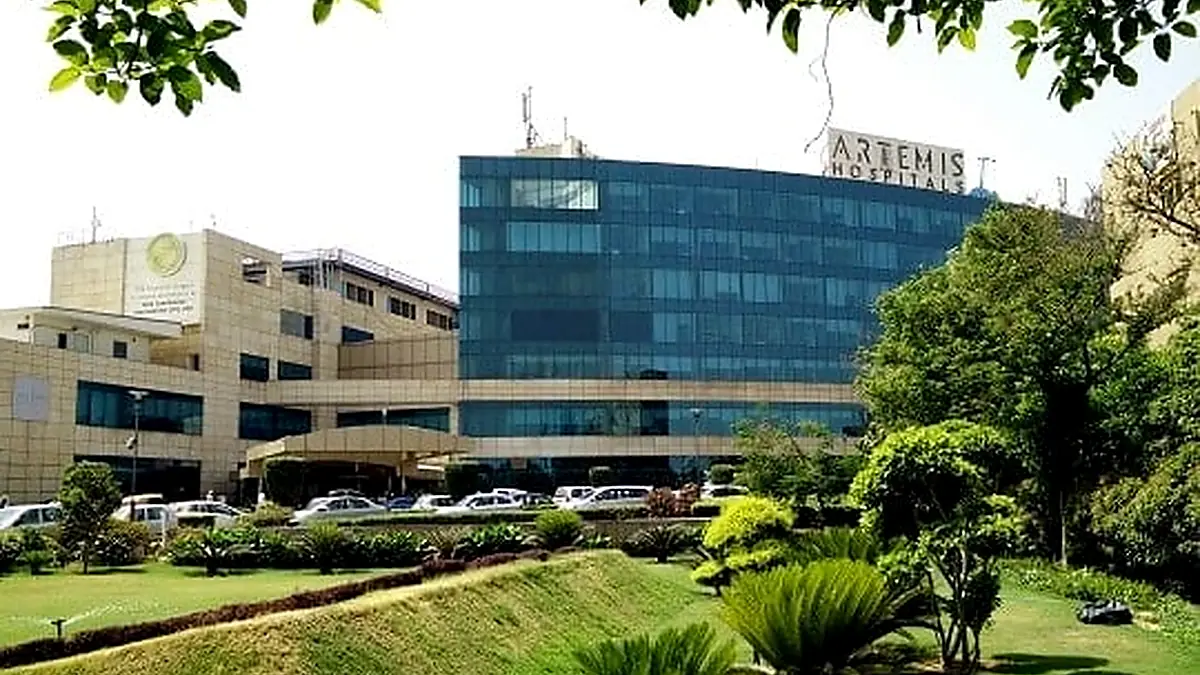
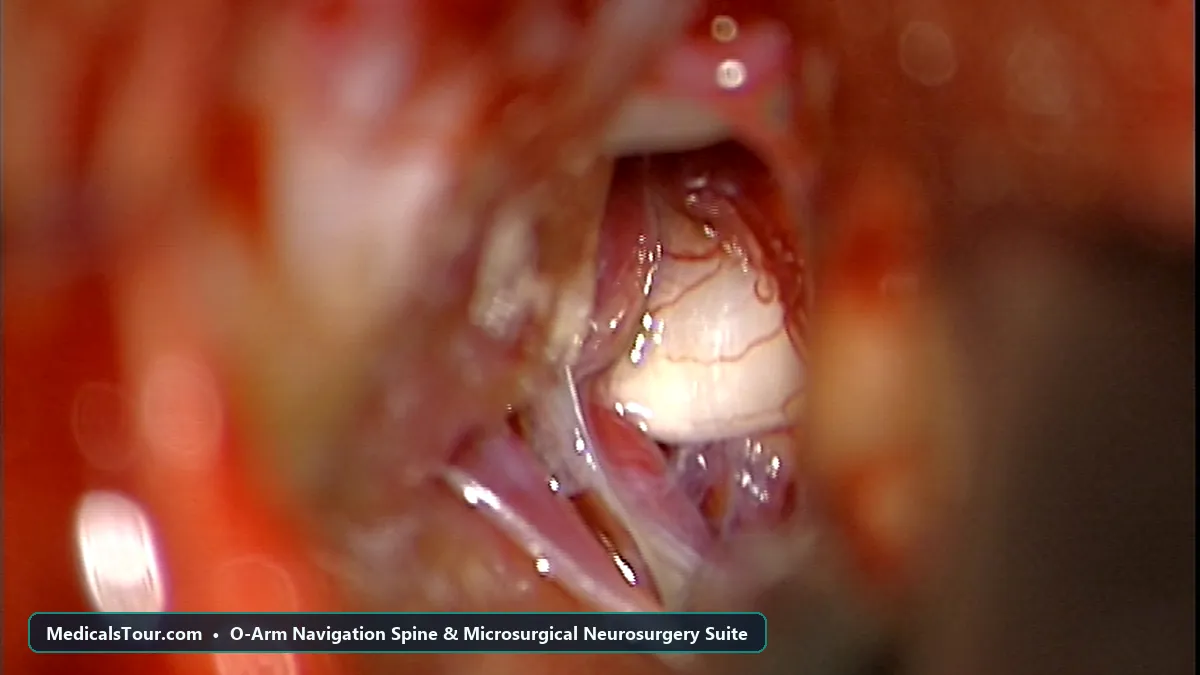
Consider revision spine and orthopedic trauma care. Decades of conflict injuries, untreated disc herniations, and first-attempt laminectomies performed without pedicle-screw navigation have created a massive caseload of adult spinal deformity and failed back surgery syndrome across central and southern Iraq. At Artemis Hospital in Sector 51, Gurugram, joint neuro-spine teams combine O-arm 3D intraoperative CT imaging with continuous somatosensory evoked potential (SSEP) nerve monitoring, cutting screw-malposition risk during three-level scar-tissue revisions while keeping total hospital bills between $5,800 and $8,400 USD—roughly one-fourth of private quotes in Istanbul or Amman for complex hardware cases.
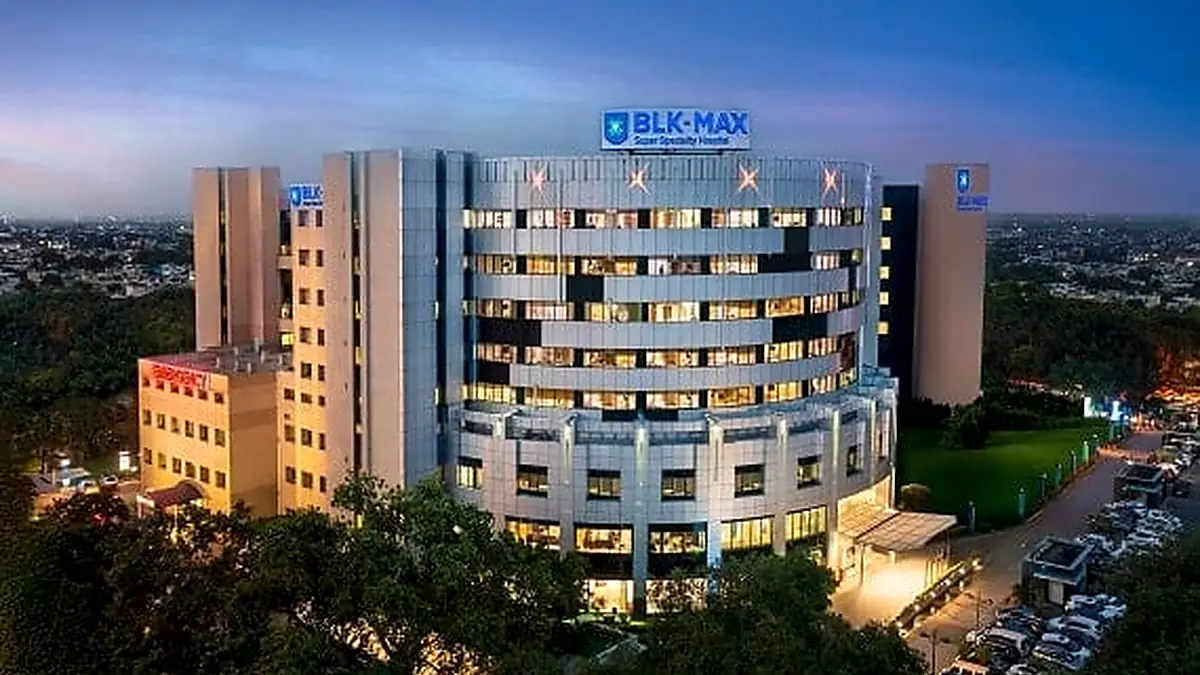
Across the municipal border in West Delhi, BLK-Max Super Speciality Hospital on Pusa Road anchors the corridor’s hematology-oncology, bone marrow transplant, and living-donor hepatobiliary volume. Iraqi oncology patients frequently arrive carrying ambiguous paraffin tissue blocks or incomplete staging scans; within 72 hours of landing at DEL, NABL-accredited molecular pathology labs re-cut the slides, run immunohistochemistry and next-generation genomic panels, complete a whole-body FDG PET-CT ($360–$460), and present the case to an organ-specific tumor board. That speed prevents weeks of hotel burn while giving accompanying relatives a single fixed inpatient Proforma Invoice before chemotherapy, CyberKnife radiosurgery, or surgical resection begins.
Sub-specialty depth matters just as much in pediatric hematology and congenital urology. Families from Karbala, Kirkuk, and Duhok managing beta-thalassemia major, sickle-cell crises, or complex hypospadias revisions find dedicated pediatric intensivists on 24-hour in-house call rather than part-time visiting consultants, ensuring post-operative complications are caught at the bedside within minutes rather than hours.
2026 Surgical, Oncology & Transplant Tariff Benchmarks in USD and IQD
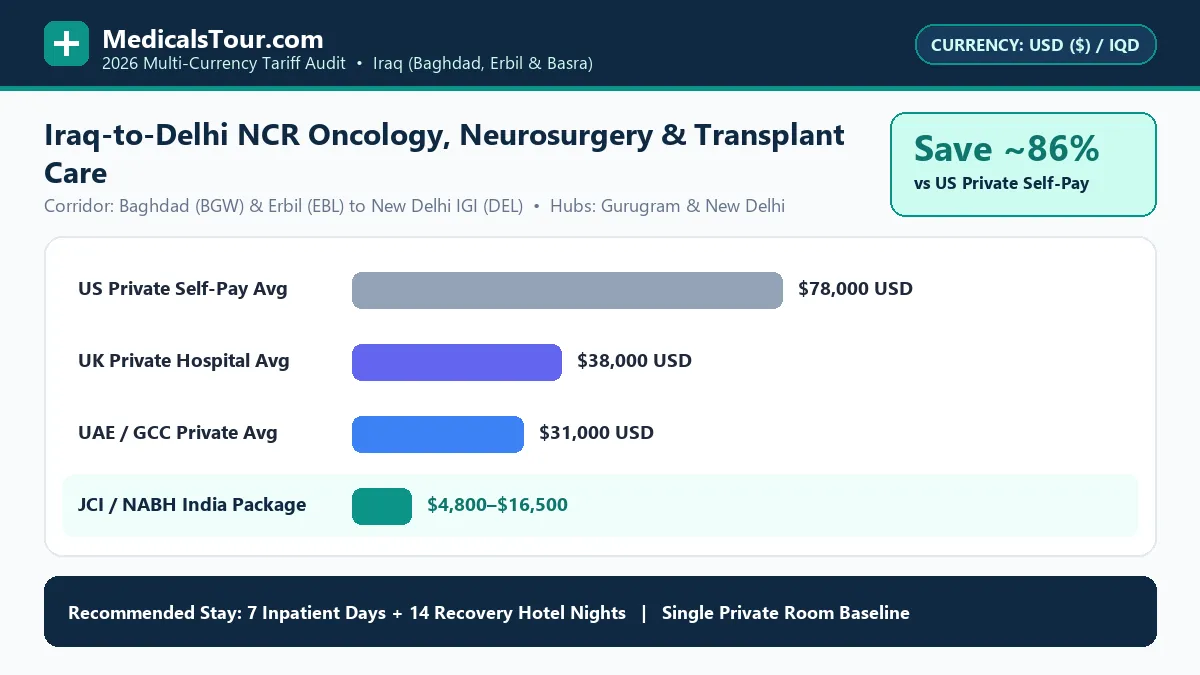
Iraqi hospital coordination desks in Gurugram and New Delhi issue all Proforma Invoices in US Dollars ($), settled in Indian Rupees at the hospital’s daily RBI reference rate upon admission. When budgeting back home in Baghdad or Erbil, families should calculate dinar outlay carefully: while the Central Bank of Iraq (CBI) official rate sits near 1,310 IQD per USD, families converting dinars into physical US dollar notes on the parallel market often absorb rates closer to 1,480–1,520 IQD per dollar unless paying via an official Trade Bank of Iraq (TBI) or corporate bank wire.
| Quaternary Procedure (Delhi NCR JCI Hospitals) | Standard Single Private Tariff (USD) | Approx. CBI Official Equivalent (IQD) | Inpatient + Gurugram/Delhi Stay |
|---|---|---|---|
| Revision Lumbar Spine Fusion (2-Level O-Arm TLIF) | $5,800 – $8,200 | 7.60M – 10.74M IQD | 5 Hosp + 10–12 Guesthouse Days |
| Microsurgical Brain Tumor Craniotomy (Neuronavigation) | $6,600 – $9,500 | 8.65M – 12.45M IQD | 6–7 Hosp + 10–14 Guesthouse Days |
| Robotic / Open Major Oncological Resection + PET-CT | $5,400 – $8,900 | 7.07M – 11.66M IQD | 5–7 Hosp + 10–14 Guesthouse Days |
| Beating-Heart CABG or Redo Valve Replacement | $5,600 – $8,800 | 7.34M – 11.53M IQD | 7 Hosp + 9–12 Guesthouse Days |
| Living-Related Kidney Transplant (Recipient + Donor) | $13,800 – $17,200 | 18.08M – 22.53M IQD | 11 Hosp + 21–25 Apartment Days |
| Autologous / Allogeneic Bone Marrow Transplant (HEPA) | $18,500 – $34,000 | 24.24M – 44.54M IQD | 24–30 Hosp + 30–40 Apartment Days |
| Living-Related Adult Right-Lobe Liver Transplant | $28,500 – $35,500 | 37.34M – 46.51M IQD | 20 Hosp + 25–30 Apartment Days |
Before wiring deposits or purchasing flights, cross-check surgical line items against our Spine Surgery & Fusion Cost Guide and PET-CT, Radiation & Oncology Cost Breakdown. Always confirm in writing that your quote locks in the Standard Single Private Room tier, includes FDA/CE-cleared implants (Medtronic, Zimmer Biomet, Stryker, or Abbott), and lists pre-admission outpatient blood panels ($300–$650) separately so nothing surprises you at discharge.
Paper Medical Visa Steps at the Indian Embassy in Baghdad & Erbil Consulate
Iraq is excluded from India’s electronic visa (e-Visa) program. Every Iraqi patient—whether holding an A-series biometric passport issued in Baghdad, Basra, or Najaf, or residing in the Kurdistan Region—must obtain a stamped paper Medical Visa (MED) prior to boarding. Up to two blood relatives (spouse, parent, adult son, daughter, or sibling) can apply simultaneously for a linked Medical Attendant Visa (MED-X) bearing the exact validity and triple-entry allowance of the primary patient’s sticker.
Step-by-Step Consular Checklist (Baghdad Al-Mansour & Erbil Ankawa/Gulan)
- Local Diagnostic Referral: Obtain a recent Iraqi clinical report (CT/MRI report, biopsy, or echocardiogram) plus a brief note from a local specialist stating that advanced tertiary intervention outside Iraq is advised.
- Official Visa Invitation Letter (VIL): Email clear colour scans of the patient’s and attendants’ passports (minimum 6 months validity and two blank pages) plus medical reports directly to the International Patient Desk at Artemis, BLK-Max, Medanta, or Indraprastha Apollo. Within 24 to 48 hours, the hospital issues a reference-numbered VIL on official letterhead addressed specifically either to the Embassy of India, House No. 6, Zokak No. 25, Mahalla 609, Al-Mansour, Baghdad or to the Consulate General of India, Erbil, while simultaneously copying the consular verification email inbox.
- Online Regular Visa Form: Complete the standard Government of India paper visa application at
indianvisaonline.gov.in/visa/, uploading a 2×2-inch white-background photograph and selecting the exact mission where biometrics will be submitted. - Supporting Financial & Civil Proof: Prepare Iraqi National ID cards (Bitaka Wataniya), residence card (Bitaka Al-Sakan), bank statement or USD solvency proof, and polio vaccination certificate (OPV/IPV certificate required for travelers departing Iraq under health port advisories). Review our Medical Attendant Visa Checklist to verify kinship proof rules before your appointment.
Standard processing at Baghdad and Erbil takes 5 to 9 working days, though verified ICU oncology, pediatric cardiac, or acute neurosurgical referrals flagged directly by the receiving hospital’s medical director are routinely expedited inside 48 to 72 hours.
Iraqi Airways Nonstop Flights (BGW & EBL to DEL) and T3 Arrival Protocol
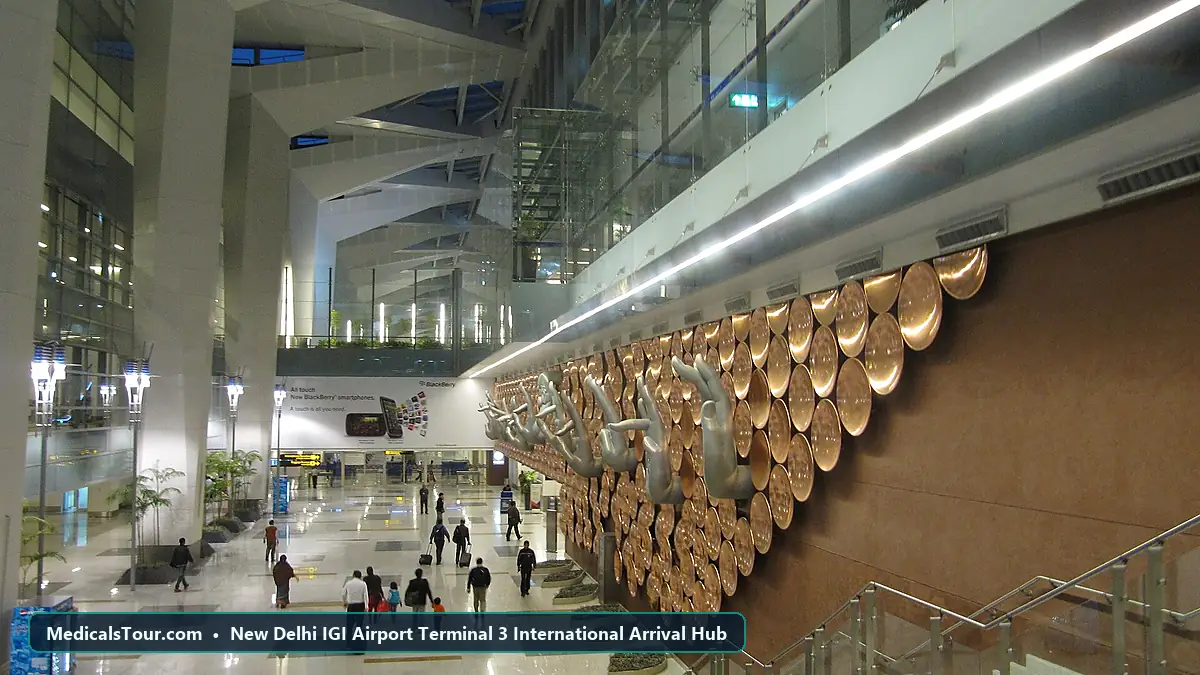
Direct air connectivity is the single biggest logistical advantage of the Iraq–Delhi corridor. Iraqi Airways (IA) operates regular nonstop rotations linking both Baghdad International Airport (BGW) and Erbil International Airport (EBL) directly to New Delhi Indira Gandhi International Airport Terminal 3 (DEL) in roughly 4 hours 35 minutes to 5 hours. Avoiding third-country layovers eliminates transit-visa headaches for Iraqi passport holders and spares spinal, post-chemotherapy, or elderly cardiac patients a grueling terminal change.
Travelers flying out of Basra (BSR) or Al-Najaf (NJF) who prefer daily departures when nonstop Baghdad seats are sold out commonly book single-ticket connections via Flydubai / Emirates (DXB) or Qatar Airways (DOH) into DEL, staying airside inside the transit concourse so no Gulf transit visa is required—provided both flight legs sit on a single PNR with through-checked baggage and pre-booked airline wheelchair assistance (WCHR or WCHC).
Clearing Immigration, Customs & Tout-Free Hospital Pickup at DEL
- Airport Ambulance & Wheelchair Escort: Email your confirmed Iraqi Airways or Gulf carrier ticket to your chosen hospital 48 hours before departure. An official hospital representative holding a printed placard meets your family outside International Arrivals Exit Gate 5 or Gate 6 (near Pillars 14–18) with a complimentary SUV or oxygen-equipped ambulance.
- Crucial Warning Against Freelance Interpreters: Never hand your Visa Invitation Letter or passport to unsolicited Arabic-speaking drivers or “helpful translators” loitering outside DEL arrivals or Baghdad ticket offices. Independent middlemen routinely divert patients away from their booked hospital—or secretly register themselves as the “referral facilitator” at the admissions counter, quietly inflating your surgical quote by 18% to 30% to fund their commission.
- Indian Customs Currency Declaration (CDF): Because international card limits on Iraqi bank cards remain restrictive, many families carry physical US $100 bills (bring crisp post-2013 blue-ribbon notes without ink stamps or tears). Carrying more than $5,000 USD in banknotes per adult (or $10,000 USD total in cash plus traveler’s instruments) into India is completely legal, provided you walk through the Customs Red Channel at DEL T3 on arrival and obtain a free stamped Currency Declaration Form (CDF). Hospital forex counters require that exact CDF slip when accepting large USD cash deposits above RBI retail thresholds.
Inside Gurugram Sector 38–51 & West Delhi Pusa Road: Housing, Food & Form-C
Where your family stays after inpatient discharge shapes both daily infection control and emotional stamina during a two-to-six-week recovery. Delhi NCR offers two distinct, deeply established Iraqi micro-neighborhoods depending on whether your surgeon practices in Gurugram or central-west New Delhi.
| Recovery Micro-Pocket | Distance to Flagship Hospitals | Daily Serviced Stay (USD) | Iraqi Family Amenities & Access Notes |
|---|---|---|---|
| Sector 51 & Mayfield Garden (Gurugram) | 0.3 – 1.5 km to Artemis Hospital | $32 – $65 / night (1BHK/Studio) | Walkable tree-lined blocks, elevator guesthouses with kitchenettes, halal butcher shops, Iraqi flatbread bakeries & Arabic pharmacies. |
| Sector 38 & Sector 39 Islampur Belt (Gurugram) | 0.4 – 1.8 km to Medanta & 4 km to Fortis | $28 – $60 / night (Guesthouse/2BHK) | Highest density of Iraqi & Yemeni restaurants, grilled fish/kebab kitchens, forex booths & budget long-stay transplant flats. |
| Millennium City Centre / Sector 29 Hotels | 2.5 – 4.5 km to Fortis, Max & Artemis | $85 – $165 / night (4–5 Star Hotel) | Full-service international hotels (Crowne Plaza, Taj City Centre, Lemon Tree) with roll-in showers & instant Form-C generation. |
| Rajendra Place, Patel Nagar & Karol Bagh (Delhi) | 0.4 – 1.6 km to BLK-Max Pusa Road | $38 – $95 / night (Hotel/2BHK Flat) | Blue Line Metro access, Jaypee Siddharth 5-star hotel right beside BLK-Max, plus halal dining & long-stay BMT apartments. |
Before paying cash rent for any private apartment in Sector 38, Sector 51, or Patel Nagar, demand screenshot proof that the property owner holds an active Bureau of Immigration Form-C portal account. Every Iraqi Medical Visa holder staying beyond 14 days—or applying to extend a 60-day or 90-day visa during chemotherapy, radiation, or transplant convalescence—must upload both the hospital’s medical certificate and a digital Form-C residential registration. Broker-leased flats that evade municipal tax cannot issue Form-C, creating avoidable fines during FRRO Medical Visa Registration & Extension.
Practical daily logistics inside these sectors are remarkably straightforward for Arabic-speaking households. Local Airtel and Jio passport SIM counters inside the hospital lobbies activate Indian mobile data packages within two hours upon presentation of your Iraqi passport and stamped arrival page, letting attendants order Uber and Ola cabs directly from hospital gates without haggling with street auto-rickshaws. Grocery stores along Sector 51 Main Road and Islampur Market stock Basmati rice, tahini, olive oil, Iraqi-style spiced lamb cuts, and low-sodium renal staples so post-transplant meals can be cooked safely inside a sanitized apartment kitchen.
Avoiding Commission Markups, Room-Tier Traps & Transplant Paperwork Errors
Using Medical Tour’s verified billing checks across Gurugram and Delhi hospitals, three operational rules protect Iraqi families from unnecessary expense. First, communicate directly with the hospital’s salaried International Patient Services email domain (such as @artemishospitals.com or @maxhealthcare.com) prior to arrival so your file is tagged as a Direct International Self-Pay Patient rather than an agency-referred file. Hospital-employed Arabic interpreters inside the inpatient wing assist you during surgeon rounds, anesthesia consent, and pharmacy discharge counseling at zero extra cost.
Second, understand how Indian inpatient room selection governs professional fees. A Standard Single Private Room already provides a private en-suite bathroom with handheld bidet sprayer (shattaf), television, clinical bed, and a dedicated sofa-cum-bed for one overnight family attendant. Upgrading to a Deluxe Suite does not merely add $100 per night to your accommodation line—hospital ERP billing software automatically applies a 20% to 35% surcharge onto the surgeon’s fee, anesthesia fee, operating theatre hours, and bedside blood tests.
Third, if traveling from Baghdad, Erbil, or Basra for a living-related liver or kidney transplant, never bring a distant acquaintance or unverified donor. Under India’s Transplantation of Human Organs Act (THOA), the donor must be a close genetic relative (parent, adult child, sibling, or spouse) backed by original Iraqi civil status records (Soorat Qaid / family registry translated into English and attested by the Iraqi Ministry of Foreign Affairs), an official No Objection Certificate (NOC) issued by the Embassy of the Republic of Iraq in New Delhi, NABL forensic DNA kinship testing, and a video-recorded statutory Authorization Committee interview prior to surgery.
Families sponsored under Iraqi Ministry of Health (MoH) or Kurdistan Regional Government medical committee delegations should verify whether their official Letter of Guarantee covers outpatient take-home pharmaceuticals and companion guesthouse nights, as institutional delegations normally fund strictly inpatient surgical bundles while leaving food, visa extensions, and extra diagnostic slides to the patient’s family wallet.
Discharge Medication Packing, Fit-to-Fly Clearance & Follow-Up Back in Iraq
Planning the return journey to Baghdad or Erbil begins four days before your final outpatient suture review. Specialty pharmaceuticals—such as targeted oncology tablets, anti-rejection tacrolimus capsules, low-molecular-weight heparin syringes, or neuropathic pain regimens—can face brand shortages or counterfeit risks in local provincial pharmacies. Ask your primary consultant to write an itemized 60-to-90-day discharge prescription stamped with the hospital seal, and purchase those sealed manufacturer boxes directly from the hospital’s inpatient pharmacy, keeping the printed tax invoice and prescription in your hand luggage for Baghdad/Erbil customs inspection.
Temperature-sensitive biologics, insulin pens, or post-BMT antiviral vials require an insulated cold-chain pouch with frozen gel packs approved during airline check-in; request a signed medical-necessity cabin letter from your coordinator so airport security officers at DEL T3 clear the cold pack without opening sterile seals.
Orthopedic, neurosurgical, and cardiac patients should also verify three physical handover items before leaving the hospital lounge:
- Implant Barcode Stickers & Operative Notes: Ensure original peel-off lot stickers for spinal cages, pedicle screws, joint prostheses, or drug-eluting stents are pasted onto your typed discharge summary, alongside English and Arabic medication schedules.
- Cloud DICOM Links & Histopathology Blocks: Collect all post-operative MRI/CT scans via downloadable cloud link (plus USB/DVD backup) and retrieve original pathology paraffin blocks if ongoing adjuvant chemotherapy will be administered at Baghdad Medical City, Al-Amal National Cancer Hospital, or Hiwa Cancer Hospital in Sulaymaniyah.
- Signed Fit-to-Fly & DVT Protocol: Obtain a surgeon-signed Fit-to-Fly certificate dated within 48 hours of departure, wear knee-high graduated compression stockings during the five-hour flight home, and request complimentary aisle wheelchair assistance up to the aircraft door. You can compare peer routes on our International Medical Corridors Hub and calculate exact airfare, apartment, and companion cashflow inside our Medical Trip Budget Planner.